

Rethinking Youth Gender Medicine Conference: First Do No Harm
Rethinking Youth Gender Medicine Conference: First Do No Harm
Share this event
Need help?
CAN-SG in partnership with SEGM welcome you to our second International conference on youth gender health care. Our theme is Rethinking Youth Gender Medicine: First Do No Harm. The conference will be live-streamed and registrants will receive a recording after the conference.
This conference brings together experienced clinicians, academics and researchers, alongside patient and parent voices. Sessions will examine the history and rapid global spread of the medical affirmation model; possible drivers of the rise in gender distress; and challenges in diagnosis, terminology, and research. We will also explore ethical tensions between autonomy and the duty to avoid harm, wider social
influences—including rising youth mental health difficulties—and alternative psychotherapeutic approaches to supporting gender-distressed children and young people.
In the UK, puberty blockers are no longer routinely prescribed, the PATHWAYS trial has been paused pending review of risks, and new proposals may further restrict cross-sex hormones for under-18s. Does this herald real change towards an ethical evidence based treatment approach? It is too early to say and in many other ways the gender affirming approach is still entrenched in the NHS, along with the ideology that underpins it.In the UK over 6000 young people a year under the age of 25 are referred to adult gender clinics. The largest group of referrals to adult clinics are now women under 25 with complex issues. Yet they can still get cross sex hormones and surgical referral after two appointments, with no mandatory mental health input.
Clinicians in the adult clinics told Dr Hilary Cass about the poor quality of care some young people were receiving there and this led to the Levy Review. Disappointingly the Levy Review was very limited and did not question the care model itself, leaving this group at substantial physical and psychological risk. Levy's main solution is to encourage more GPs to prescribe cross sex hormones - a policy enthusiastically supported by the Royal College of General Practitioners. Is more GP prescribing really the answer?
Clinicians face growing uncertainty. If medical intervention is no longer appropriate, what should replace it? We will hear from several clinicians pioneering psychotherapeutic approaches to helping children, young people and their families to deal with gender related distress.
And how should practitioners support adults living with the known—and unknown—long-term effects of hormones and surgery? Two years after NHS England said it would implement the recommendation of the Cass Review to provide services for detransitioners, no progress has been made. The conference will hear from detransitioners and those supporting them to find out what kind of services detransitioners need.
The last conference was in the spirit of the Cass Review recommendation for open respectful professional discussion in order to find the best ways to help those experiencing gender-related distress.
Instead the conference was heavily protested and the RCGP whose venue we had hired went to great pains to distance themselves from us. There are still few opportunities for clinicians to meet or discuss their concerns about gender medicine.
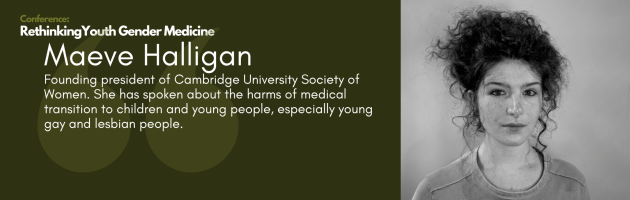
We are delighted that Maeve Halligan who founded the Cambridge Society for Women who will talk about the importance of courage to speak out. It's only be meeting, talking, debating, sharing ideas and, yes, disagreeing that we can hope to resolve a situation that threatens the health of so many vulnerable young people and ensure that we as clinicians are practising ethically and safely.
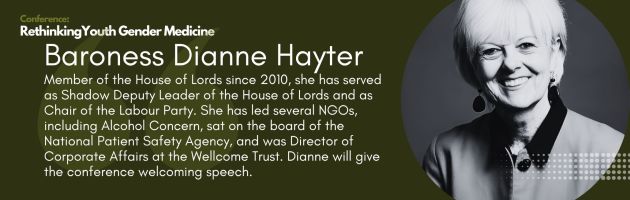
Conference opening: Welcoming speeches from Baroness Dianne Hayter and Maeve Halligan.
Day one | Aetiologies, evidence, research, and ethics
Panel One: History and aetiologies
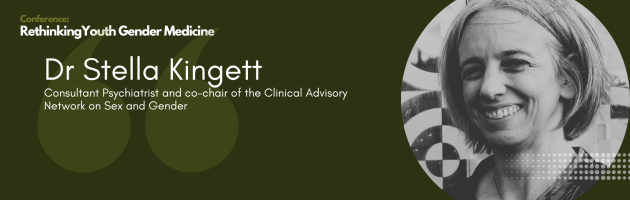
Chair: Dr Stella Kingett Co-chair, Clinical Advisory Network on Sex and Gender
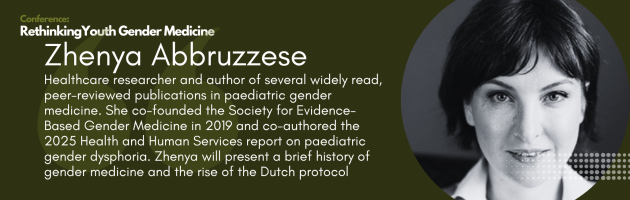
Zhenya Abbruzzese A brief history of gender medicine and the rise of the Dutch protocol
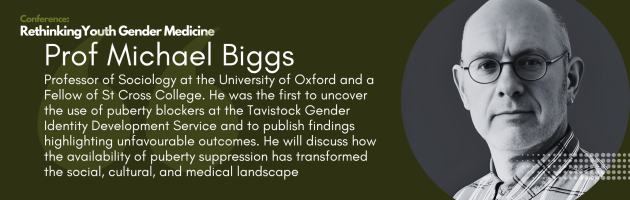
Prof Michael Biggs How the availability of puberty suppression transformed the social, cultural, and medical landscape
Prof Alex Byrne Diagnoses in gender medicine

Panel Two: Evidence, uncertainty, and risk from childhood into adulthood
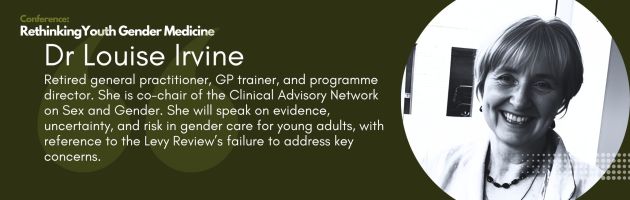
Chair: Dr Louise Irvine Co-chair, Clinical Advisory Network on Sex and Gender
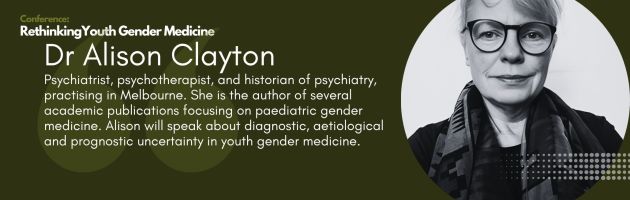
Dr Alison Clayton Diagnostic, aetiological and prognostic uncertainty in youth gender medicine
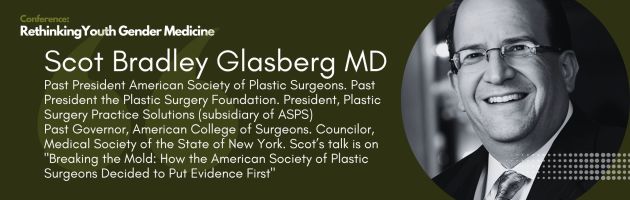
Scot Bradley Glasberg, M.D Breaking the Mold: How the American Society of Plastic Surgeons Decided to Put Evidence First
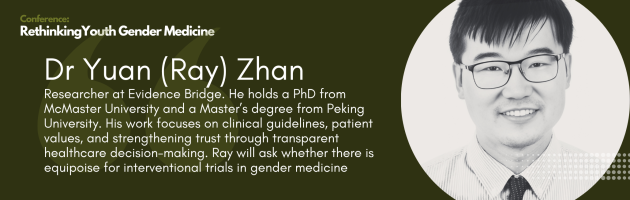
Dr Ray Zhang Is there equipoise for interventional trials?
Panel Three: Research
Chair: Prof Alice Sullivian
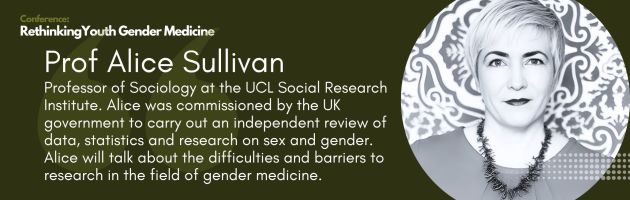
Prof Alice Sullivan Barriers to research in gender medicine
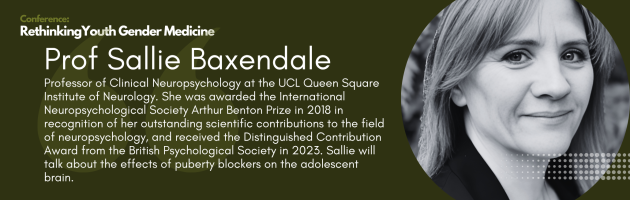
Prof Sallie Baxendale Effect of puberty blockers on the adolescent brain
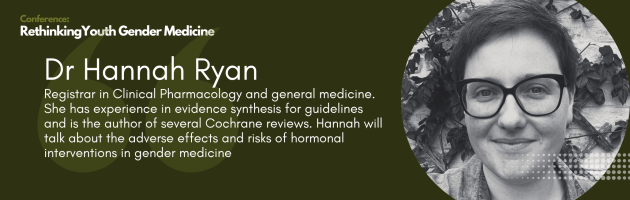
Dr Hannah Ryan Adverse effects of hormonal interventions in gender medicine
Panel Four: Ethical challenges
Zhenya Abbruzzese (Chair)
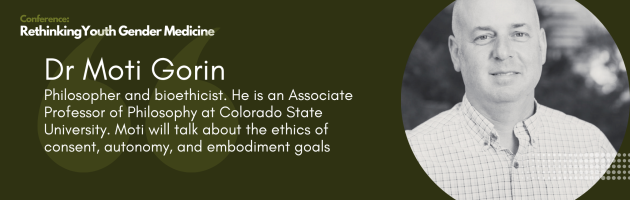
Prof Moti Gorin Evidence, ethics, and youth gender dysphoria
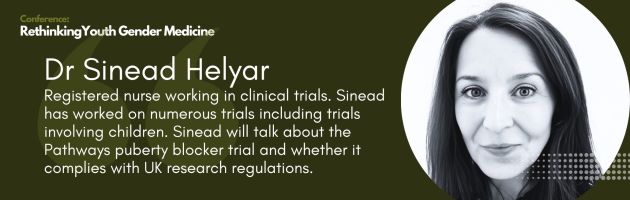
Dr Sinéad Helyar Pathways puberty blocker trial and why it does not comply with UK research regulations
Parent perspective Ethical dilemmas for parents of trans identified children
Evening 5-7.30: summer drinks reception
Day two | Social and cultural contexts, clinical perspectives
Panel Five: Society, culture and detransition
Prof David Pilgrim Chair
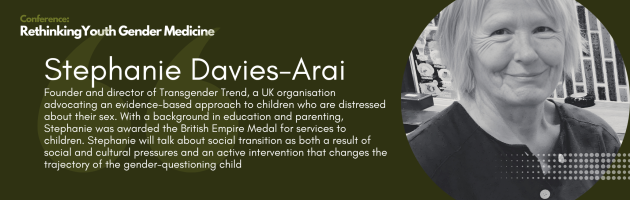
Stephanie Davies-Arai Social transition: what's the harm?
Sarah Mittermaier Beliefs about medical transition and the body in online trans support spaces
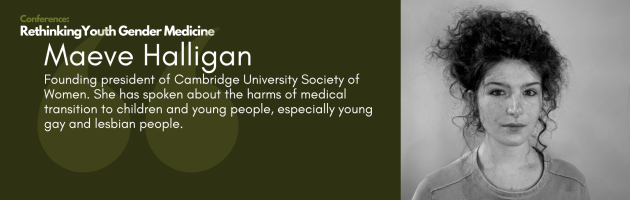
Maeve Halligan Social pressures on young women
Michael Kerr Detransition pathways: going back, but moving forward
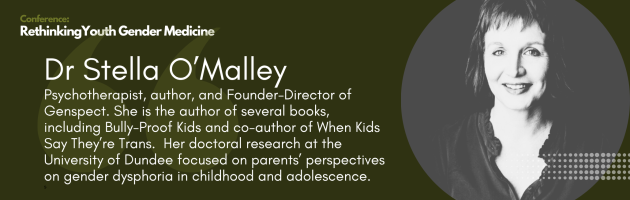
Dr Stella O'Malley Beyond Trans; psychological support for detransitioners



Panel Six :Psychotherapy
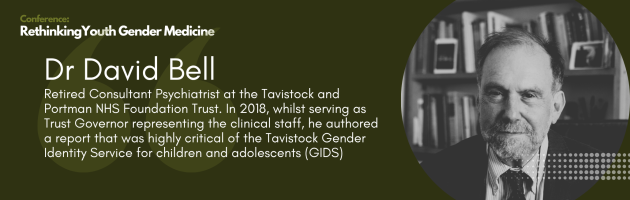
Dr David Bell Chair
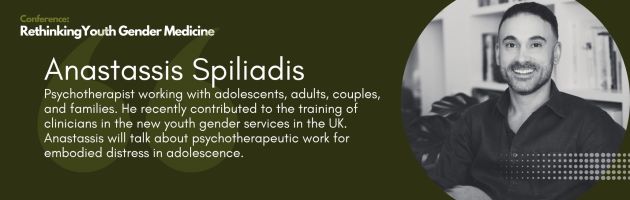
Anastassis Spiliadis Embodied distress in adolescence
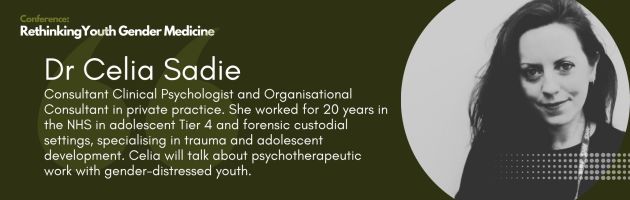
Dr Anna Hutchinson and Dr Celia Sadie Psychotherapeutic work with gender-distressed youth
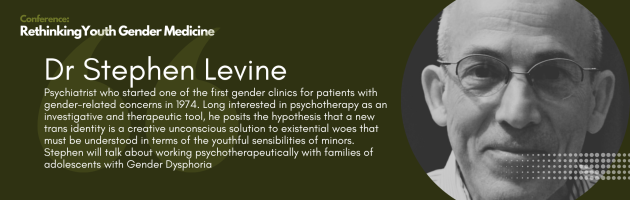
Dr Stephen Levine Working psychotherapeutically with families of gender distressed youth

Panel Seven: Clinical perspectives
Dr Aileen O'Brien Chair
Dr Louise Irvine Uncertainty and risk: should GPs prescribe cross sex hormones?
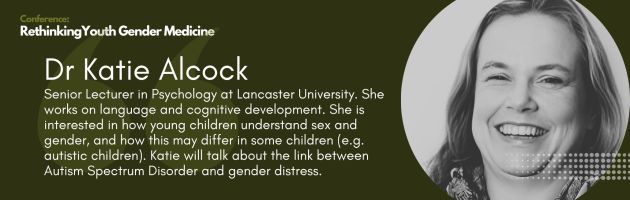
Dr Katie Alcock The link between autism spectrum disorders and gender related distress
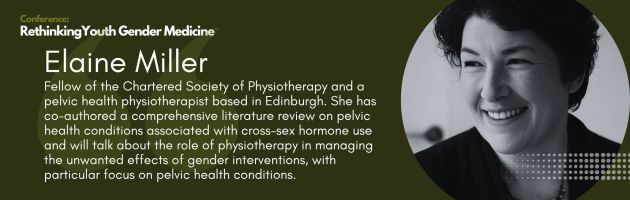
Elaine Miller Pelvic floor complications of testosterone use in women and how physiotherapy can help
Panel Eight: Looking to the future. How can we support young people moving forward?
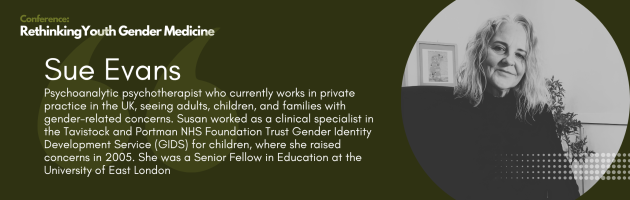
Sue Evans Chair
Sue will chair a panel discussion on "Looking to the future: How can we support children, families and young adults, moving forward?" with Stephanie Davies-Arai, Dr. Anna Hutchinson, Dr. Stephen Levine, Dr Hannah Ryan, Michael Kerr and a parent perspective. The panel will also address the implications of the proposed conversion practices bill for therapists, clinicians, parents and same sex attracted young people.
Closing remarks: Dr Stella Kingett Co-chair Clinical Advisory Network on Sex and Gender
The Clinical Advisory Network on Sex and Gender (CAN-SG) is a group of clinicians campaigning for clearer dialogue, rigorous science and improved treatment options for gender dysphoria.
The Society for Evidence Based Gender Medicine (SEGM) aims to promote safe, compassionate, ethical and evidence-informed healthcare for children, adolescents, and young adults with gender dysphoria.
X I BLUE SKY I WEBSITE I FAQ I EMAIL I SIGN THE DECLARATION I VIMEO
Location
University College London, Malet Pl, Bloomsbury, London, WC1E 7JE