
Guilty or not guilty? How you can make better decisions
Guilty or not guilty? How you can make better decisions
Share this event
What you'll learn
We’re endlessly hooked by criminal trials — the twists, the testimony, the dramatic pauses, the “surely this proves it!” moments. From courtroom dramas to headline-grabbing cases, trials pull us in because they ask one of the biggest questions a person can face: what really happened?
Most criminal trials rely on juries: twelve ordinary people, selected at random, asked to weigh evidence, test stories, spot gaps and ultimately pass judgement on a fellow citizen. No pressure, then.
This session takes you behind the courtroom curtain to explore how jurors — and all of us — make sense of complicated evidence, why our brains sometimes help us brilliantly, and why they can also lead us confidently up the wrong path.
Research in psychology and legal decision-making shows that people are not neutral evidence-processing machines. We use shortcuts, stories, first impressions and common-sense assumptions to make decisions quickly — which is useful when choosing lunch, but much riskier when assessing guilt, reliability or credibility.
Studies of juror decision-making have highlighted the role of confirmation bias, pre-trial attitudes, hindsight bias and the way expert evidence is presented. In other words: the facts matter, but so does the mind receiving them.
How do you make decisions?
So, how do you make decisions when the evidence is messy, emotional and incomplete? Imagine being asked to decide whether someone is guilty while faced with witness statements, forensic findings, competing explanations and persuasive advocates on both sides.
Do you carefully update your view as each new fact arrives? Or do you — like most humans — start forming a story early on and then, perhaps without noticing, give extra weight to the evidence that fits it? This talk unpacks the hidden machinery of judgement: how we build narratives, how we decide who sounds credible, and why confidence is not always the same as accuracy.
You’ll also discover why reasonable doubt is such a fascinating idea: it sounds simple, but applying it in real life can be surprisingly tricky.
The talks will draw on research into cognitive bias, causal reasoning and evidence evaluation to show how good people, trying hard to be fair, can still be nudged by irrelevant context, vivid details, early anchors or a compelling-but-wrong story. The result is a lively, practical look at why smart decision-making needs more than instinct — it needs structure, curiosity and a willingness to ask, “What else could explain this?”
Better decisions
Drawing on the combined expertise of Professor David Lagnado of UCL, whose work explores causal reasoning, evidence and decision-making, and KC barrister David Bentley, this talk brings psychology and courtroom experience together in one package. Expect real-world insight, memorable examples and plenty of “oh, I do that too” moments as we look afresh at the trials that fascinate, trouble and sometimes horrify us.
You’ll leave with a sharper understanding of how the mind investigates evidence, why mistakes happen, and what practical tools can help you make better judgements — not only in legal settings, but in work, relationships, advice-giving and everyday life.
Join our Whatsapp group to hear about the latest events
The Speakers

David Lagnado
David Lagnado is a cognitive psychologist and professor at the University College London (UCL). His research focuses on the psychological processes that underlie human learning, reasoning and decision-making. A major theme is the central role played by causal models in cognition.
David investigates how people learn causal models from uncertain data, and how they use these models to draw inferences and make decisions. David has extended this work to legal decision-making, showing that people use their causal knowledge to organise evidence and make decisions.
Another key theme is the interplay between causal thinking and judgements of responsibility. David examines how people use causal models to attribute credit and blame in moral and legal contexts.

David Bentley KC
With over 30 years of trial and appeal work, David Bentley KC brings this experience and judgement to bear on every case he undertakes. Recognised as a leading heavyweight silk, with a practice based largely at the Old Bailey, David is instructed in many of the highest profile and most challenging cases that come before the courts.
His practice, though focused in recent years on murder and terrorism, also takes in financial crime and sexual offences.
He is a senior member and past leader of Doughty Street’s Crime Team – top-ranked in both Chambers and Partners and the Legal 500.
Follow us on Instagram
The Agenda
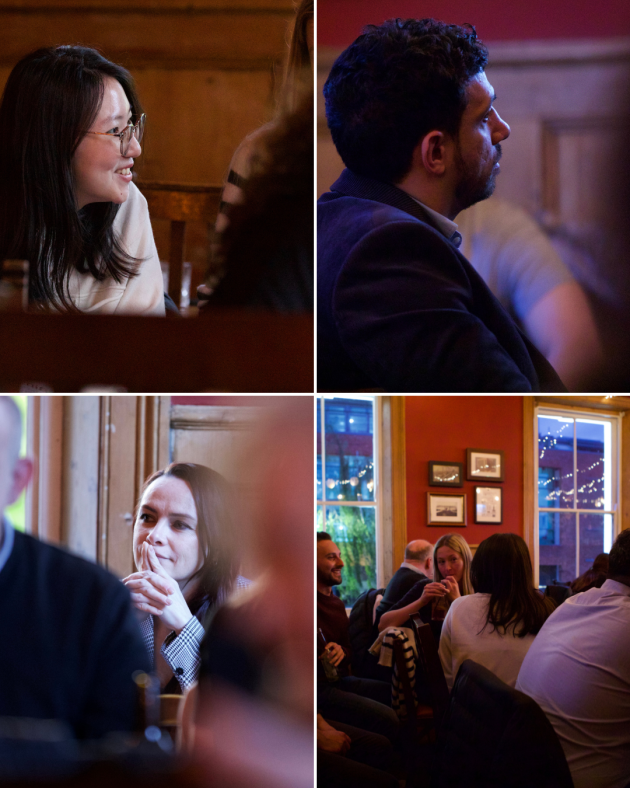
18:30-19:30 - Arrivals & structured networking/ice-breakers
Arrive, mingle and grab drinks. You'll be in small groups discussing intriguing discussion/ice-breaker questions (optional). If you want to meet like-minded young professionals you're welcome to join. This part of the event's ideal for anyone who works (or aspires to work) in psychology, neuroscience, education, healthcare or related fields. We'll also have an interactive pub psychology quiz in groups using your mobile phone.
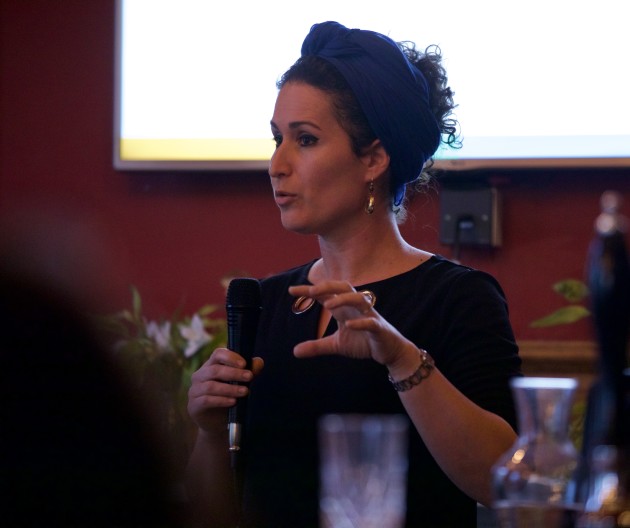
19:30-20:30- 'TED style' talk
Learn something new.
20:30 - 21:00 - Q and A
Question time - the chance to ask your questions about this topic and anything else you'd like to know with our expert speaker.
21:00 - 22:00 - Networking mingle
Informally meet our speaker and other likeminded people, continuing conversations, drinks, sharing knowledge and reflections. Whether you've got a personal or professional interest, anyone who wants to connect with professionals is welcome to join! This is a great way to expand your social and professional network.
The Venue
We'll be in the 'Green Room' (upstairs) at the Star of Kings pub - just a 5 minute walk from Kings Cross train/tube station. Further details about the pub can be found here.
This pub has a lovely array of craft beers, cocktails and soft drinks. The pub recently updated its menu to include a range of burgers from award-winning 'Filthy Buns'. You'll also be a short stroll from a number of restaurants around Kings Cross.
One of the few traditional pubs in Kings Cross, the Star of Kings boasts a large beer garden and classic arcade games downstairs.
Join our Whatsapp group to hear about the latest events
FAQs – Pub psychology events
Who attends these events?
This event is open to anyone regardless of religion, race, ethnicity, sexual orientation or gender. Many attendees have a professional interest working (or aspiring to work) in mental health professions, education or related fields. You're also welcome to come along if you have a personal interest in the subject matter. This is an ideal way to expand your social and professional network.
Will you sell tickets on the door?
No! All our tickets are sold before the event so please don't arrive on the day without a ticket as you'll be turned away. Pub psychology events are popular and tend to sell-out. Please get a ticket in advance!
I’m not sure if I’ll arrive in time after work. Should I still come?
Yes! If you have a ticket, please come whenever you can (ideally before the talk begins). For pub psychology events, most talks begin 1 hour after the scheduled start time. This gives you time to settle in, network with others and grab a drink or food. Please double check the event agenda on Ticket Tailor (the platform we use to sell tickets) as times vary depending on the event.
Will I be able to network?
Yes! You're welcome to come along if you've got a personal or professional interest and/or want to meet new people. Based on feedback, we’ve added loads of new opportunities for mingling. Many people attend alone and please do reach out if you want to be introduced to anyone or need support. For pub psychology events, we recommend arriving early for ice breakers. We’ll also have a pub psychology quiz arranged in groups and there’s always a friendly group of us who’ll stay for drinks afterwards.
Can I come just for the talk?
Absolutely! If you'd prefer to come along for just the expert 'TED style' talk (skipping the networking/mingling bits) you're more than welcome to arrive later and before the talk begins. Please keep in mind all seats are unreserved.
Are you on social media?
Yes - we are! Join our Whatsapp group to hear about the latest events: WhatsApp Group Invite
You can also follow us on Instagram: @Conn8cting
About us
Want to learn about psychology, neuroscience and healthcare while meeting like-minded people in London? You're in the right place. Exclusive educational talks and mingling events for young professionals. Conn8cting 'TED style' talks are ideal for anyone with a professional or personal interest in the topics and want to meet likeminded people.
Our talks cover every topic you can think of. From the psychology of laughter, happiness, decision-making and regret to psychosis, narcissism, incels, drugs and psychopaths. You'll learn interesting stuff delivered by experts, in-person.
Learn something new, meet someone new.🧠
Location
Star of Kings Pub, N1 0AX