
Sustaining Arts Enterprises in Glasgow: A Workshop
While small and medium sized art-based businesses are acknowledged as vital sources of creativity, work and employment, how best to sustain local arts ecosystems, and support their positive flourishing, remains a subject of debate and concern.
This interactive event is delivered jointly by the Cultural Industries subject at University of Glasgow and Creative Glasgow, a membership organisation connecting, championing and celebrating the creative and cultural sectors in the city. It is the first in a series underpinned by a new Dublin-Belfast-Glasgow exploratory research partnership, involving University of Glasgow, University College Dublin, and Queen’s University Belfast.
This series brings together academic researchers, arts managers and practitioners, support networks, and policy makers in each of the three geographic contexts, with shared interest in the conditions and practices informing the sustainability of arts enterprises in cities and city regions - with particular focus on the visual arts, dance, performance, and digital arts sectors.
The first event brings together key voices within Glasgow, to contribute to discussion about the key factors influencing the sustainability of arts enterprises in Glasgow, the experience of those working within them, current support structures, possible future infrastructural requirements, sector ambitions and policy priorities. It will interrogate links and blockages between the various city-level interests involved in developing and maintaining a healthy city-context for arts enterprises.
At this event you’ll hear from a range of guest speakers, participate in round table discussions, and contribute to a short report that will be circulated to guests. This report will then underpin subsequent discussions in Dublin and Belfast in 2027, and guests will also receive summary findings from these other city-contexts as the collaboration develops.
Overall, this series aims to build capacity to better learn, exchange, and collaborate between the three cities – deepening understanding of shared challenges, and differential approaches – as well as pointing towards future opportunities for joint research and collaborative, practice-based interventions.
Full Programme and Speaker Details to be announced shortly.
Please note this event is by invitation only.
Please contact programme@creativeglasgow.co.uk if you would like to discuss opening up this invitation to any colleagues or partners.
Venue Accessibility for The Pyramid at Anderston can be found here:
https://thepyramid.scot/hire/our-spaces/#
Please note any dietary requirements, access requests or support needs when confirming your ticket, and a member of the team will be in contact with you if we need to discuss this further.
INTRODUCING THE EVENT CONTRIBUTORS
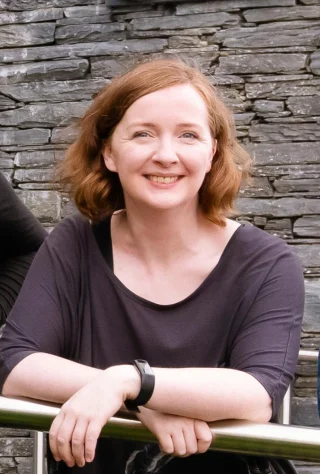
Prof. Aoife McGrath is Professor of Dance at the School of Arts, English and Languages, Queen’s University Belfast. She has worked as a professional dancer, choreographer, community dance and theatre facilitator, and Dance Advisor for the Irish Arts Council. She is interested in finding out how embodied knowledge can be valued and included within interdisciplinary, engaged, collaborative, and policy-informing research processes. Her work has been funded by Horizon Europe, AHRC, Future Screens NI/AHRC, Creative Ireland, and the Higher Education Authority, amongst others.
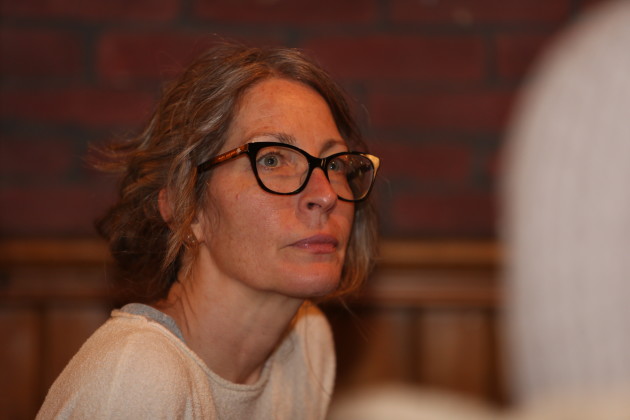
Dr Victoria Durrer is a social scientist and cultural policy scholar at UCD’s School of Art History and Cultural Policy, and Co-Founder and Co-Director of of Cultural Policy Observatory Ireland. Supported by the Higher Education Authority, Royal Society of Edinburgh and AHRC, her research investigates the spatial and relational dimensions of cultural policy and administration, with a focus on how they shape the production, experience, and value of arts and creative practice. She is co-editor of a number of collections on cultural policy.
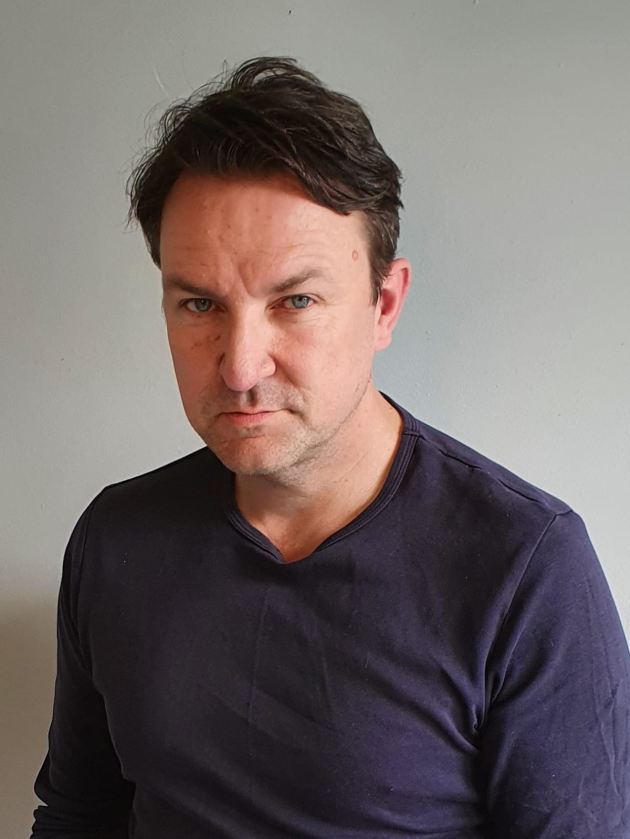
Mark Banks is Professor of Cultural Economy and Head of Subject for Cultural Industries at the University of Glasgow. He writes about work and employment in culture, cultural theory and cultural policy.
Full line of of speakers and contributors to follow shortly.
Image Credit: University of Glasgow, 2026
Location
The Pyramid at Anderston, G3 8DS