

Why Smartness Needs a Cultural History
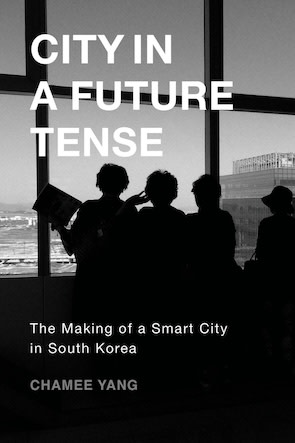
City in a Future Tense: The Making of Smart City in South Korea traces the history of Songdo -- known as one of the first "smart cities" in the world. The book offers a cultural, historical, and locally grounded account of smart urbanism. It opens with a question: "When, where, and how does a smart city begin?" Much like the idea of the future itself, smart city is often offered as a horizon of possibilities: a provisional testbed holding the promise of optimization and constant update, while repeatedly renewing what constitutes its goal, whether sustainability, development, security, or something else. Importantly, the conceptual flexibility produces a strategic vagueness, allowing developers, vendors, and city officials to sidestep difficult questions about feasibility and material consequences, while continually postponing the fulfillment of the smart city's promise.
Despite persistent criticism, these visions have continued to survive, serving as an enabling context for the smart city's continued appeal. Instead of dismissing them simply as 'hypes' or 'myth', the book suggests it is worth exploring how these visions and aspirations matter, not necessarily because they are true, but in part because sometimes they inspire people to take a leap of faith, even if they defy reason. To truly understand the smart city, we must trace the deep cultural starting points of its historical present: the ways that societies have imagined, facilitated, negotiated, and debated its trajectory from past to present and into the future. Songdo, one of the first prototypes of a smart city built from the ground up, is a good place to think about the performativity of the future as a driver of smart urbanism. Spanning a longer historical arc than most accounts of smart cities, the book shows how the cultural work of will formation continually reimagines the future as both promise and threat -- serving as a psychological infrastructure of the smart city.
City in a Future Tense: The Making of Smart City in South Korea is available both open access (free) and in print from 22 September, 2026.
The event is followed by a reception to celebrate the launch of the book. It is organised by the King's College London Department of Digital Humanities and the Centre for Digital Culture.
Speaker Info:
Chamee Yang is Associate Professor of Communication at Seoul National University. Her research works across media history and theory, technocultural studies, and science and technology studies (STS), with a particular focus on the history and politics of “smartness” across Asian and global contexts. Her work examines how technologies become entangled with longstanding concerns around mobility, security, economy, and development, and how seemingly new technological problems are historically and socioculturally constituted. Her research has appeared in Science, Technology, & Human Values, Big Data & Society, International Journal of Communication, among other venues. She is the author of City in a Future Tense: The Making of a Smart City in South Korea (University of California Press, 2026). She is visiting researcher at King's College London in September-October 2026 and a co-PI on the project K-platforms: Co-developing tools and methods for studying digital platforms and cultures in South Korea.
Chairs:
Liliana Bounegru is Senior Lecturer (Associate Professor) in Digital Media, Culture and Society at the Department of Digital Humanities, King's College London. She is also co-founder of the Public Data Lab and affiliated with the Digital Methods Initiative in Amsterdam and the médialab, Sciences Po in Paris. More about her work can be found here.
Jonathan W. Y. Gray is author of Public Data Cultures (Polity, 2025), Reader in Critical Infrastructure Studies and Co-Director of the Centre for Digital Culture at King’s College London. More at jonathangray.org.
Location
Embankment Room, Macadam Building, Strand Campus, King’s College London, WC2R 2NS