

‘We Are Here’: Survivors and Other Actors in the Prevention of Genocide & Mass Atrocities
‘We Are Here’: Survivors and Other Actors in the Prevention of Genocide & Mass Atrocities
Share this event
The Centre for Law and Social Justice, De Montfort University & Remembering Srebrenica UK
are hosting a one-day conference
‘We Are Here’: Survivors and Other Actors in the Prevention of Genocide & Mass Atrocities
Wednesday 13 May, 9.30am-4.30pm
De Montfort University, Leicester
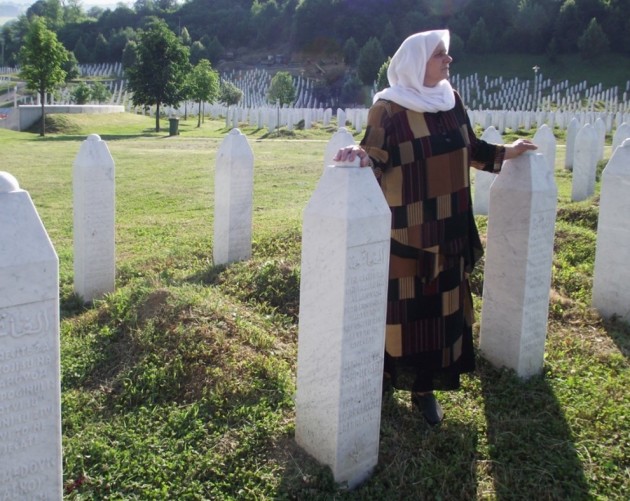
The Centre for Law and Social Justice (DMU) in partnership with Remembering Srebrenica UK are hosting a one-day conference on genocide and mass atrocity prevention on the theme of ‘We Are Here’.
‘We Are Here’ encompasses a wide range of voices/perspectives in understanding and preventing genocide and mass atrocities. These include survivors and other actors who work tirelessly to prevent its reoccurrence through proactive, responsive and redressive mechanisms. Finally, it is a call to action for all of us, to stand up against hate and prejudice.
Programme
9.30 Registration
10.00 Welcome speech
Professor Kasim Sheikh, Pro Vice-Chancellor for Social Justice and Dean of Faculty of Business and Law (TBC)
10.10 Introduction to theme/event
Dr Kim Sadique, Associate Professor in Genocide Prevention and Education (Chair of RSUK Academic Advisory Board)
10.15 Panel 1: Survivor Voices and Survivor-Led Work
Panel Chair: Dr Lize Mills. Speakers: Arnesa Buljusmic-Kustura (Survivor-Activist), Melisa Mujkanovic (Survivor-Educator, DMU) and Ferid Kevric (Bosnian Centre, Derby)
11.20 Panel 2: Memory, Heritage & Education
Panel Chair: Holly Swift (Doctoral Researcher). Speakers: Dr Anastasiya Pshenychnykh (Ukrainian Visiting Academic, Loughborough Uni), Dr Larissa Allwork and Dr Giulia Levi (Derby University) Neil Sledge (Liverpool World Centre)
12.30 Lunch
1.15 Keynote: 30 Years of Progress in International Investigations: Have Obligations to Implement Effective Forensic Investigations been Successful? Srebrenica as an Exemplar of the Development of Responses.
Dr Ian Hanson, Bournemouth University (Former Deputy Director of The International Commission on Missing Persons, Bosnia and Herzegovina)
2.20 Panel 3: Genocide and Mass Atrocities – Issues of Prevention
Panel Chair: Dr Alwyn Jones. Speakers: Professor Aidan Hehir (Westminster University), Dr Vadim Atnash (University of Exeter) & Chris Hale (AHRC M4C Scholarship-funded Doctoral Researcher, DMU),
3.25 Coffee Break
3.45 In Conversation with…
Professor Hollie Nyseth Nzitatira (Ohio State University) Discussion on the PREVENT Framework for Mass Atrocities). Hosted by Chris Hale (DMU)
4.20 Closing remarks
Professor Julia Shaw, Director of Centre for Law and Social Justice
4.30 Finish
Keynote Address: Dr Ian Hanson, Bournemouth University.
30 Years of Progress in International Investigations: Have Obligations to Implement Effective Forensic Investigations been Successful? Srebrenica as an Exemplar of the Development of Responses.
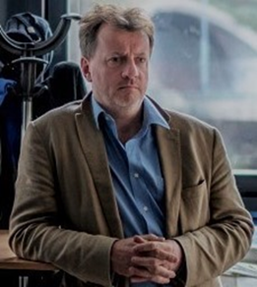
Ian Hanson is an archaeologist of 30 years’ experience, with over 17,000 hours spent in the field. Coordinating between national entities and multiple agencies, he has been involved in location and recovery investigations of war dead and missing persons as well as criminal evidence gathering concerning WWII to the modern era in Bosnia and Herzegovina, Croatia, Serbia, Kosovo, Guatemala, Democratic Republic of Congo, Iraq, Libya and Cyprus.
He has lectured and researched at Bournemouth University since 2002. He has published widely, developing scientific investigation
processes that utilize and implement practical methods to successfully locate and recover the missing, for example from the Srebrenica massacre in Bosnia.
He has provided reports and testimony to international and national courts as an expert witness. Working for The International Commission on Missing Persons (ICMP) 2009-2016, he implemented and directed training programs to build capacity for governments including Iraq and Libya with teams deployed to investigate genocide and atrocities. He has been an advisor and panelist concerning investigations in several countries including Guatemala and El Salvador.
Recently, he has focused research on intelligence, evidence and data source collation and analysis to improve successful outcomes for locating the missing, and developed considerations for effective investigation. Since 2022 he has assisted in drafting legislation on atrocity crime support, specifically in the coordination of imagery assessment provision, and has provided expert written responses for government enquiries.
He is a member of the UK Expert Panel on Forensic Archaeology advising the Home Office Forensic Regulator, a Fellow of the American Academy of Forensic Sciences and a Member and panelist of the UK Chartered Institute for Archaeology.
Location
Hugh Aston Building, De Montfort University, Leicester, LE2 7BY