
Genderqueer Grief
Genderqueer Grief
Share this event
If this date doesn't work for you, consider our other events: buytickets.at/grieftending
What is grief tending?
Grief tending is an intentional way of being with the deep, often overwhelming emotional pain that comes when we lose something or someone meaningful, or when life does not unfold as we had hoped. Grief encompasses a whole spectrum of feelings, like an emotional rainbow that might include anger, sorrow, numbness, confusion, longing, relief, tenderness, regret or even moments of unexpected joy. It can be heavy, complex and difficult to carry alone, which is why we come together in community, to bear witness to and to express our individual and our shared griefs.
To tend grief is to care for it as something living. Rather than pushing it away or trying to fix it, we approach it with attention, patience and compassion, giving it space and allowing it to be witnessed, both by ourself and by others. Imagine a garden where there are places of light and places of shade, wild corners and carefully cultivated beds. Each part and each plant requires a different kind of care. Some areas need lots of tending and attention, with regular pruning and watering, whilst others need space to grow freely or might require little more than acknowledging and appreciating their presence. In the same way, our grief is not one single feeling or experience, it has many layers, textures and rhythms that require distinct types of tending in different moments. Grief tending invites us to meet all these parts with presence, curiosity and care.
Why is it important to tend our grief?
Grief can be vast. It is often too big to hold alone and asks to be tended in community. Michel Egger offers us the image of a vast net, where each knot is a jewel and every jewel reflects the others, catching and passing those reflections back and forth. In this way, each of us is part of a greater tapestry of beings, interconnected and responsive to one another, fostering a sense of shared humanity. Even when the details of our grief differ, the emotional threads often overlap. In witnessing each other, we reduce the sense of isolation that grief can bring and begin to feel held within something larger.
There is also an important truth that Francis Weller points to: when grief is left unattended, it can surface in ways that may harm ourselves or others, through disconnection, numbness or reactivity. Tending to grief allows it to move, to be expressed and to be integrated more gently into our lives, so that we and our communities are restored.
Grief is deeply connected to love. We grieve because we care, because something matters. In this way, grief and love are inseparable, they are two expressions of the same depth of feeling. To honour our grief is to honour what we love.
Similarly, Martín Prechtel talks of praise and grief as two wings of a bird. Both are necessary for flight. When we allow space for sorrow alongside joy, we create a fuller, richer, more balanced experience of being human. Rather than avoiding grief, we learn to move with it, trusting that it belongs as much as joy does, and we experience how tending our grief somehow enhances our appreciation, our joy and our life-force.
Sobonfu Somé reminds us that in many cultures, including in her own Dagara tradition, grief is understood as a natural and essential part of life, something as common and necessary as food and shelter. Grief tending seeks to restore that understanding, offering it the space and dignity it deserves.
Who is it for?
Grief tending in this context is for trans, intersex, non-binary (TIN), genderqueer and gender-questioning people who are experiencing any kind of grief and who wish to meet it in community. It is for those who may be feeling isolated in their experiences and are seeking a space where they can be held without needing to explain or justify who they are.
Whilst we really appreciate the support of all allies and the overlapping experiences with other queer people, this is exclusively a space for gender nonconforming people, as listed above.
Note: We use the terms genderqueer, gender expansive, gender non-conforming, gender-questioning and TIN interchangeably. We hope this includes everyone within this beautiful rainbow umbrella, whilst recognising our own limitations and those of language, and we respect everyone’s self-identification and self-description.
Does my grief need to relate specifically to my gender?
No. Your grief does not need to be directly connected to your gender identity. It may relate to loss, relationships, life transitions, political events or any number of personal or collective experiences. At the same time, grief connected to TIN and gender non-conforming experiences, such as discrimination or identity struggles, is absolutely welcome.
What matters is that the space is shaped by and for gender non-conforming people. Even when gender is not explicitly named, it is present in the shared understanding, lived experience and collective energy of the group. This supports the creation of a foundation of safety and belonging.
What does a session look like?
A grief tending session is held with care and intention, often unfolding in a gentle arc. It begins by building the banks of the river, by creating a sense of safety, trust and connection within the group that supports holding and containing the flow of grief. This might include grounding practices and simple ways of arriving together.
At the heart of the session is the core practice of grief sharing and tending. Participants are invited to express what they are carrying, in ways that feel right for them. This may be through words, sound, silence or embodied expression. There is no pressure to perform or to share in a particular way, only an invitation to be authentic.
After expression, there is a space for soothing and integration. The session gradually transitions towards a softer, more settled place, allowing participants to come back to themselves gently. The movement between these phases is slow and intentional, supporting a sense of care throughout.
The session will be held online and will last for 4 hours, including breaks and the prioritisation of comfort.
There will be a maximum of 10 participants, in addition to the facilitators, to allow for more intimate sharing both within smaller groups and within the wider group.
What is the cost?
We offer a sliding scale of €20 - €200 / £18 - £180 and ask you to pay what you can afford. This large variation accounts for regional differences in the cost of living and for the time and effort this work requires of us as the space-holders. Crucially, it facilitates access to those on lower incomes, as we do not believe that anyone should be excluded from this work. We encourage you to give generously where possible, to support us to continue to hold these spaces inclusively. We also encourage you to get in touch if cost is a barrier to access.
What is the registration process?
We ask you to complete a short form to register. This should take no longer than 10 minutes to complete.
Before confirming your place, we may contact you if we have any follow up questions or concerns, so that we can be sure that this is the most suitable space for you at this time. Grief tending is a powerful process and sometimes it is more beneficial to focus on further resourcing and supporting yourself before engaging in this work.
Once your place is confirmed, we will ask you to make payment within the above-mentioned sliding scale. You will not be provided with the online access details until payment has been made.
We will close the registration process on 30th August, so please ensure you have registered by then.
Cancellation and refund policy
If you need to cancel for any reason, unfortunately we do not offer refunds but we will offer you a space in upcoming grief tending spaces.
If we need to cancel for any reason, we will offer you the choice of whether to be refunded or to attend an alternative gathering.
Accessibility
If you have any accessibility needs that we haven’t covered in this document, please get in touch.
Feeling unsure about whether this is the right space for you?
If you’re unsure whether this space is right for you, you’re warmly invited to get in touch and ask any questions at grieftending@proton.me. You don’t need to be certain or to have things worked out to reach out.
If this date doesn't work for you, consider our other events: buytickets.at/grieftending
About us
Our events are held by a combination of the facilitators listed below. All of our team are gender non-conforming.
Clarius (no pronoun – any pronoun)

As an archaeologist specialized in burial practices and the way the living care for their dead ones, I came to question my own relationship with the cycles of birth and decay in my own life and practices. Grief has always held my hand. Tending to my grief in community reminded me of the power of being together, of going through life collectively while reminding me of my own accountability towards myself and others, as a link in the chain we form.
Jana (they/them)

I live in the east of the Netherlands and work as a coach, facilitator and trainer. I came to grief tending during the pandemic and found that it was a powerful way to tap into deeper places within myself. Since then, I’ve offered online and offline grief tending spaces, and look forward to sharing the space with fellow genderqueer folks.
Skye (they/them)
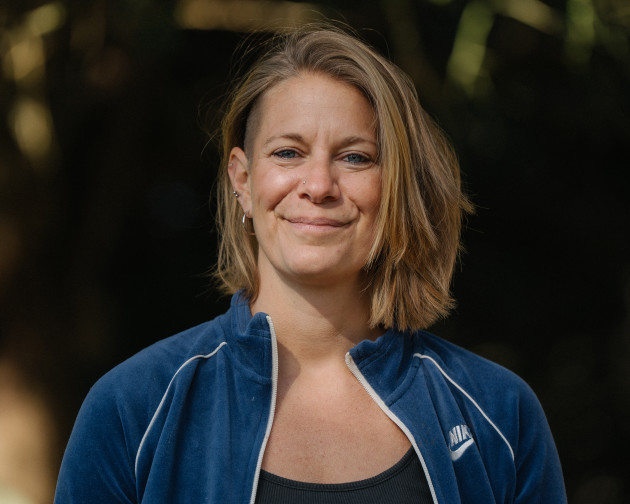
Since childhood, I’ve been profoundly affected by the injustices of the world. This grief deepened through my humanitarian work in countries impacted by war and drought. Though I trained and now work as a psychotherapist, I found that individual therapy couldn’t fully meet the depth of what I was feeling. I discovered community grief tending after a series of family bereavements and realised it offered the collective, restorative approach for which I had been searching. It means a lot to me to share this practice with you.
The shoulders on which we stand
All of our team have apprenticed in community grief tending with Sophy Banks and Jeremy Thres. Sophy and Jeremy have learnt from and follow in the lineages of grief tenders who have generously shared their practices and wisdom with us. These include: Malidoma and Sobonfu Somé, Francis Weller, Joanna Macy and Martín Prechtel.
Malidoma and Sobonfu Somé: Born among the Dagara people of Dano in Burkina Faso, where weekly grief tending rituals are central to community life, Malidoma and Sobonfu were sent by their tribe to share communal grief tending practices in the West - offering them as a way to re-weave community, to heal Western alienation and disconnection and to reduce the spread of the sickness of colonialism.
Francis Weller: An American psychotherapist and writer, who has learnt directly from the Dagara people, to share grief tending and soul work.
Joanna Macy: An American scholar of Buddhism, systems thinking and deep ecology, Joanna developed “The Work that Reconnects.” This supports activists to grieve and honour the planet that we love, providing a generative culture that empowers and sustains environmental activism.
Martín Prechtel: A mixed race white-native American, with a Pueblo Indian upbringing, Martín was accepted by the Tzutujil people of Guatemala, becoming a shaman who supported young people through adult rites of passage. He is an artist, writer, teacher, storyteller and healer who includes grief tending amongst his practices and offerings.
To all of our teachers, we are deeply grateful.
Resources
Books
There are many books that can support you in this work. Here are a few that we have found to be poignant and seminal:
- Camille Barton: Tending grief (Whilst our teaching did not include Camille’s work, we have also found their book to be a wonderful resource. Camille Barton is a writer, embodiment facilitator and movement artist. They are also non-binary).
- Joanna Macy: Active hope
- Joanny Macy and Molly Brown: Coming back to life
- Martín Prechtel: The smell of rain on dust: Grief and praise
- Malidoma Somé: Ritual: Power, healing and community
- Malidoma Somé: The healing wisdom of Africa
- Sobonfu Somé: Falling out of grace: Meditations on loss, healing and wisdom
- Francis Weller: The wild edge of sorrow: Rituals of renewal and the scared work of grief
Podcasts
For those of you who prefer to listen, you can find many podcast episodes. Here are a few of our favourites:
- Camille Barton: On tending grief (Public Programs CIIS)
- Malidoma Somé: Grief, ritual and sacrifice (recording found on Sound Cloud)
- Sobonfu Somé: Grieving and ritual (Public Programs CIIS)
- Joanna Macy and Jessica Serrante: We are the great turning (podcast series on The Work that Reconnects)
- Martín Prechtel: Grief and Praise (Out of the Fog podcast)
- Francis Weller: and Orland Bishop: The sacred work of grief (Sounds of Sand podcast)
- Francis Weller: The lost art of grieving: Grief as ritual, resistance and resilience (The Great Simplification podcast)