
(Im)migration, State Violence & the Community Response
This event is presented in collaboration with the Chicanx/e and Latinx/e Studies (CLS) Program and the Latin American, Caribbean, and Iberian Studies (LACIS) Program at UW-Madison.
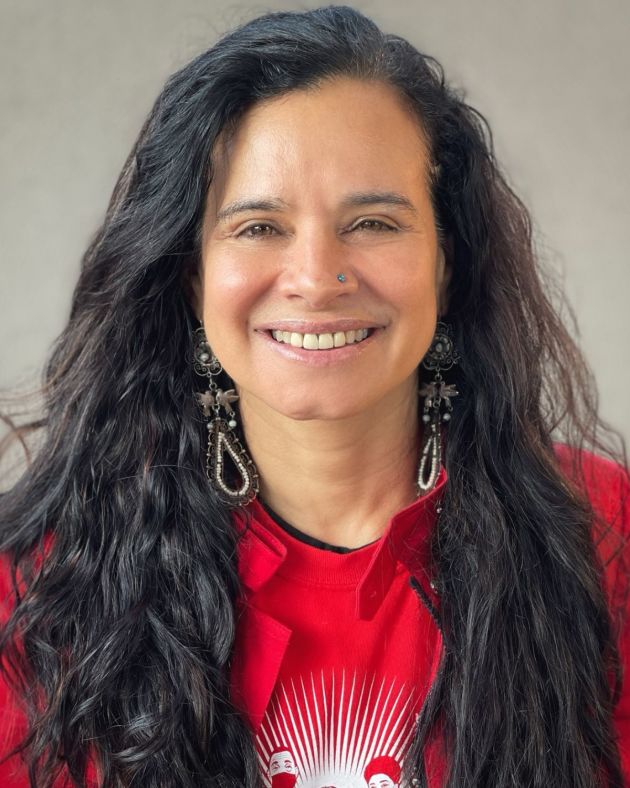
Christine Neumann-Ortiz is the founding Executive Director of Voces de la Frontera and Voces de la Frontera Action. Ms. Neumann-Ortiz is recognized as a national leader in the immigrant rights movement. Ms. Neumann-Ortiz serves on the board of the Fair Immigration Reform Movement (FIRM). FIRM is a national coalition comprising 47 grassroots organizations in 35 states, which work together to fight for immigrant rights at the local, state, and federal levels. In August 2020, she was recognized by USA Today as one of the ten “Women of the Century” in Wisconsin, and she was also awarded the 2020 National Education Association (NEA) César Chávez Acción y Compromiso Human and Civil Rights Award. She was named by The Huffington Post in its list of “50 Young Progressive Activists Who Are Changing America” and has received numerous awards, including the Community Change Champion Award for Community Organizing and Leadership from The Center for Community Change and the Equal Justice Medal from the Legal Aid Society of Milwaukee. Through her leadership, Voces has grown from a small, grassroots worker center to a state and national leader in the immigrant rights movement. In 2016, The Nation magazine awarded Voces the “Most Valuable Strategy” award in honor of the February 18th statewide general strike, which took place on Day without Latinos & Immigrants, and defeated a state anti-sanctuary bill. In 2012, The Nation named Voces the “Most Valuable Grassroots Organization” in the country. In 2009, the Wisconsin State Assembly recognized Voces for its role in achieving passage of in-state tuition rights for immigrant students as part of the 2009-2011 state budget. Ms. Neumann-Ortiz earned her Master’s Degree in U.S./Chicano History at the University of Texas at Austin and her Bachelor of Arts degree in English at the University of Wisconsin-Madison.
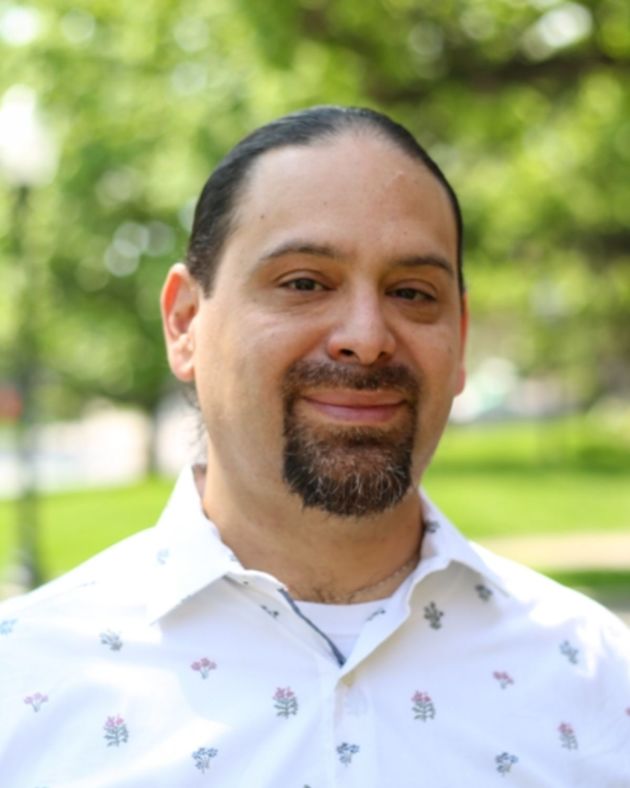
Jimmy Patiño seeks to critically excavate alternative imaginings of democratic practice among aggrieved communities in the midst of global capitalism. Concentrating on Mexican-origin and broader Latino/a/x communities at the U.S. Mexico Border and in major U.S. urban settings, his work attempts to dialog about the ways that concepts of race, gender and nation create hegemonic class disparities and formulate an array of identities that mobilize social movements and initiate class struggles on multiple fronts.
His first book, Raza Sí, Migra No: Chicano Movement Struggles for Immigrant Rights in San Diego asserts that important contingents of Mexican-origin activists in the U.S. engaged, across generations, the crisis over the “illegal alien“ through attempts at organizing the Mexican-origin community across differences of national affiliation and citizenship status. Focusing on San Diego due to its vital positioning as both urban and border space where consistent migration and race-based border policing has occurred, the project illuminates a serious challenge to deportation-oriented immigration policies between 1968 and 1986 through the ideological prism of Chicano self-determination.
He is now working on a number of other projects, including a study that investigates the conceptualization and historical practice of solidarity primarily through the lens of African American, Chicana/o/x, and Puerto Rican sites of struggle in the twentieth century. Important to this investigation are the ways regional differences and geo-historical contexts facilitated articulations of Black-Brown/Afro-Latinx diasporic solidarities and how these articulations led to counter hegemonic activities and theories of revolution across local, national and transnational boundaries. Through a relational and comparative framework, the study will ground these analyses in historical activities in the Midwest, Texas, California and New York in the burgeoning Black and Brown Power movements at the mid to late 20th century.
His broader research and teaching interests include Comparative Ethnic Studies, Chicano/a-Latino/a History, diaspora/transnationalism/borderlands, social movements and political mobilizations, and Cultural Studies.
Location
Hybrid Event: Zoom and Sewell Social Sciences Building, Room 8417