

South Devon Country Houses
Enjoy an exclusive two-day tour featuring private, owner-guided visits to four of South Devon’s tucked-away and least known country houses.
Day 1: 29th July
Explore Grade II* Hayne Manor, which was rebuilt in 1810 in the Gothic-revival style with battlemented parapets, buttresses, gabled pinnacles with gothic finials, and stone and timber traceried windows by Isaac Donnithorne, who later adopted the surname Harris having married the heiress of Harris of Hayne. The two-storey house is of roughly square plan and is arranged around a central, top-lit staircase hall. The service quarters to the north of the main block incorporate the core of the pre-1810 house. The manor was the seat of the Hayne family which had taken their surname from their seat. In the 16th century the family died out in the male line on the death of Walter Hayne, one of whose daughters and co-heiresses was Thomasine Hayne, whose share of her paternal inheritance was the manor. The house is reputed to be haunted by three ghosts. Our tour will include the listed grotto and the early 19th-century gardens.
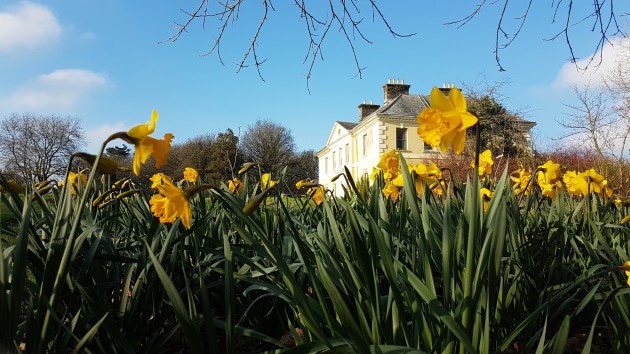
Kelly House
Later, discover Grade I Kelly House, in its many guises, home to the Kelly family for over 900 years. The name of Kelly is derived from the Celtic word, meaning a clearing in a wood. Around 1100, the name Martin de Kelly is connected with this site. By the reign of Henry II, some fifty years later, Nicholas de Kelly held a manor here, and was one of eleven Devonshire families responsible for raising fighting men for the king in return for their landholding. Sir William de Kelly began to build the church next to the house in 1252. Many family members are buried there, and the family has remained closely connected with it ever since. By 1742, Arthur Kelly of Kelly was prosperous enough to replace part of the old pre-Tudor house with today’s elegant early Georgian building with its graceful staircase. Through the 19th century, the family continued to live the lives of prosperous country squires, devoted to their estate. Even the existing lockup demonstrates the traditional gentry’s role of maintaining local law and order as Justices of the Peace.
Day 2: 30th July
Discover Shilstone House, a lovingly restored Georgian manor house, extended in the local vernacular in the heart of the Devon countryside, overlooking an important historical landscape, which includes the only known and nationally important 17th-century water theatre. Our tour will include the ground floor of the house and some rooms upstairs, looking at architectural styles of 1600–1730, the formal gardens and wider designed landscape. Guests will explore the history of the site through its surviving archaeology and rare architectural features before seeing the results of a 20-year project to restore the house. There will be time to explore the terraced formal gardens and into the water garden with its ornamental and cascading rills, the walled kitchen garden with its very own banqueting house, and the remnants of the Italianate water theatre.
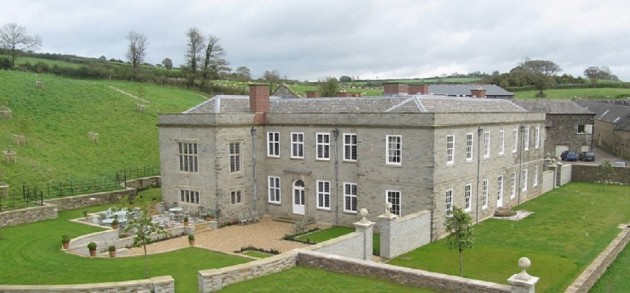
Shilstone House
Later, discover Hemerdon House, still the home of the family for which it was built in 1793, extended in the early 1800s and completed in the late 19th century, with a wealth of local and family history and artefacts collected by the family through generations. Our tour of the interior will be followed by a leisurely wander through the parkland with its pond and walled garden. The presence of the family in Devon has been recorded since the 1100s, and in the Plympton area since the 1500s. The family’s participation in local public life – in particular over the last 300 years, through the naval and military services, the clergy, the law, medicine, and local government – is reflected in the contents of the house. The major fittings, fireplaces and the like are thought to be original, and the furnishings have been accumulated over the years by the family for the house. These include a number of paintings and objets d’art, many acquired by Henry Woollcombe, who was a founder of the Plymouth Athenaeum and an enthusiastic patron of local artists. Hemerdon offers an intimate insight into a country house and its family from the late 18th century to the present day.
Please note that lunches are not provided during this tour.
On day 1, tea or coffee with cake will be provided upon arrival at Hayne Manor and later at Kelly House.
On day 2, the café at Shilstone House will be open, where refreshments can be purchased.
Tickets £110 for the two-day tour
Header image: Hemerdon House
Location
Hayne Manor, EX20 4DB