
Who Represents Whose Heritage, for Whom? Heritage Making in Postcolonial and Settler Colonial Societies
Who Represents Whose Heritage, for Whom? Heritage Making in Postcolonial and Settler Colonial Societies
Share this event
Who Represents Whose Heritage, for Whom? Heritage Making in Postcolonial and Settler Colonial Societies |
What is heritage? Who defines it? Whose heritage is preserved, and whose histories are supressed? This course will examine how heritage is a powerful cultural instrument which has been systematically used in postcolonial and settler colonial societies to legitimize certain narratives while silencing others. The course dismantles “authorized” heritage narratives, exposing how dominant institutions, through international heritage administration, charters and conventions, as well as national and local museums, archives, monuments, festivals etc., construct and preserve selective versions of the past that privilege some communities while marginalizing others. The course will also look at how Indigenous peoples’ heritage differs from Western definitions of cultural heritage and will consider emerging decolonial approaches that subvert existing frameworks. Through mini-lectures, group discussions, individual readings and knowledge exchange, students will learn to interrogate the power structures embedded in heritage-making and propose people-centered ways to decolonize heritage practices.
Key questions underpinning this course:
What constitutes heritage?
Whose past is represented in public, who gets to decide this, and for whom is it displayed?
How do societies use heritage to remember the past (or forget certain events in the past)?
What are the mechanisms of power in heritage making or heritagization?
What is Indigenous heritage?
Can heritage be a form of social action?
Delivery mode: Online
Days/times: Thursday 6PM-8PM AEST.
- Week 1: Thursday 16 July
- Week 2: Thursday 23 July
- Week 3: Thursday 30 July
- Week 4: Thursday 6 August
- Week 5: Thursday 13 August
- Week 6: Thursday 20 August
Scholarship places: full fee scholarship places are available for Aboriginal and/or Torres Strait Islander or unwaged participants. Please email info@ipcs.org.au with a brief EOI to apply.
Accessibility: If you have any accessibility queries and/or requirements, please reach out to us at info@ipcs.org.au
Course Coordinator:
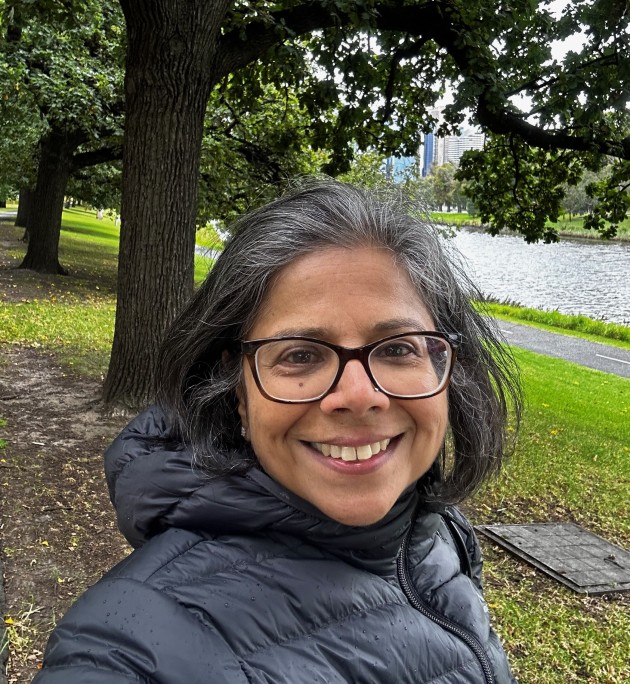
Dr. Srilata Ravi is Emeritus Professor at the University of Alberta (Edmonton), with more than three decades of international experience across India, Singapore, Australia, and Canada. Until retiring in 2023, she was Professor of Comparative and Francophone Literatures at the University of Alberta, where she also served as Director of the Institute for Heritage Studies and Transdisciplinary Research in Francophonies (IMELDA) at Campus Saint-Jean. Her research interests are in postcolonial studies, comparative cultural studies, and migration studies. Throughout her career, Dr. Ravi has worked at the intersection of literary scholarship, interdisciplinary research, teaching, mentorship, and community engagement.