

Education Event: Early-Stage Design Strategies for Reducing Risk and Avoiding Rework
Education Event: Early-Stage Design Strategies for Reducing Risk and Avoiding Rework
Share this event
Need help?
Early-Stage Design Strategies for Reducing Risk and Avoiding Rework
Early design decisions have an outsized impact on compliance, schedule, and long-term operability in complex facility projects. This session brings together practitioners to share practical ways to build a stronger design foundation and prevent avoidable rework during execution.
Thank you to our sponsors for this event:


What you will learn:
Attendees will leave with practical approaches they can apply immediately, including how to strengthen early assumptions, manage risk earlier, and use modeling to prevent late-stage design rework.
Basis of Design for Complex Facilities: Avoiding Common Design Oversights
Presented by James Gladden
The Basis of Design is often treated as a procedural milestone. In aseptic manufacturing, it is foundational to compliance, performance, and facility integrity. This session highlights early-stage oversights that commonly surface later as rework and validation challenges.
Key Takeaways:
- A pragmatic checklist for building a robust Basis of Design in complex environments
- The most common early misalignments that lead to downstream rework, validation friction, or lost capacity
- Practical guidance for managing interfaces, design unknowns, and utility strategy early
Risk Optimization in Early-Stage Design
Presented by Kevin Hollenbeck
In many projects, risk is treated as something to address later rather than a design input to manage early. The result is often reactive decision-making at the worst possible time. This session focuses on practical methods to identify, track, and reduce project risk during early-stage design.
Key Takeaways:
- A repeatable approach for identifying and tracking design risk early
- Practical strategies to reduce rework by tightening assumptions and decision-making
- Ways to maintain project momentum while improving alignment across stakeholders
Early-Stage Process Modeling and Utility Balance: Preventing Late-Stage Risk in Aseptic Facilities
Presented by James Gladden
Early-stage process modeling and utility load balancing are underutilized tools for risk mitigation in aseptic facility design. This session shows how modeling during concept and early design enables teams to forecast capacity requirements, identify bottlenecks, and validate utility strategies before specifications and procurement begin.
Key Takeaways:
- How to use modeling to confirm capacity and utility decisions before committing to hardware and infrastructure
- A data-driven method to prevent late-stage overload, validation delays, and design churn
- How early modeling supports compliance, operational reliability, and cross-functional alignment
Attendees will receive 3.0 PDH Credits for this program
Agenda
5:00 PM - Check-in and Networking
5:30 PM - Boxed Dinners Available and Presentations Begin
8:30 PM - Presentations Conclude; Networking Until Departures
Presenters:
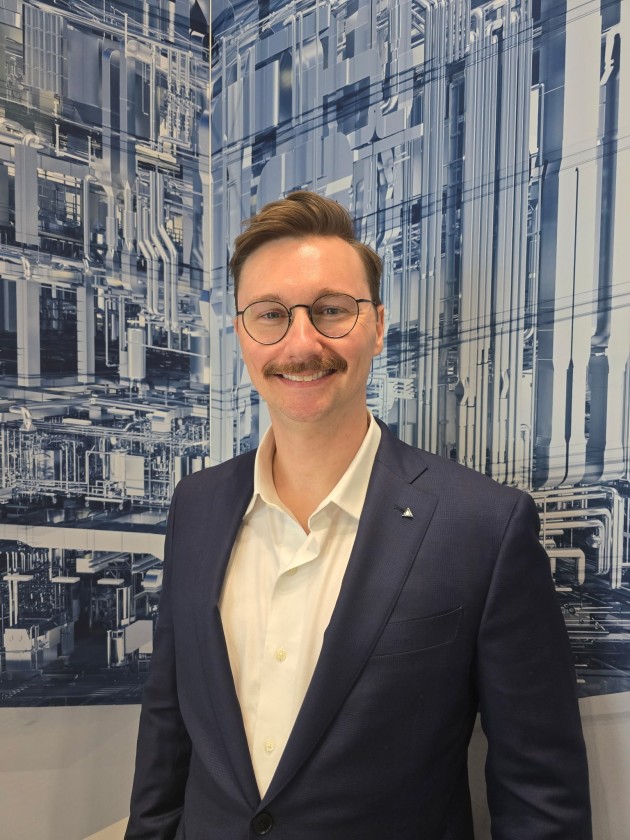
James Gladden
President, ZETA USA
James Gladden is President of ZETA USA, where he leads process engineering, equipment fabrication, and integrated automation delivery for aseptic and biopharma manufacturing facilities. With more than 15 years of experience executing complex liquid-handling systems and clean utility integrations, James has directed projects that balance regulatory compliance, operational scalability, and long-term efficiency.
He is known for bridging engineering strategy and execution, aligning facility owners, project teams, and delivery partners to reduce schedule risk while protecting quality and validation outcomes. At ZETA, James oversees turnkey and retrofit project execution, advances modular skid-build fabrication strategies, and champions robust, validation-first design philosophies for aseptic production environments.

Kevin Hollenbeck, AIA
Director of Life Sciences, Precis Engineering + Architecture
Kevin Hollenbeck, Director - Life Sciences at Precis Engineering + Architecture, is an accomplished Architect with more than 20 years of architectural design, planning, and programming experience. He provides strategic oversight for the design and planning of life sciences buildings, leading teams through the project life cycle from concept to completion. He establishes creative vision and guiding principles so that each team can proceed with technical documentation and regulatory compliance while streamlining processes, maintaining quality control, and delivering solutions that meet client and regulatory requirements. His concentration has been in the areas of architectural design & Planning, project coordination, and technical documentation for complex, large-scale projects across diverse global markets.
"Walk-in" Registrations will be accepted for $20 surcharge per ticket type. Cash, Credit Card and PayPal accepted.
Location:
Zeta USA 2200 Renaissance Blvd; Suite 170 King of Prussia, PA 19406 Not yet an ISPE Member? Consider joining today! |
Location
Zeta USA, 19406