

Programs Event: Process Design Framework for Process Intensification (PI) and Continuous Manufacturing (CM)
Programs Event: Process Design Framework for Process Intensification (PI) and Continuous Manufacturing (CM)
Share this event
Need help?
Process Design Framework for Process Intensification (PI) and Continuous Manufacturing (CM)
Process intensification (PI) and continuous manufacturing (CM) are often approached either as extensions of process development or by adopting individual continuous-processing technologies. This presentation offers a different perspective: PI and CM are fundamentally process design problems.
A process design framework (PDF) will be introduced for systematically examining how an established biopharmaceutical process can be integrated, connected, automated, and potentially operated continuously without necessarily redeveloping the underlying purification process.
Using downstream bioprocessing examples, the presentation will distinguish process integration, connected processing and continuous manufacturing as related but different engineering design problems. It will examine process architecture, material flow, equipment interaction, automation and control, pilot-scale proof of concept, technology transfer and operational and regulatory considerations.
The presentation aims to shift the PI/CM discussion from “which continuous technology should we use?” toward the more fundamental question:
“How should the manufacturing process be designed in the first place to achieve the desired level of intensification and continuity?” And the impact of this is far more than just a 10X increase in production capacity.
What You'll Learn / Key Takeaways
- Differentiate process development from process design and explain why PI and CM should not automatically require redevelopment of the underlying biopharmaceutical purification process.
- Distinguish process integration, connected processing and continuous manufacturing as three different process-design challenges, each addressing different manufacturing objectives and process boundaries.
- Identify key process-design considerations for PI and CM, including material flow, intermediate holding, equipment interaction, process dynamics, automation and control strategy, and operational boundary conditions.
- Evaluate PI/CM opportunities from a process-level rather than equipment-level perspective, recognizing that continuous unit operations alone do not necessarily constitute continuous manufacturing.
- Understand the role of pilot-scale proof of concept and integrated engineering in bridging process development, MSAT, automation, technology transfer and commercial manufacturing.
Who Should Attend
Process Engineers, MSAT, CMC Leaders, Senior Directors, Executives, VPs
Why This Event Matters
Current approaches to process intensification (PI) and continuous manufacturing (CM) are often technology- or unit-operation-centric, focusing on individual solutions such as multi-column chromatography, continuous filtration, PAT, or advanced automation. This can leave a significant gap between intensifying individual operations and designing an integrated manufacturing process as a whole. The Lisure PI Process Design Framework (PDF) addresses this gap by shifting the starting point from individual technologies to process architecture—systematically examining process integration, connected processing, continuous manufacturing, equipment and automation requirements, operational considerations, and technology transfer as interrelated design problems.
Presenter:
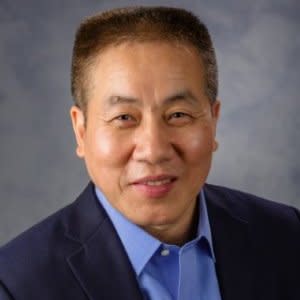
Zuwei Jin, Ph.D.
Dr. Zuwei Jin has 16 years in GE Healthcare (Cytiva), 6 years in Emerson Automation, 3 years in Cognizant specialized in biopharmaceutical process engineering, equipment technology, Process Intensification, Continuous Manufacturing, and PAS/MES system integration, with a particular focus on downstream processing and the integration of process, equipment, and automation design.
At Lisure Technology, he has been involved in the development and application of technologies for chromatography, filtration, inline dilution buffer management, connected processing, pilot-scale process intensification, and continuous biomanufacturing. He is one of the inventors for CBMS, SSTFF, and Tankless TFF. He is also one of the architects behind Lisure M++ Modular POC platform for PI and CM, LetsGo 3.1 turnkey CM solution for clinical manufacturing. His recent work focuses on developing a systematic PI Process Design Framework (PDF) for translating established biopharmaceutical processes into more integrated, connected, and continuous manufacturing architectures.
His work emphasizes the distinction between Process Development—defining how a product should be processed—and Process Design—defining how that process should be executed efficiently and at manufacturing scale. He advocates multidisciplinary collaboration among Process Development, MSAT, Manufacturing, Automation, and Engineering as a foundation for next-generation biopharmaceutical manufacturing.
https://www.linkedin.com/in/zuweijin/
Thank you to our sponsor of this event:

IMPORTANT: Please use your company e-mail address during registration.
END-USER/OAG COMPANY: Must use End-User/OAG Company e-mail address for complimentary registration.
Program Agenda:
5:00 - 6:00 PM Networking and Dinner
6:00 - 7:30 PM Presentations
7:30 - 8:00 PM Q&A Session
Walk-in registrations will be allowed (for $20 surcharge per ticket type).
Cancellation Policy: Full refund or credit voucher for a future program will be given up until 7 days before program; After November 3rd no refunds or credit vouchers will be provided.
For specific site access logistics to access Merck Upper Gwynedd Auditorium, please see below:
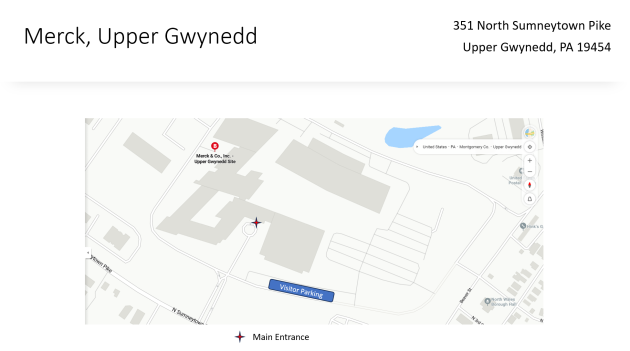
All registered participants will have to enter through the main entrance at Merck Upper Gwynedd & check-in at the Security Desk.
Each attendee will be registered with Merck's Security in advance and will receive a visitor badge.
Merck's Upper Gwynedd Conference Room is located close to the entrance / Security Desk.
Not yet an ISPE Member? Consider joining today! https://ispe.org/membership/join
Location
Merck - Upper Gwynedd Conference Room; Upper Gwynedd Campus, 351 North Sumneytown Pike, Upper Gwynedd, PA 19454