

Vision2030 JEDI Learning Series 2: Equity as a Practice: From Audits to Organizational Transformation
Vision2030 JEDI Learning Series 2: Equity as a Practice: From Audits to Organizational Transformation
Share this event
Need help?
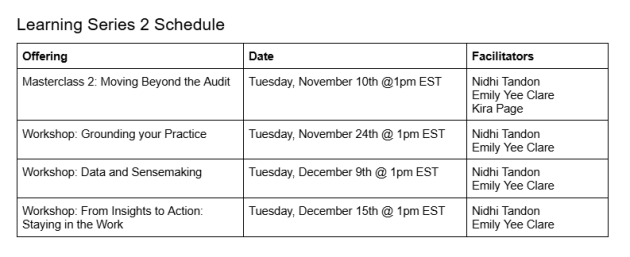
Date: Tuesdays, Nov 10 (90 min), Nov 24, Dec 9, Dec 15 (120 min), 1 PM ET
Cost: Free (Zoom Meeting)
All registrants will be provided with a link to the recording and the slides to the masterclass (Session 1). The recording will be available for 60 days. Sessions 2-4 (workshops) are not recorded.
Environmental organizations are navigating increasing complexity—from climate change and biodiversity loss to changing communities, evolving workforces, Truth and Reconciliation, and growing expectations for collaboration and accountability. Building organizations that can thrive in this environment requires more than good intentions. It requires practical tools, strong leadership, inclusive governance, and the ability to engage meaningfully with the diverse communities we serve.
This fall, Vision2030 invites members to join a new two-part series of practical learning opportunities designed to help move from awareness to action. Developed collaboratively by Sustainability Network, Saltwater Consulting, and Networked Intelligence for Development, this learning series is intended for Board members, Executive directors, managers, HR professionals and staff who want to strengthen organizational culture, inclusive leadership, and equitable impacts over the long term. Each learning series combines expert instruction with practical application, enabling participants to immediately apply what they learn within their own organizations.
Why Participate?
Participants will:
- Gain practical tools that can be applied immediately within their organizations.
- Learn alongside peers facing similar organizational challenges and opportunities.
- Explore approaches that strengthen equitable governance models, leadership, and workplace culture.
- Build confidence in facilitating meaningful organizational change.
- Develop practical action plans tailored to their own organizational priorities.
- Connect equity, reconciliation, and organizational effectiveness toward progressive environmental outcomes and sustained community relationships.
These sessions are practical, collaborative, and action-oriented, with the aims of supporting organizations to move toward lasting organizational change that benefits staff, leadership, partners, and the communities they serve. Each learning series kicks off with a 90-minute introductory masterclass that explores key concepts and practical examples, followed by an interactive three-part learning lab where participants work through tailored approaches, and real organizational scenarios, opportunities and challenges alongside peers.
- Session 1: A 90-minute Masterclass introducing key concepts, current practices and emerging approaches in the NGO sector
- Sessions 2–4: Three highly interactive 120-minute learning labs where participants work through scenarios, practical tools, templates and organizational learning alongside peers
Learning Series 2
Equity as a Practice: From Audits to Organizational Transformation
Many organizations have invested time and resources in equity assessments. Translating findings into meaningful organizational change remains a common challenge.
This series supports organizations in moving beyond checklists towards a practice of meaningful organizational learning and continuous improvement and reflection. Participants will explore practical approaches to conducting organizational equity audits; examining policies, governance, workplace culture, communications, recruitment, leadership, and organizational systems. Importantly, they will learn how to translate findings into realistic, measurable, and achievable action plans.
Together, participants will explore how to centre marginalized voices, troubleshoot real-world scenarios and build both the technical and adaptive skills needed to turn these reflections into realistic and high impact action. Ultimately, equity can strengthen organizational resilience, improve decision-making, build trust with staff and communities, and help organizations better achieve their environmental missions.
These workshops are open to all members of the Sustainability Network. These are not introductory workshops, and will dig down into strategies, examples and working through challenges of organizations committed to advancing JEDI values in their work. They are especially relevant for people who are contributing to or supporting equity audits, equity reflections, or equity related action planning in their organizations.
Masterclass on Equity Audits
Moving Beyond the Audit
Why do so many organizational assessments fail to generate lasting change?
This introductory session explores how organizations can clarify the purpose and scope of their equity work (answering why equity, and for whom?) and move from identifying issues to creating practical, achievable, and measurable improvements.
Participants will gain:
- 5 guiding steps for organizational change
- An understanding of common implementation barriers
- Examples of successful organizational practice
Workshop 1
Grounding your Practice
Learn practical approaches for examining organizational systems, policies and workplace culture and establishing a clear orientation or ‘why’ for your organization’s equity work.
Topics include:
- Defining your organizational ‘why’ for equity work
- Social location and governance
- Identifying priority groups
Participants leave with:
- A draft organizational equity definition and ‘why statement’
- A map of decision-making and power within your organization
- A method for testing and challenging internal assumptions
Workshop 2
Data and Sensemaking
This workshop dives into Step 3 ("What?") and Step 4 ("So What?") of the equity guiding questions cycle. Learn how to make sense of feedback, protect participant safety, avoid "trauma mining," and convert community insights into validated strategic themes.
Topics include:
- Ethical information and story collection
- Sensemaking and theme validation
- Trauma mining
Participants leave with:
- A plan for internal and external feedback and information collection
- A step-by-step sensemaking practice to analyze and validate organizational data
- Case studies for how this may work in different contexts
Workshop 3
From Insights to Action: Staying in the Work
Sustainable organizational change requires ongoing reflection, learning and accountability. The final workshop focuses on Step 5 (“Now What?”) - how to institutionalize equity so it survives staff transitions, strategic plan updates, and shifting funding landscapes.
Topics include:
- Structural change over training
- Iterative implementation
- Managing resistance and criticism
- Sustaining the work
Participants leave with:
- A plan and matrix for prioritizing actions and changes
- Ideas on how to expand the organization’s window of capacity
- A framework to support continuous reflection to maintain your org’s equity work
Practical. Collaborative. Action-Oriented.
Across both learning series, participants will have opportunities to learn alongside peers from environmental organizations across Canada, share experiences, test practical tools and develop resources that can be immediately adapted within their own organizations.
The workshop materials build on approaches developed for the Canadian nonprofit sector and adapted for the unique opportunities and challenges facing environmental organizations today.
Our Presenters
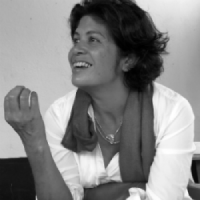
Nidhi Tandon is founder and Executive Director of Networked Intelligence for Development (NID). Nidhi is a gender and rural development specialist with 25+ years field experience. Her practice draws from a cross-section of conducting needs surveys and analyses, designing and facilitating capacity development programs.Nidhi is a diversity consultant and has sat on the Boards of OXFAM Canada, Ontario Nature, Sustainability Network and MSF.
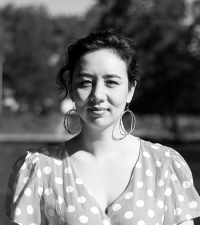
Emily Yee Clare is a Co-Director of Saltwater Consulting. (She/them) is a mixed-race (Hong Konger/White) facilitator working with team dynamics, anti-oppressive change management, conflict engagement & curriculum design. They are passionate about co-creating interactive processes to enable authentic and courageous workplaces & organizing spaces. Emily worked as an Equity Facilitator at UBC and is a faculty member at Concordia’s department of Applied Human Sciences, focusing on social justice and equity related change in organizations.

Kira Page is a Co-Director of Saltwater Consulting. She helps groups move through learning and change and supports nonprofits organizations on strategic planning, organizational structure, conflict resolution, and anti-oppression. She worked as a consultant and communications director for the Centre for Community Organizations (COCo) from 2013-2021 and with the MAAMUU Consulting Group from 2020-2023. She is trained as a mediator, has completed the Leadership Rassembleur training program.