

The rhythm of semiotic landscape
The rhythm of semiotic landscape: hopeful soundscapes and language ideologies among Nepalese followers of a Japanese New Religion
Every morning Nepalese followers of the Japanese New Religion called Tenrikyō (“Teachings of the Heavenly Wisdom”) gather in a small room in Kathmandu, and perform a ritual consisting in singing and dancing codified songs in old Japanese, while also playing traditional Japanese instruments and performing specific hand movements. Ritual songs and gestures indexically refer to the main shrine in Jiba, Tenri city (Japan)—the place where, according to them, God the Parent created humankind—and bring it present in the “here-and-now” (Silverstein 2004) of the space of performance in Nepal.
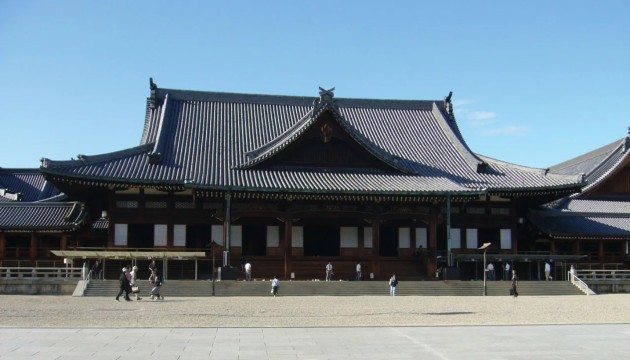
Based on fifteen-month fieldwork, this paper intends to expand the concept of semiotic landscape, by looking at the specific temporalities it produces and the language ideologies it entails. Looking at how space, language ideologies and sounds are combined during the ritual performance, this talk shows how semiotic landscapes have the effect of shaping the subjectivity of practitioners, connecting them to a different place and hoped-for time. It also looks at how the ritual songs are translated from Japanese to Nepalese.
This event is hybrid. You can choose either an in-person ticket or a Zoom ticket.
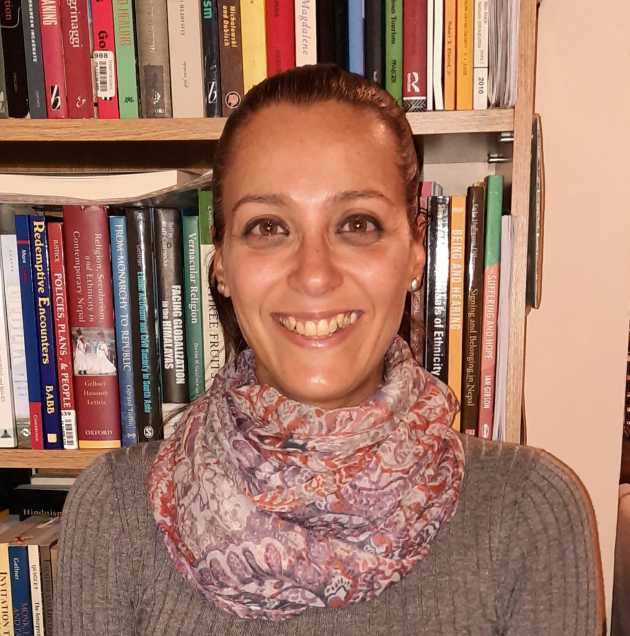
Marilena Frisone is a social anthropologist who is currently working as assistant lecturer in the Study of Religions Department, UCC. She has taught at UCC in modules on Indigenous Religions, Hinduism and Indian Religions, Introduction to Asian Studies, and within the MA programme in Anthropology. She has conducted fieldwork in Nepal, researching on Nepalese followers of Japanese New Religions and focusing on religious conversion, ritual, and medical pluralism. More recently she has also conducted fieldwork among Newar communities in London, researching on language revitalisation, heritage, and food practices in the diaspora.
If you enjoy events about literary translation, take a look at what else we have planned at the Centre, here.
Location
Trinity Centre for Literary and Cultural Translation, D02 CH22