

Romania: Stories, Histories, Translations
Romania: Stories, Histories, Translations proposes a presentation of Romanians in the pre-Romania epoch. |
Romania: Stories, Histories, Translations propune o prezentare a românilor de dinainte de România. |
In the early 19th century, brothers Arthur and Albert Schott travelled through parts of modern-day Romania, gathering fairy tales and folk tales. Their collection of Wallachian fairy tales gathered from the Banat region (then part of the Habsburg Empire), was first published in German in 1845 and translated into Romanian more than a century later. This talk follows collector Arthur Schott's life story, his and his brother's observations about the Romanians, and Schott's travels through various Romanian towns and villages. This talk will also discuss other 19th-century fairy tale collections that have become fundamental to Romanian culture and tradition. Transylvanian stories, Moldavian stories, and Wallachian stories, sometimes written in the transitional alphabet, speak about the mindsets of deeply traditional and eminently oral communities. The fairy tale collections bring together elites and peasants, European trends and local directions, forms of modernisation, and also forms of preserving Romanian folk culture. |
Pornind de la o primă culegere de basme valahe culese din regiunea Banatului, Imperiul Habsburgic, publicată prima dată în limba germană în 1845 și tradusă în română după mai bine de un secol, prelegerea urmărește povestea de viață a culegătorului, observațiile lui și ale fratelui despre români, călătoriile lui prin diverse localități românești. Această prelegere aduce în discuție și alte culegeri de basme de secol XIX, devenite fundamentale pentru cultura și tradiția românească. Povești transilvane, povești moldovenești, povești muntenești, uneori scrise în alfabetul de tranziție, vorbesc despre mentalitățile unor comunități profund tradiționale și eminamente orale. Culegerile de basme aduc laolaltă elite și țărani, direcții europene și direcții autohtone, forme de modernizare, dar și forme de păstrare a culturii române. |
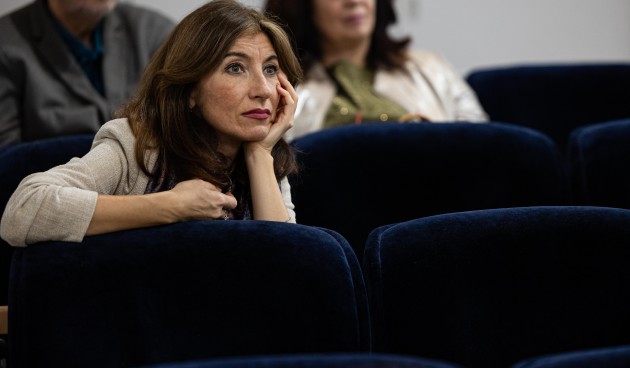
Nicoleta Mușat is a teacher and a field researcher; she trained as a philologist at the Faculty of Letters in Timișoara, Romania. She has conducted research as part of multidisciplinary projects focusing on burial rituals, various types of heritage, and how heritage-making occurs within communities. She has explored human migration while being fascinated by life stories, family archives, and the objects people collect and pass down as heirlooms. Recently, she has turned her attention to methods of teaching the Romanian language through textbooks, how it is transmitted within the family as a heritage language, and how it shapes identity in communities outside the country.
The 'Languages 250 at Trinity (1776-2026)' programme of events marks the 250th anniversary of the establishment of Modern Languages in Trinity College Dublin.
Location
Trinity Centre for Literary and Cultural Translation, D02 CH22