
Zine Activisms: Past, Present, Future
We are delighted to welcome the brilliant team from the Liberating Histories project to host this special workshop at The Feminist Bookshop on Wednesday 5th June. Liberating Histories tells the stories of the Women’s Liberation Movement through UK feminist magazines and connects these stories to women’s activism today. The team will also be joined by brilliant local zinemakers from Aghh! Zine and Tough Cookie Mag.
Sign up now to join their interactive workshop on zines and feminist activism.
Details
In this interactive workshop, we’ll be thinking about the distinctive form of the zine, its relation to feminist activism and the role of print zines in the digital age. We’ll look at a range of feminist zines and magazines from the 1970s and 1980s including Spare Rib, Sappho, Red Rag, Shocking Pink, Mukti and Scarlet Women to reflect on the following questions:
How does the form of the zine/magazine shape feminist debate?
What do things like covers, listings and letters tell us about key campaigns and issues?
To what extent are the legacies of Liberation evident in contemporary feminist media activism?
What, if anything, distinguishes the debates of the Women’s Liberation Movement from contemporary feminist debates?
All materials are included along with drinks and snacks.
This event is hosted in partnership with the University of Sussex, with funding from the Arts & Humanities Research Council (AHRC). This event is a partnership between Liberating Histories and the Business of Women’s Words project which ran between 2018-2021.
Tickets
Tickets are £5.
About
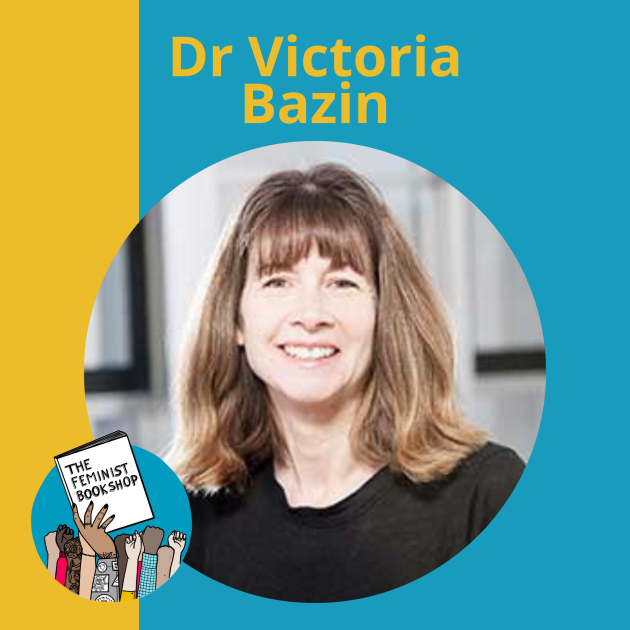
Dr Victoria Bazin
(Principal Investigator on Liberating Histories) Northumbria University
For much of my career my research has focused on the work of Marianne Moore, an American modernist poet who also had a passion for magazines. In fact, she was the editor of The Dial magazine between 1925 and 1919 and it was through her work as an editor that I started to become interested in periodical culture.
I’ve published two monographs, Marianne Moore and the Cultures of Modernity (2010) and Modernism Edited: Marianne Moore and the Dial Magazine (2019) as well as several articles on feminist periodicals in the UK.
I also founded the Network of American Periodical Studies in 2015 with Sue Currell and I’m one of the founding members of the Gendered Subjects Research group based at Northumbria University. In 2016, Mel Waters and I co-edited a special issue of Women: A Cultural Review called Mediated and Mediating Feminisms: Periodical Culture from Suffrage to Second Wave.
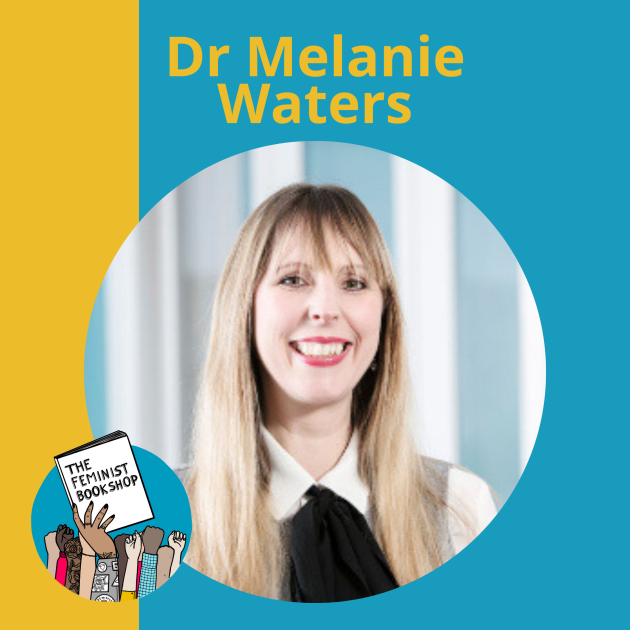
Dr Melanie Waters
(Co-Investigator on Liberating Histories) Northumbria University
Reading, discussing and writing about feminist periodicals has been one of the most enjoyable parts of my career to date. It’s always a privilege to look back over these magazines and encounter – first-hand and in context – versions of debates about women and inequality that we are still having today. My interest in feminism unites all of my research and publications. I am the author, with Rebecca Munford, of Feminism and Popular Culture: Investigating the Postfeminist Mystique (New York: Rutgers University Press, 2014), the editor of Women on Screen: Feminism and Femininity in Visual Culture (London: Palgrave, 2011) and the co-editor of Poetry and Autobiography (London: Routledge, 2011). I have published articles and chapters on a range of periodicals, including 'Yours in Struggle': Bad Feelings and Revolutionary Politics in Spare Rib and Risky Ms.-Ness? The Business of Women's Liberation Periodicals of the 1970s as well as twentieth-century women’s writing, contemporary television and the gothic.
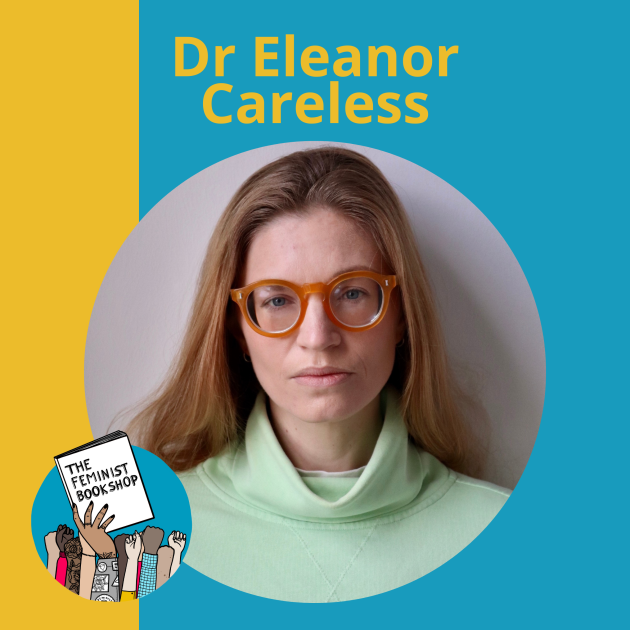
Dr Eleanor Careless
(Research Fellow on Liberating Histories) Northumbria University
Since completing my PhD on the late modernist poetry of Anna Mendelssohn, I have pursued my fascination with the ecosystems of small magazines and activist publishing networks which facilitate experimental feminist writing such as Mendelssohn’s. Mendelssohn was one of the editors of the women’s issue of Frendz, a pioneering example of women-led activist publishing in the early 1970s that, according to some accounts, inspired the founding of Spare Rib magazine.
This connection led me to my involvement as a Research Fellow for the Leverhulme-funded project The Business of Women’s Words: Purpose and Profit in Feminist Publishing (BOWW) based at the University of Sussex and partnered with the British Library, with a focus on Spare Rib and the feminist publishing house Virago. In this role, I led the completion of the Spare Rib Map, the first digital map of the Women’s Liberation Movement and published a history of Feminist Book Fortnight, a pioneering feminist book trade promotion of the 1980s. Before joining ‘Liberating Histories’, I spent three months at the British School of Rome researching the transnational connections between Italian and British feminist magazines of the 1970s-80s.
*
Aghh! Zine
Aghh! Zine is a zine created in the heart of Brighton and Hove, UK, by Nuria Castro and MNamug.
Our Aims:
- To create a safe space to discuss and investigate ourselves, society and subjects that are considered taboo or not mainstream.
- To give a platform for new voices and easy access to publishing opportunities with a focus on queer, BIPOC and underrepresented communities.
MNamug
MNamug (she/her) is a Brighton-based writer, poet, radio host, artist and photographer and is the co-founder of Aghh! Zine. MNamug has a BA in English Language and Literature and MA in Creative and Critical Writing from the University of Sussex. Her work has been featured in Sweet-thang Zine, Writing Our Legacy, Riot Soup, ONCA, Brighton and Metropolis Contemporary Gallery Art Gallery. Her interests are in social justice, amplifying marginalised voices and inspiring others.
Nuria Castro
Nuria Castro (she/her) is a Brighton-based visual artist and the co-funder of Aghh! Zine. Working predominantly with photography, her artistic practise is focused in exploring themes of home, belonging, community and intimacy. With the help of colour, movement and using different formats she captures emotions that she finds difficult to articulate. Her work has been featured in various publications like United, by Work Show Work, Where are you a local? by Silvergrass Press and Letters to Lovers Zine.
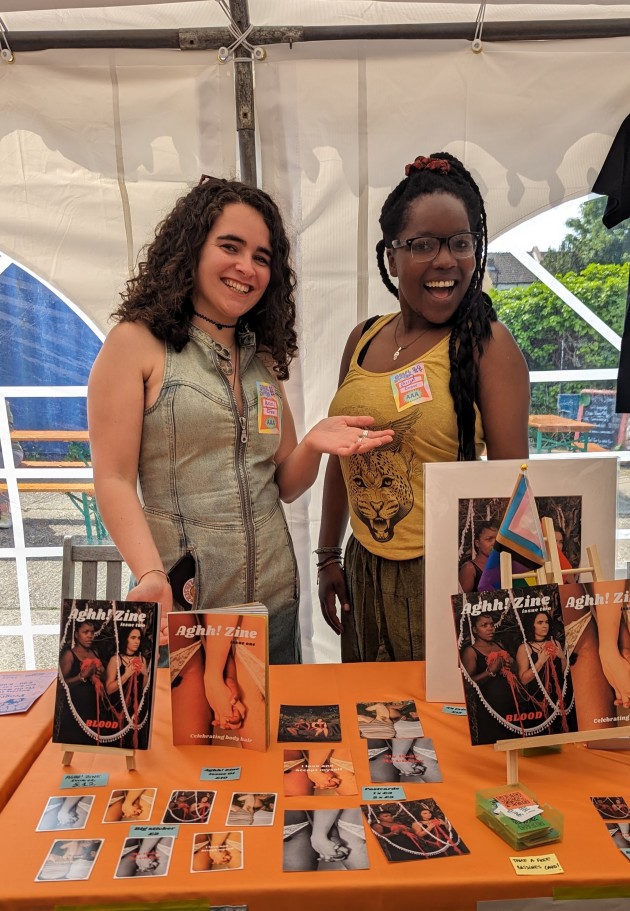
Erin James
Erin James is a Brighton/London -based multi-disciplinary artist, hoping to change the world "one poem at a time". With a focus on the merging of art and activism through their practices, they look to inspire others to use their art for social change. They are the founder of the socially engaged zine Tough Cookie, as well as a poet, actor, DJ, photographer and creative facilitator.
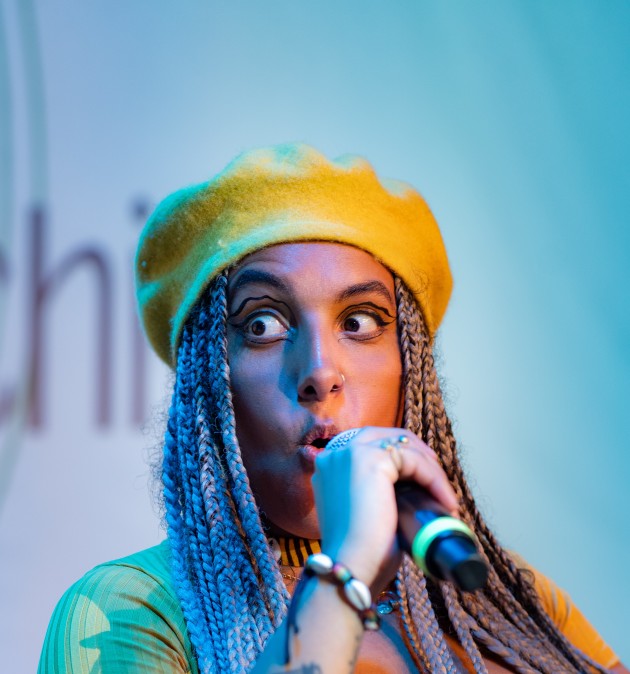
Photograph: @munyamuchati
*
This event is a partnership between Liberating Histories and the Business of Women’s Words project which ran between 2018-2021.
Liberating Histories
Liberating Histories tells the stories of the Women’s Liberation Movement (WLM) through UK feminist magazines and connects these stories to women’s activism today.
The project is led by Dr Victoria Bazin (Principal Investigator), Dr Melanie Waters (Co-Investigator), Professor Kaitlynn Mendes (Co-Investigator) and Dr Eleanor Careless (Postdoctoral Research Fellow), and partnered with LSE Women’s Library.
In this project, they examine the key campaigns and debates of the WLM as they were mediated in magazines. They look at the fight for equal pay, for reproductive rights, affordable childcare and an end to violence against women and girls. They explore how women organised to protest against anti-immigration laws, institutional racism, sexism and homophobia. Feminist magazines shaped these campaigns, creating feminist collective identities and providing spaces for debate. In other words, this project adapts the suffrage rallying cry, ‘deeds not words’, by claiming that words are deeds. These magazines generated the ideas and feelings that mobilised activism.
The Business of Women's Words
The Business of Women’s Words: Purpose and Profit in Feminist Publishing (BOWW) explores the dramatic story of the feminist publishing revolution that unfolded during the UK Women’s Movements of the 1970s, 80s and 90s, and their legacies for social movement inspired creative industries today. This four-year research project (2018-2021), funded by the Leverhulme Trust, looks at the contrasting histories and fortunes of legendary enterprises such as Virago Press and Spare Rib.
It examines how activists called upon cultural and creative business activities to help promote their aims despite feminists’ general antipathy and sometimes hostility to capitalist methods and ideologies. The research unearths activists’ efforts to infuse purpose with profit and to reconcile business and financial imperatives with political, artistic and egalitarian commitments, bringing life to archival treasures at The British Library. The research brings fresh perspectives to the history of feminism, which has previously focused on identities and campaigns, by considering the ways that feminists’ ethical and socialist economic strategies related to creative and entrepreneurial successes.
The Business of Women’s Words also explores the business investments and state support behind feminist cultural production and the hidden role of personal and private income, transnational networking, collective ‘crowd sourcing’, unpaid time, labour and care.
Accessibility
Access to our shop is through a large door (91cm wide) and a ramp (77W x 48L x 12H with 240kg max weight) can be placed for wheelchair access. If you require assistance or the ramp to enter the shop, please ring the doorbell that is located on the right hand side of the front door and one of our staff will come and help you.
Our chair dimensions are the following:
Width - 40 cm
Depth - 41 cm
Legs height - 47 cm
Back of the chair height - 30 cm
Our gender-neutral toilet is located on the basement level, which sadly due to structural restrictions, is not wheelchair accessible. The basement is accessed via 10 stairs with a handrail on the right hand side. We have on-site baby changing facilities in our bathroom.
If you'd like to familiarise yourself with the space beforehand, you can find photos of the space on our website.
We can't wait to see you there!
Location
The Feminist Bookshop, BN1 3FH