

The Great Fire Walk
The Great Fire Walk
Share this event
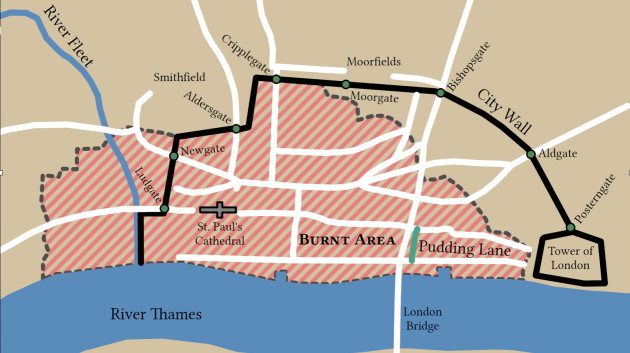
Join acclaimed, bestselling London historian Dr Matthew Green on the 360th anniversary of the Great Fire on the very spot, in Pudding Lane, where the inferno broke out, then trace its itinerary of destruction through London as churches, palaces, streets, tens of thousands of houses — not to mention St Paul's Cathedral itself — fell into its red-hot maw. Hear the most vivid of eye-witness accounts from Samuel Pepys and John Evelyn; consider the new city that, phoenix-like, emerged from the ruins; and feel a tinge of nostalgia for the once-famous landmarks we will never see again.
- With red wine and sparklers for every attendee!
- Read Dr Green's tie-in Guardian feature on the mesmerising buildings lost in the Great Fire here
'O! The Miserable and Calamitous Spectacle!
Mine eyes now saw over 10,000 houses all in one flame!'
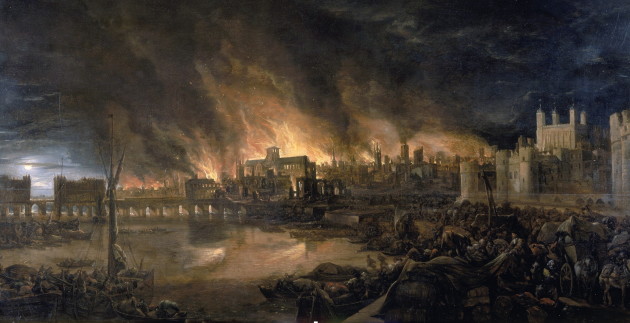
On this day, 360 years ago, the Great Fire began its devastating trail of destruction, blazing through 400 streets, eating 13,000 houses, 87 churches, and 44 livery halls along with most of the great landmarks of the medieval metropolis, ultimately destroying 80 per cent of the walled City. As John Evelyn put it: "London was, but is no more".
Join acclaimed, bestselling historian Dr Matthew Green on the very spot in Pudding Lane where the Fire began as a malignant spark in the oven of the king's baker, Thomas Farriner. Hear a vivid evocation of what the City was like on the eve of the inferno to grasp what was at stake.
Follow the Fire's devastating trail of destruction from the eastern City to Fetter Lane; see the clock of St Dunstan's in the West whose second hand marks the westernmost limit of the Fire's rampage, and the golden boy of Smithfield, marking its northernmost limit.
See an actor leap out at unexpected points to dramatise eye-witness accounts so vivid and starling you'll be able to feel the very flames scorching the hairs on the back of your neck.
Hear how the riverside fortress Baynard's Castle PLUNGED into the Thames, envisage the statues of every single English monarch since Alfred falling from their alcoves as the Royal Exchange filled with 'fire-drops' smashing into a million pieces below; and picture the local lightning storm that broke out above Gothic St Paul's as its roof melted and molten lead streamed down Ludgate Hill as people fled, screaming.
Remember the booksellers who had moved their stock into the Cathedral only for it to go up in flame, dying of broken hearts, their lives ruined and the pigeons, too, who 'loathe to leave their resting places stayed until their wings caught fire and they fell down.'
Visit in the mind the lost landmarks of the old, medieval City — places that would be major tourist sites today if only the Fire had not destroyed them. Picture the spectacular glass-and-gargoyle mansion near Samuel Pepys's house, the Great Conduit of Cheapside, the German city-within-a-city called The Steelyard (now Cannon Street station) and of course the remorselessly Gothic St Paul's Cathedral, one of the biggest buildings ever to have been built in Christendom, and substantially bigger than its replacement.
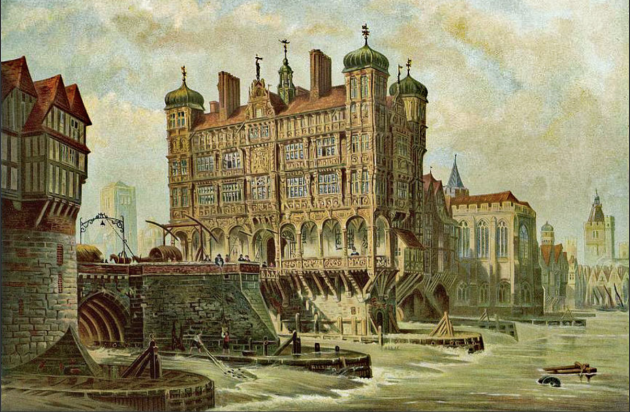
Discover too the buildings which miraculously survived the Fire only to be ripped down by later generations, most strikingly Nonsuch House, the wildly eccentric, gaudily painted, meticulously carved Renaissance palace with Russian-style tulip-bulb cupolas, once the jewel in the crown of London Bridge.
Hear tales of tragic deaths, of European gloating — the French loved to produce 'Scorch Maps', enjoying the spectacle of its rival's demise — of xenophobic murders of Frenchmen carrying 'fireballs' (tennis balls), and of course, of the burial of Pepys's Parmesan cheese.
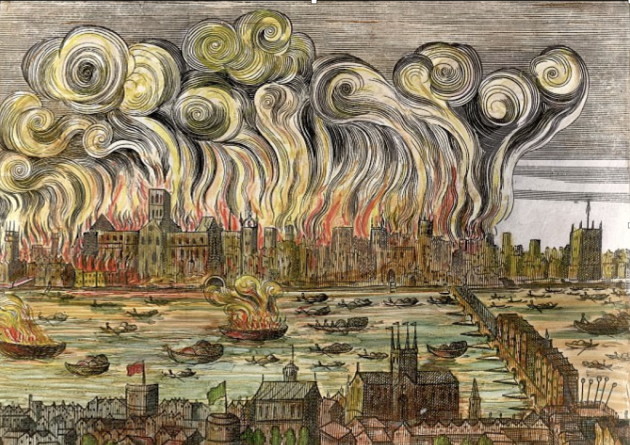
With global heating, and wildfires ravaging Europe, it is only a matter of time before London burns again so the story of the Fire can show us how the city coped last time around and, with the bulb of Wren's St Paul's gauged into the sky behind us, tells the salutary tale of how the biggest city in Europe was able to rebuild itself after the the apocalypse, arising phoenix-like from the smouldering ruins, in a radical new architectural form designed to condition the way people behaved.
'O! The Sky was of a fiery aspect, like the top of a burning oven!'
Location
Monument, EC3R 8AH