
Making Sense of Complex Trauma: Foundations in Trauma-Related Dissociation
Making Sense of Complex Trauma: Foundations in Trauma-Related Dissociation
Share this event
Need help?
Making Sense of Complex Trauma:Foundations in Trauma-Related Dissociation
2 DAY WORKSHOP in Tauranga, New Zealand
Cost: $750 AUD per person - Early Bird $690 AUD until 15 December 2026
PREREQUISITES:
No prerequisites. All therapeutic orientations are welcome. Basic knowledge of trauma therapy is presumed.
Who is this Workshop for?
Mental Health Practitioners who work with trauma and want to become competent working with survivors of complex trauma, whose treatment is complicated and/or who exhibit high levels of internal conflict and symptoms of dissociation. The focus is on adult clients.
Is there any Practicum?
Yes, but it’s optional. There are several opportunities for self-reflection on your caseload and clinical experiences, to try out skills on yourself, and to apply the content to your own work.
What will I learn?
Participants will gain a solid foundation in identifying, assessing and treating complex trauma with dissociative features. Specifically, they will:
- Learn a neurobiology- and attachment-oriented model of complex trauma and trauma-related dissociation
- Get a sound foundation in preparing complex trauma clients for trauma processing by teaching them to regulate their nervous systems with sophisticated application of foundational skills including Grounding, Containment, and physiological Self-Soothing
- Learn to formulate complex trauma and dissociative systems within a model that organises the treatment targets and structures the therapy
- Get a method for working with internal conflict and/or dissociated parts that focuses on harmonising the client’s nervous system and reduces internal conflict
Summary / Overview
Working with people with complex trauma is fraught with challenges for the clinician. While trauma clearly generates the troubling symptoms complex trauma survivors struggle with, it isn’t always possible to work on the trauma right away. The solution to these challenges comes with having a sound understanding of the neurobiology of trauma and how it can cause internal conflict and self-defeating and therapy-interfering behaviour. In this workshop, Catherine uses the neurobiology of trauma to develop a model for complex trauma formulation that sets out your therapy goals with clarity. She discusses special considerations for applying trauma therapy, like using the therapeutic relationship strategically, clearly articulating the process of therapy, and organising the pacing and structure of the therapy appropriately. The ‘how to’ of therapy is clearly illustrated with video case examples of specific skills. This training provides participates with the foundational skills for treating complex trauma with dissociative features.
Detailed Content Summary
Part 1: Understanding your Client’s Nervous System
- Neurobiological formulation of trauma
- Grounding and Containment
- Homeostasis and Balance as the Foundations of Regulation
- Attachment and Regulation
- A Case Example to illustrate
Part 2: Formulation
- Model for Mapping Clients’ Internal Worlds
- Case Example of the Model
Part 3: Organising the Therapy
- Phases of Therapy
- Structuring the Therapy
Part 4: Therapeutic Relationship
- Relational Adversity and Triangulation
- Boundaries and Boundary Violations
Part 5: Parts Work: Therapy to Harmonise the Nervous System
- 7 Elements of Parts Work in detail
Part 6: Common Challenges with Parts Work
- Working with Blocks
- Angry Parts
- Shame Parts
- Child Parts
About the Trainer
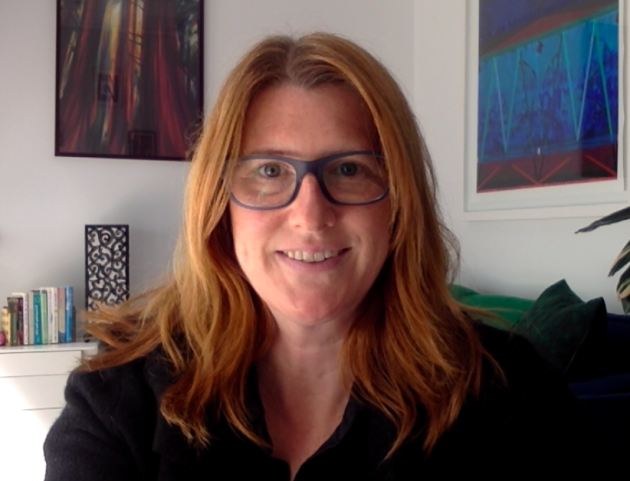
Catherine has a passion for helping people to achieve wellbeing by harnessing the brain’s healing potential. She is a clinical psychologist in private practice in Brisbane, who works with adults who have experienced adversity and trauma, often in childhood and throughout development. She is the director of Wellbeing Wisdom, a business devoted to training psychologists to provide high level interventions in trauma and dissociation while practicing thoughtful self care, and to sharing wisdom from the therapy room with the general public.
Catherine offers training and consultation across Australia and internationally on the treatment of trauma and dissociation. She graduated from the University of Toronto, Canada, where she studied philosophy and neuroscience. She completed a Masters Degree at Dartmouth College, USA in Biological and Brain Sciences, where she completed her thesis on the functional neuro-imaging of social cognition. She obtained a PhD from the University of Queensland, in clinical psychology and clinical neuropsychology, where her thesis developed neuropsychological assessments for social and emotional difficulties following traumatic brain injury. She is a an EMDR consultant with the EMDR Association of Australia, and a member of the Australian Association of Psychologists, and the International Society for the Study of Trauma and Dissociation.
Catherine’s current therapeutic work is founded on her lifelong interests in the philosophy of consciousness and the neurobiology of social cognition. She works integratively, and draws on therapies whose mechanisms are consistent with brain science. She uses EMDR therapy, embodied mindfulness therapies, Parts Work Therapies, Coherence Therapy, Compassion Focussed Therapy, Schema Therapy and Cognitive Behavioural Therapy in her treatments.
She develops her clinical case conceptualisations from a social neurobiology perspective, and avidly follows developments in neuroscience to guide her therapeutic and educational projects.
Location
TBA, Tauranga, New Zealand