
What Actually Heals? Freud, Neuroscience, and the Talking Cure: A Lecture and Discussion with Professor Mark Solms
What Actually Heals? Freud, Neuroscience, and the Talking Cure: A Lecture and Discussion with Professor Mark Solms
Share this event
What Actually Heals? Freud, Neuroscience, and the Talking Cure with Prof. Mark Solms
A live 1-hour lecture by Prof. Mark Solms followed by a 1-hour conversation about his new book The Only Cure: Freud and the Neuroscience of Mental Healing — recordings will be available for 90 days for registrants.
"Admittedly, it is not altogether a matter of regret that one has opted for psychology. There is no greater, richer, more mysterious subject, worthy of every effort of the human intellect, than the life of the mind." From Sigmund Freud's letter to Albert Einstein (March 6, 1929). Solms, Mark. The Only Cure: Freud and the Neuroscience of Mental Healing (p. 262). Pegasus Books, Ltd., NY, NY.
"Extraordinary on so many different levels. How minds change is the question at the center of this book. It's changing mine." Brian Eno, producer, composer, and artist.
"A scholarly masterpiece, written by the world's greatest living authority on Freud." Karl J. Friston, the world's most cited neuroscientist.
"A must-read for anyone involved in or interested in mental health." Cristina Alberini, professor of neural science at NYU.
"...Solms....reminds us that Freud was a biologist and, wonder of wonders, that his ideas are part of the foundation of neuroscience." Antonio Damasio, author of Descartes' Error.
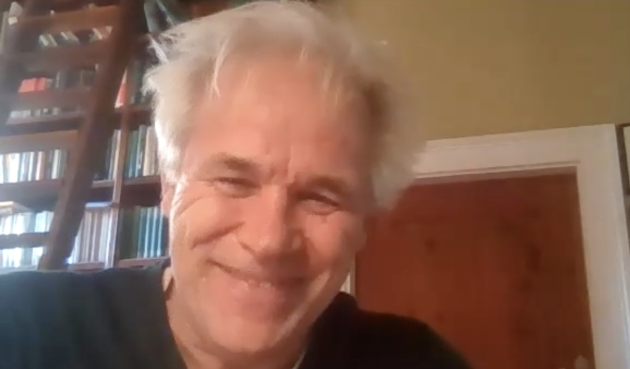
Mark Solms, PhD:
- Chair of Neuropsychology: Department of Psychology, University of Cape Town (UCT)
- Director: Neuroscience Institute, University of Cape Town
- Director and Training Analyst: South African Psychoanalytic Association
- Co-Chair: International Neuropsychoanalysis Society (NPSA), an organization he co-founded in 2000
- Honorary Lecturer: Neurosurgery department at St Bartholomew's Hospital and the Royal London School of Medicine
- Senior Fellow: British Psychoanalytic Society
Most of us were trained to see Freud as a historical figure whose theories did not survive scientific scrutiny. Yet nearly every therapist today, whatever the modality, relies on ideas he introduced: that symptoms have meaning, that the past lives on in the present, and that talking within a relationship can change how a person feels and lives.
Mark Solms is a psychoanalyst and neuropsychologist, Chair of Neuropsychology at the University of Cape Town, and founder of the field of neuropsychoanalysis. In The Only Cure, he argues that modern brain science is confirming the core of what Freud discovered about mental suffering, even where Freud's specific theories were wrong. His provocative claim is that lasting relief comes only from treatment that finds and addresses the subjective causes of a person's suffering.
This webinar is not about defending psychoanalysis. It is about what works in psychotherapy, explained by one of the few people who can speak with authority about both the brain and the consulting room. Whether you practice CBT, EMDR, ACT, somatic, couples, or integrative therapy, you will leave with a clearer understanding of why your best work succeeds.
Dr. Solms' lecture has three parts followed by conversation and audience questions:
1.Why symptoms make sense. Feelings as the brain's signal of unmet needs, and symptoms as protective solutions rather than defects.
2.How talking changes the brain. What neuroscience tells us about emotional experience, prediction, memory reconsolidation, and the therapeutic relationship as the vehicles of lasting change.
3.What we've gotten wrong, and what to take home. Where Freud went astray, where the broader field has also erred, and practical lessons for therapists of every orientation.
Co-Sponsored with:
California Psychological Association
San Francisco Psychological Association
San Francisco Psychotherapy Research Group
University of California Division of Palliative Medicine
When: Sunday, November 15, 2026 · 9–11 AM Pacific · Noon–2 PM Eastern · 7–9 PM South Africa (SAST)
Where: Online
General Registration: $75.
Members of co-sponsoring organizations, when registering to pay, can register with their organization's code at "SFPA" or "UCSF" or "CPA/SFPRG"
Where your registration goes
All profits from this webinar will be donated to the International Rescue Committee’s work in Ukraine and to the Lviv Titans wheelchair basketball team in Lviv, Ukraine.
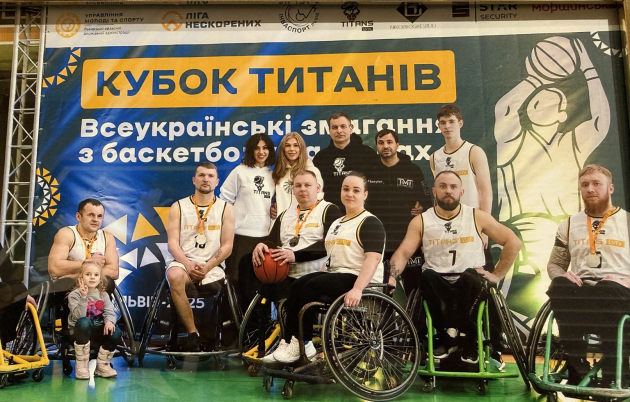
The Lviv Titans at the Titans Cup, an all-Ukraine wheelchair basketball tournament, Lviv, 2025.
Credit: 2 CPD units for psychologists, at no additional charge.
Register: tickettailor.com/events/bullardpsychologyconsultantsinc/2494109
CPD learning objectives
The program offers 2 CPD units for California-licensed psychologists. (For registrants of other states, please check with your own respective governing agencies.)
By the end of this program, participants will be able to:
1.Explain how contemporary affective neuroscience frames feelings as signals of unmet needs, and describe one clinical implication of viewing symptoms as protective solutions.
2.Describe at least two mechanisms, such as prediction updating and memory reconsolidation, by which psychotherapy is thought to produce lasting change in the brain.
3.Identify two of Freud's theoretical errors and two of his enduring clinical insights, and assess their relevance to current practice.
4.Apply at least one principle from the program to their own clinical work, regardless of theoretical orientation.
Course level: Intermediate - Advanced. Suitable for licensed psychologists, psychiatrists, LMFTs, LCSWs, LPCCs, chaplains and spiritual care professionals, and nurses.
Discussant: David G. Bullard, PhD. Clinical Professor of Medicine and of Psychiatry and Behavioral Sciences, UCSF Weill Institute for Neurosciences. Recipient of 2026 California Psychological Association's Chuck Faltz Lifetime Achievement Award, and of the 2023 Distinguished Contribution to Psychology Award.