Everything you need to run a safe and successful event | Including health & safety checklist
This guide breaks the process down into manageable steps, covering practical event safety planning, including legal responsibilities and onsite checks. You’ll also find a downloadable event health and safety checklist template to support your planning process.
Health and safety planning helps events run more smoothly for everyone involved, from attendees and staff to suppliers and performers working onsite. Every event carries some level of risk, whether you’re hosting a small community gathering or a large public festival. Taking time to prepare properly helps organisers reduce those risks and manage events more confidently on the day itself.
This guide breaks the process down into manageable steps, covering practical event safety planning, including legal responsibilities and onsite checks. You’ll also find a downloadable event health and safety checklist template to support your planning process.
Why health and safety matters at events
Good health and safety planning helps events feel welcoming, organised, and well managed from the moment attendees arrive. Most guests will never notice the preparation behind safe crowd flow, trained staff, emergency procedures, or accessible entry points, but these details shape the overall experience throughout the day.
As an event organiser, you also have a legal duty of care to consider the safety of everyone involved in your event, including attendees, staff, volunteers, contractors, suppliers, and performers. When you prepare properly, you and your team can respond more confidently to unexpected situations without unnecessary disruption onsite.
What are the health and safety requirements for events?
Health and safety requirements for events vary depending on factors like venue type, audience size, and the nature of the event itself. However, most organisers are expected to identify potential risks, put sensible precautions in place, and prepare clear procedures before attendees arrive onsite.
Risk assessments and emergency planning
Most events will need a risk assessment covering setup, live event hours, and breakdown. Organisers are also usually expected to prepare emergency procedures for situations like medical incidents, fire, severe weather, or evacuation scenarios. Depending on the event, this may also include arranging first aid cover, reviewing fire safety measures, and confirming safe crowd capacity limits.
Venue safety and operational responsibilities
Event organisers should review how attendees, staff, suppliers, and emergency services will move safely through the venue or site. This can include checking emergency exits, managing busy areas and queues, coordinating contractors safely, and confirming suitable insurance cover is in place. Many events also maintain procedures for recording incidents, accidents, or safeguarding concerns during the event itself.
Additional requirements for some events
Some events may require extra permissions or specialist planning depending on the activities involved. For example, events selling alcohol may need a Temporary Event Notice or premises licence, while outdoor events could also require traffic management plans, security staff, temporary structure sign-off, or noise management procedures. Accessibility should also be considered throughout the planning process to help ensure all attendees can move around the event safely and comfortably.
Your event health and safety plan
When planning event health and safety, you might hear the terms checklist, risk assessment, and event management plan get used interchangeably. But each of these documents actually serves a different purpose during the planning process. Understanding how they work together makes event safety planning much easier, especially when you’re working with venues, suppliers, local authorities, or larger event teams.
Event health and safety checklist
When planning event health and safety, you might hear the terms checklist, risk assessment, and event management plan used interchangeably. However, each document serves a different purpose during the planning process. Understanding how they work together can make event safety planning much easier, especially when coordinating venues, suppliers, local authorities, or larger event teams.
Event health and safety checklist
An event health and safety checklist acts as a practical working document that helps organisers track important operational tasks before, during, and after an event.
A checklist might include items like:
- Emergency exits checked before opening
- First aid provider confirmed
- Fire extinguishers accessible onsite
- Contractor insurance documents received
- Radios distributed to staff members
- Temporary structures inspected
This type of checklist helps teams stay organised and reduces the chance of important tasks being missed during busy setup periods.
Event risk assessment
A risk assessment focuses on identifying potential hazards and documenting the steps you’ll take to reduce the likelihood of harm.
Risk assessments usually consider:
- Who could be affected by a hazard
- How likely a risk is to occur
- What control measures are already in place
- Whether additional precautions are required
For example, a risk assessment may cover crowd congestion near entrances, trailing electrical cables, vehicle access routes, poor weather conditions, or fire risks linked to catering equipment.
Event management plan (EMP)
An event management plan, sometimes shortened to EMP, brings all operational and safety information together into a single document. Larger events often require a more detailed management plan, particularly where local authorities or emergency services are involved.
An EMP may include:
- Site maps and layouts
- Emergency procedures
- Crowd management plans
- Communication processes
- Accessibility arrangements
- Traffic management details
- Contact lists for suppliers and staff
- Setup and breakdown schedules
This document gives organisers and stakeholders a shared operational framework for how the event will run safely from start to finish.
Event health and safety checklist
A structured event health and safety checklist is crucial for tracking important tasks before, during, and after an event. Here’s what a checklist should cover 👇. Be sure to download a printable version (with space for notes) below.
1. Pre-event planning
Good preparation creates a safer and more organised foundation for the rest of the event. This stage should begin as early as possible, especially for outdoor events, public gatherings, or events involving multiple suppliers.
- Define the event scope: Confirm the event type, expected audience size, operating hours, site layout, and planned activities before detailed planning begins.
- Confirm venue suitability: Review whether the venue can safely support your expected attendance, facilities, equipment requirements, and accessibility needs.
- Assign health and safety responsibilities: Identify who will oversee event safety planning and manage operational decisions throughout the event.
- Complete a risk assessment: Document potential hazards and outline practical control measures for setup, live event hours, and breakdown activities.
- Create an event management plan: Prepare a working document covering staffing, emergency procedures, site operations, supplier coordination, and communication processes.
- Confirm insurance coverage: Check public liability insurance and confirm external suppliers also carry suitable cover where required.
- Review licensing requirements: Confirm whether your event requires licences or permissions for alcohol sales, entertainment, road closures, or public spaces.
- Notify local authorities if required: Some councils or emergency services may require advance notice for larger public events or outdoor gatherings.
- Review safeguarding procedures: Consider how children, vulnerable adults, performers, or isolated attendees will be supported.
- Confirm accessibility arrangements: Review accessible entrances, toilets, seating areas, viewing spaces, and communication support for attendees.
- Plan emergency procedures: Prepare evacuation plans and emergency response processes for medical incidents, severe weather, or fire safety concerns.
- Book first aid provision: Arrange appropriate first aid cover based on audience size, event type, and location.
- Review weather contingencies: Outdoor events should put contingency plans in place for heat, heavy rain, strong winds, or sudden temperature changes.
- Create a communication plan: Confirm how staff members, stewards, suppliers, and emergency contacts will communicate during live operations.
- Confirm contractor competence: Request insurance documents, certifications, and safety information from suppliers and contractors working onsite.
2. Site and venue safety
Site safety checks should take place before attendees arrive and continue throughout the event where necessary. Even smaller venues benefit from structured walkthroughs before opening.
- Emergency exits marked: Make sure exits are visible, accessible, and supported by suitable signage throughout the venue or site.
- Escape routes unobstructed: Check that equipment, stock, furniture, or temporary barriers do not block emergency routes.
- Fire extinguishers accessible: Confirm suitable fire safety equipment is available and positioned appropriately onsite.
- Electrical equipment tested: Review generators, lighting systems, extension leads, and temporary power supplies before use.
- Temporary structures checked and signed off: Check stages, marquees, fencing, barriers, and temporary seating areas have been installed safely.
- Lighting levels suitable: Make sure entrances, exits, walkways, toilets, and parking areas remain safely lit throughout operating hours.
- Slip and trip hazards controlled: Secure loose cables, uneven flooring, temporary ramps, and wet surfaces where possible.
- Toilets maintained: Provide suitable toilet facilities and arrange regular cleaning throughout the event.
- Waste management arranged: Position bins appropriately and create procedures for rubbish collection and disposal.
- Crowd flow assessed: Review busy areas, pinch points, entrances, exits, and queue locations before opening.
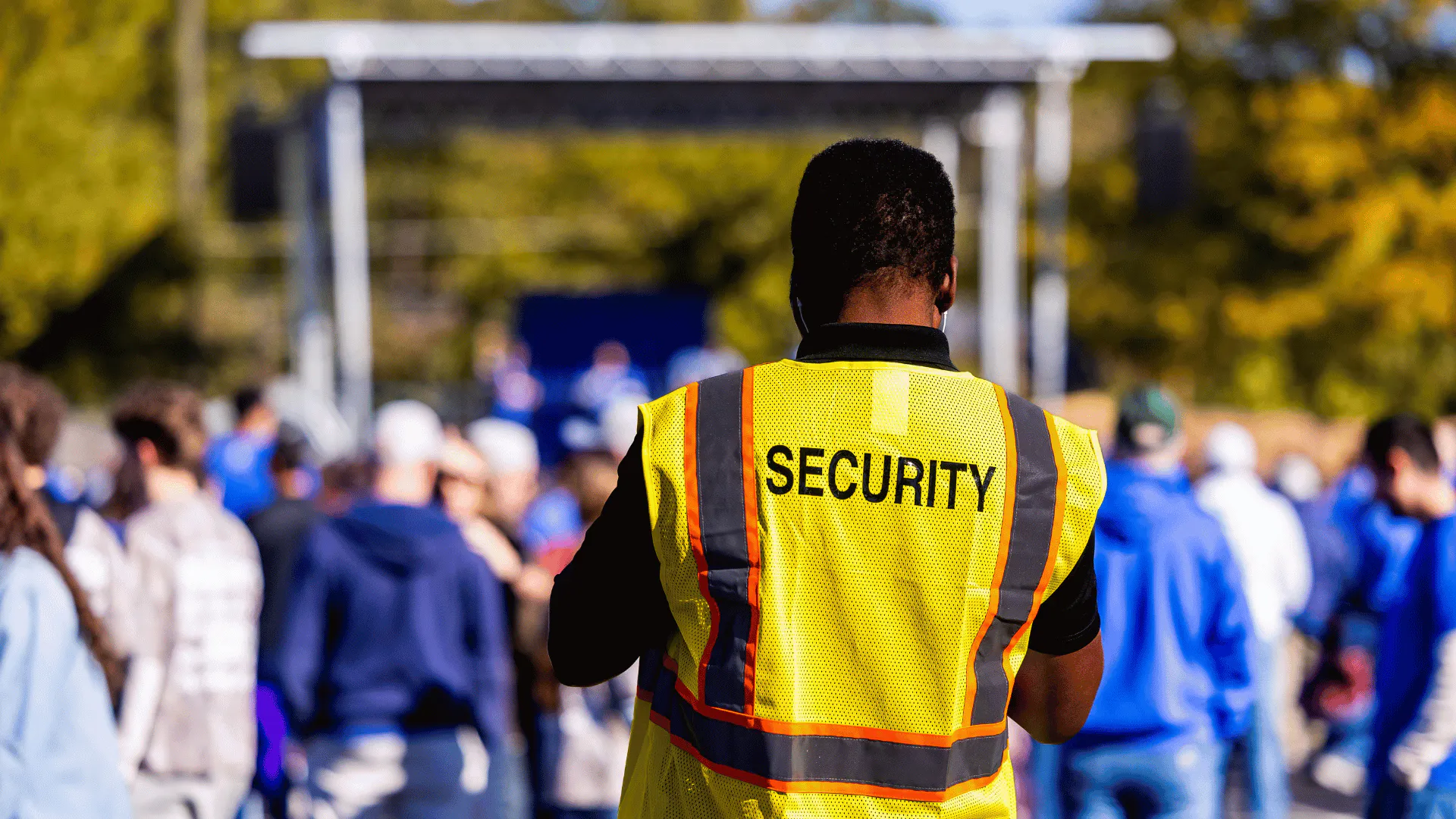
- Security and stewarding in place: Confirm staffing levels are suitable for the audience size and event environment.
- Vehicle access controlled: Separate pedestrian routes from supplier vehicles and maintain emergency access where required.
- Barriers and fencing checked: Inspect crowd barriers, perimeter fencing, and restricted access zones before attendees arrive.
- Signage installed: Display important directional, accessibility, safety, and welfare information across the site.
3. Attendee safety
Attendee safety planning should support both comfort and practical risk management throughout the event experience. Good communication and organised crowd movement can help reduce pressure in busy areas.
- Safe entry and exit procedures: Review how attendees will enter, queue, and leave the venue safely.
- Capacity monitoring in place: Track attendance numbers and avoid overcrowding in busy spaces.
- Queue management planned: Use barriers, signage, staff members, or timed entry systems where necessary.
- First aid points visible: Make sure attendees can easily identify medical support locations onsite.
- Water available where needed: Provide drinking water access for outdoor events, festivals, sporting events, or hot weather conditions.
- Accessibility support available: Confirm accessible facilities and support processes are functioning properly during live event hours.
- Lost child and vulnerable person procedures prepared: Brief staff members on safeguarding and welfare escalation processes.
- Incident reporting process active: Record accidents, near misses, complaints, or safety concerns consistently.
- Security escalation procedures confirmed: Staff should understand how to respond to disruptive behaviour or emergency situations.
- Communication systems tested: Check radios, phones, announcement systems, and backup communication processes before opening.
4. Staff and contractor safety
Staff members, contractors, volunteers, and suppliers play important roles in maintaining a safe event environment. Good communication before opening can reduce confusion during busy periods.
- Staff briefing completed: Share important operational, safety, and emergency information before the event begins.
- Emergency roles assigned: Confirm responsibilities for evacuation, medical support, crowd management, and incident reporting.
- Radios and communication tools distributed: Make sure key staff members can contact each other quickly.
- PPE available where required: Provide suitable protective equipment for setup crews, security staff, caterers, or contractors where necessary.
- Contractors briefed on site risks: Share relevant safety information with suppliers before work begins onsite.
- Manual handling risks reviewed: Identify lifting risks linked to staging, stock, equipment, or temporary infrastructure.
- Welfare facilities provided: Arrange suitable breaks, refreshments, toilets, and rest areas for staff and contractors.
- Contact lists distributed: Share emergency contact details and escalation procedures with relevant team members.
5. Emergency planning
Emergency planning helps organisers respond more confidently if unexpected situations arise while the event is running. Procedures should be practical, accessible, and shared with relevant staff members before opening.
- Evacuation procedure documented: Prepare clear instructions for evacuating attendees safely if required.
- Severe weather plan prepared: Outdoor events should outline actions for storms, heat, flooding, or strong winds.
- Fire response procedures confirmed: Staff should understand how to report fires and support evacuation processes.
- Medical emergency process planned: Confirm how first aid teams, security staff, and emergency services will communicate.
- Missing person procedures prepared: Create a welfare process for vulnerable attendees or separated children.
- Power failure contingency arranged: Consider backup lighting, generator support, and communication systems during outages.
- Emergency vehicle access maintained: Keep important access routes unobstructed throughout the event.
- Key contacts accessible: Maintain updated contact lists for suppliers, emergency services, venue teams, and organisers.
- Incident log prepared: Record accidents, disruptions, and emergency responses consistently.
6. During the event
Live event monitoring helps organisers respond quickly to changing conditions and operational issues as they develop throughout the day.
- Safety checks completed before opening: Review the venue or site before attendees arrive.
- Crowd numbers monitored: Track attendance levels and pressure points during busy periods.
- Exits remain accessible: Continue checking emergency routes throughout the event.
- Incidents logged consistently: Record accidents, complaints, medical situations, or security concerns accurately.
- Noise levels monitored where required: Outdoor events or amplified performances may require ongoing monitoring.
- Communication systems functioning: Check radios, phones, and announcements regularly during live operations.
- Weather conditions monitored: Outdoor events should continue reviewing forecasts and onsite conditions.
- Toilets and welfare facilities maintained: Monitor cleanliness, stock levels, and attendee access throughout the day.
- Hazards addressed quickly: Respond promptly to spills, damaged equipment, overcrowding, or unsafe conditions.
7. Post-event
Post-event safety procedures help teams close the event site responsibly and improve future planning processes.
- Safe breakdown procedures followed: Manage vehicle movements, equipment removal, and contractor activity carefully after the event ends.
- Site cleared safely: Remove waste, temporary infrastructure, and leftover materials responsibly.
- Incidents reviewed: Assess accidents, complaints, medical issues, or operational disruptions after the event.
- Contractor sign-out completed: Confirm suppliers and contractors have finished work safely before leaving the site.
- Debrief meeting held: Review operational successes, challenges, and team feedback after the event.
- Lessons learned documented: Record improvements that could support future event planning and safety procedures.
Common event health and safety mistakes
Good event safety planning comes down to thorough preparation and clear communication across the entire event team. Small oversights can create unnecessary pressure during setup or live event hours, especially when teams are working across busy venues or outdoor sites.
- Leaving risk assessments too late: Early planning gives organisers more time to fix practical issues before suppliers, staff, and attendees arrive onsite.
- Underestimating crowd flow: Entrances, toilets, bars, food vendors, and exits can become congested quickly without proper planning.
- Assuming venues handle everything: Venues may provide basic safety support, although organisers still need to review responsibilities carefully.
- Poor contractor communication: Suppliers should understand site rules, emergency procedures, access times, and operational expectations before setup begins.
- No wet weather contingency plan: Outdoor events benefit from practical backup plans for heavy rain, strong winds, heat, or muddy ground conditions.
- Forgetting accessibility requirements: Accessible routes, viewing areas, toilets, and support processes should be considered during early planning stages.
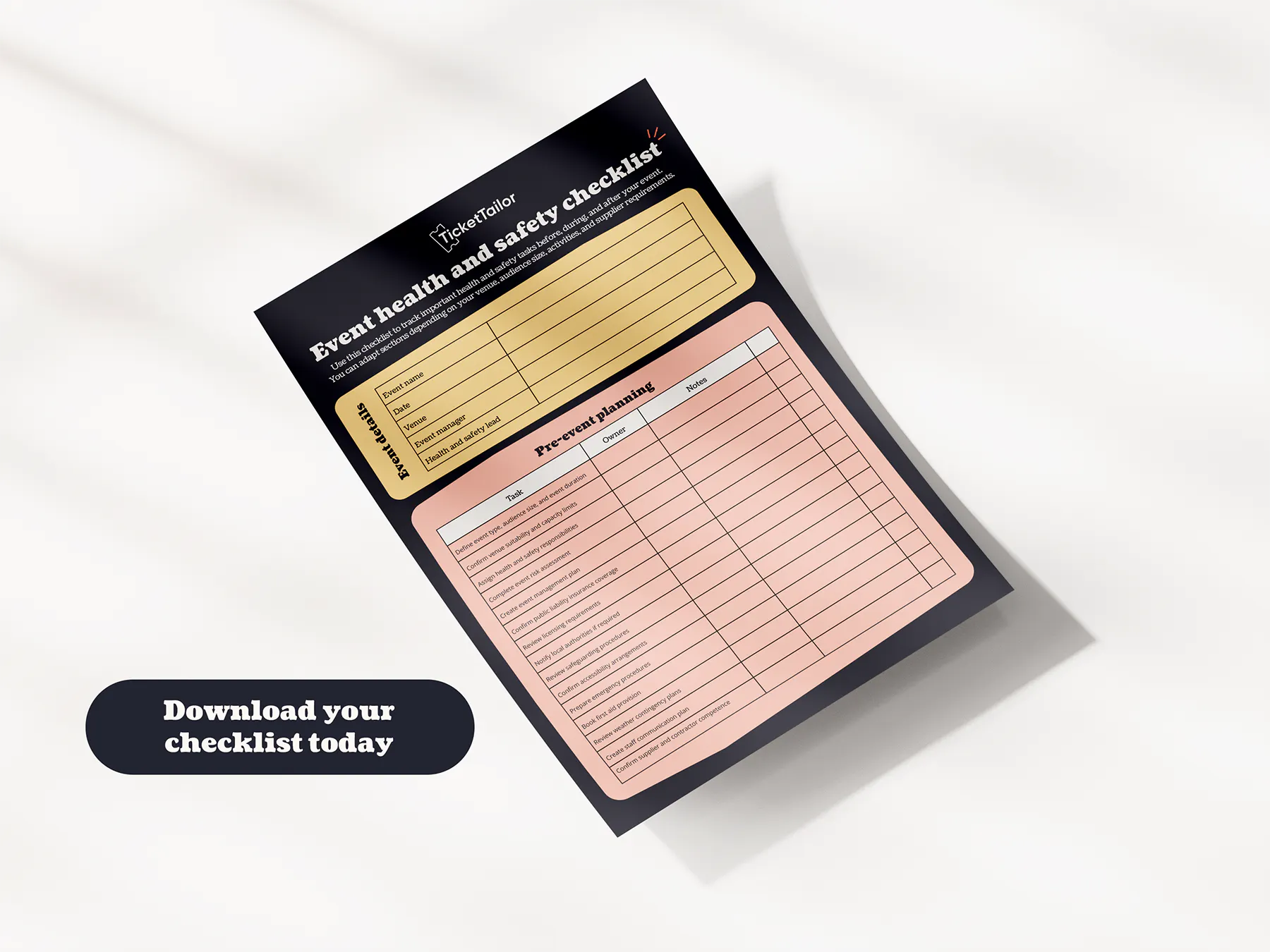
Download your free event health and safety checklist
Download the free event health and safety checklist below
Event planning made smoother with stress-free ticketing
Good health and safety planning helps events run more smoothly behind the scenes, but coordinating all the moving parts of an event can still become time-consuming as plans grow. Using reliable event software can reduce administrative pressure and give you more time to focus on operational planning and attendee experience.
Whether you’re organising international festivals or village fêtes, Ticket Tailor helps simplify ticketing so you can focus on running an incredible, well-thought-out event that attendees remember for all the right reasons. 💫
Get started by creating your free Ticket Tailor account today >