

Is Zeffy actually free? Fees, price and who really pays
Zeffy runs a tipping model and asks supporters and ticket buyers to cover their fees. The fairest way to put it is Zeffy is “free for the event organiser, but your supporters pay”, rather than “Zeffy is free”. So, whilst there is technically no platform fee, no subscription and no card processing fees to pay, Zeffy is a for-profit organisation that has to cover its cost. These costs are covered by Zeffy asking every ticket buyer at checkout to add an optional contribution, which on the event pages we looked at came pre-filled at around 15% to 17% of the order.

Zeffy runs a tipping model and asks supporters and ticket buyers to cover their fees. The fairest way to put it is Zeffy is “free for the event organiser, but your supporters pay”, rather than “Zeffy is free”. So, whilst there is technically no platform fee, no subscription and no card processing fees to pay, Zeffy is a for-profit organisation that has to cover its cost. These costs are covered by Zeffy asking every ticket buyer at checkout to add an optional contribution, which on the event pages we looked at came pre-filled at around 15% to 17% of the order.
We rather admire how neatly Zeffy has put this together. A charity hears “free”, signs up in minutes, and Zeffy says more than 100,000 organisations now use it. If you’re comparing it with other ticketing platforms, though, the questions that matter are who ends up paying, how much does that come to on a ticket, and whether it’s actually any cheaper than paying a flat fee.

How does Zeffy make money if it claims to be free?
Zeffy makes its money from the optional contribution it asks supporters to add at checkout, and that contribution is its only source of income.
That has to be the case, because Zeffy is a for profit business. It’s a Certified B Corp™ (as are we, as it happens), it has venture capital behind it, and it employs a team with its head office in Montreal. Salaries, support, development and card processing all cost money, so the money has to come from somewhere. According to Zeffy’s UK pricing page, on average two in three donors leave a contribution. That’s a clever piece of pricing design, because Zeffy has set the model up so the cost passes to the ticket buyer and the charity pays nothing.
But what a lot of event organisers don’t realise is that ticketing platforms allow you to pass on costs to ticket buyers in the same way. They’re just not marketed as 100% free.
The detail that matters for ticketing is what that cost is. From the research we’ve done, the contribution made by ticket buyers comes pre-filled at roughly 15% to 17% of the order, though this does vary dynamically depending on factors such as your ticket price or means of payment. Ticket buyers or supporters as Zeffy calls them, can lower it or set it to zero, but they do have to spot it and change it. The average contribution, according to Zeffy’s blog post on how it makes money, is around 4%, well below the pre-fill, which suggests plenty of people adjust it.
Zeffy is only for registered charities and not-for-profits, and it now runs in the UK as well as the US and Canada. So what does a 4% average actually look like on a ticket and how does it compare to the usual pricing models of other ticketing companies?
What does Zeffy charge a charity and is it more expensive than traditional ticketing platforms?
Zeffy doesn’t charge a charity or non-profit anything. Zeffy charges the charity no platform fee, no subscription, no transaction fee and no card processing fee, and that is what the “100% free” on its pricing page refers to. We think that’s a fair description of the charity’s side of the deal.
The fairest way to put it is Zeffy is “free for you, but your supporters pay”, rather than “Zeffy is free”. The cost of running the platform and covering card fees hasn’t gone away, it has moved from the organisation to the people buying tickets.
But the same is possible in ticketing platforms including Ticket Tailor. By switching a simple toggle you can pass on the costs to ticket buyers essentially making the platform 100% free for you.
It’s the same end results, but just a different way of positioning them.
How much does Zeffy cost the people buying tickets?
Because the contribution on Zeffy is a percentage of the order, it grows with the ticket price. Here’s what it looks like at the 4% average and at the pre-filled range we saw:
What Zeffy’s contribution adds to a ticket
Ticket price
Contribution at 4% (average)
Contribution at 15% to 17% (pre-fill)
£10
40p
£1.50 to £1.70
£20
80p
£3.00 to £3.40
£50
£2.00
£7.50 to £8.50
A supporter who lowers the contribution to the average pays a modest amount on a £10 ticket. One who leaves the pre-fill alone on a £50 ticket pays around four times the average. Both are making a free choice, but it’s worth knowing the range exists when you’re telling your supporters what to expect.
Is Zeffy actually cheaper than Ticket Tailor?
So the reality is, we can’t give a definitive yes or no because it depends on a) how much your ticket price is and b) what % contribution a ticket buyer or supporter decides to leave. Because the contribution % isn’t fixed it could go either way. However if we apply some averages and common ticketing scenarios, we can give a very good indicator.
For a charity selling 500 tickets, Zeffy’s average contribution costs supporters less on tickets under about £16, and Ticket Tailor’s flat fee plus card processing costs them less on anything above that. The gap widens as prices rise.
We charge a small flat fee per ticket, and it doesn’t change with the ticket price. Charities get 50% off our pricing, which makes our lowest upfront credit price, usually 22p, just 11p a ticket.
In the example of a charity selling 500 tickets, you can expect to pay 21p a ticket based on the cost of a credit at this ticket volume. Card processing is separate, at 1.5% plus 20p for a standard UK card, which is 50p on a £20 ticket. As the organiser, you choose whether to absorb those costs or pass them on to buyers as a clear booking fee.

Here’s the supporter-side cost for a charity selling 500 tickets, assuming the fee is passed on in both the UK and US
Zeffy contribution versus Ticket Tailor fee plus card processing, per ticket (UK)
Ticket price
Zeffy contribution (4% average)
Ticket Tailor at 21p plus card processing (500 tickets)
Ticket Tailor at 11p plus card processing (lowest charity rate)
£10
40p
56p
46p
£15
60p
64p
54p
£20
80p
71p
61p
£50
£2.00
£1.16
£1.06
Card processing is worked out at 1.5% plus 20p per standard UK card, Ticket Tailor figures exclude VAT, and everything is rounded to the nearest penny.
At 21p a ticket the crossover sits at about £16, and at our lowest charity rate of 11p it drops to about £12. Over a year the difference gets bigger: at £20 a ticket and 5,500 tickets, supporters would pay about £3,400 with Ticket Tailor at 11p plus card processing, against £4,400 with Zeffy. That’s a staggering £1,000 difference, which with Zeffy your ticket-buyers are paying, imagine if that money was actually making it’s way to your charity, for example through donations, but more on that below.You can check your own volumes in our pricing calculator.
The picture changes in the US, mostly because card processing costs more there (2.9% plus 30¢ for a standard US card). Here’s the same comparison in dollars for a nonprofit selling 500 tickets, assuming our fee is passed on:
Zeffy contribution versus Ticket Tailor fee plus card processing, per ticket (US)
Ticket price
Zeffy contribution (4% average)
Ticket Tailor at 26¢ plus card processing (500 tickets)
Ticket Tailor at 15¢ plus card processing (lowest charity rate)
$10
40¢
85¢
74¢
$15
60¢
$1.00
89¢
$20
80¢
$1.14
$1.03
$50
$2.00
$2.01
$1.90
We’ve assumed the same 4% average contribution for Zeffy as in the UK, and everything is rounded to the nearest cent. With US processing costs, Zeffy’s average contribution works out lower for supporters on tickets up to roughly $41 to $51, depending on which of our rates applies, and we work out lower above that.
Does the pre-filled contribution change what supporters pay?
It can. A pre-filled amount is easier to leave alone than to change, and the average sitting below the pre-fill tells us many people do change it. The ones who don’t can pay several times that average, as the first table shows.
None of this makes Zeffy’s contribution anything other than optional. It does mean the cost to your supporters depends on how closely each of them reads the checkout page, and that is hard to predict before you’ve sold the tickets.
Perhaps the point to make here is on support/ticket buyer sentiment. Data shows that customer sentiment dropped significantly following JustGiving’s transition from a fixed % fee to a default 15% to 17% voluntary “tip” or contribution system. So what do supporters actually think of this way of charging?
What do supporters actually think of tip-based charging?
We went looking for how this lands with the people who see it at the checkout. A thread on r/EndTipping, a US subreddit about tipping in general, gives a flavour.
The poster had bought tickets for a Halloween scavenger hunt, where the full ticket price was already going to the organiser, and was asked for a tip on top. They called it “just begging for more” and set it to zero. Several commenters agreed. One said Zeffy should charge the organisations using the platform instead, another that it should take a share of the donations, and a third felt it plays on supporters’ generosity and, because it comes across as a charity when it’s a for-profit business, reads as deceptive.
Someone else worked through the numbers using a 17% tip and argued that less of a supporter’s money reaches the cause than it would with a platform that takes a percentage. A few people defended the model as voluntary and better than a fixed fee, but the thread’s most upvoted complaints were about the ask itself.
Here are some of those quotes in full:
“They should charge the non-profits using their platform... but instead they figured that this grift for the people donating will generate way more revenue than charging a subscription fee”
“The venture capitalists are squeezing out every last penny they can.”
What we take from it is that the reaction seems to depend on how well the contribution is explained. People who understand the model tend to accept it, and people who meet it for the first time at checkout, on a ticket they assume already covers the cause, are more likely to push back. A booking fee works differently, because it shows up as a clear line on the order and can be explained on the event page before anyone gets that far.
Does the contribution go to the charity, and can you claim Gift Aid on it?
The contribution goes to Zeffy rather than to your cause, so every pound a supporter adds is a pound they may not have given to you. As far as we know Gift Aid can’t be claimed on it either, because it isn’t a gift to the charity.
For a charity that values every pound of supporter goodwill, that’s a trade-off to weigh up. Is it really the supporter you want paying for the platform?
Contributions on Ticket Tailor go to you, not us
On Ticket Tailor we give organisers the ability to ask for donations, just like Zeffy. It’s a simple set up when creating your event but there’s a big difference in how that money is distributed vs Zeffy.
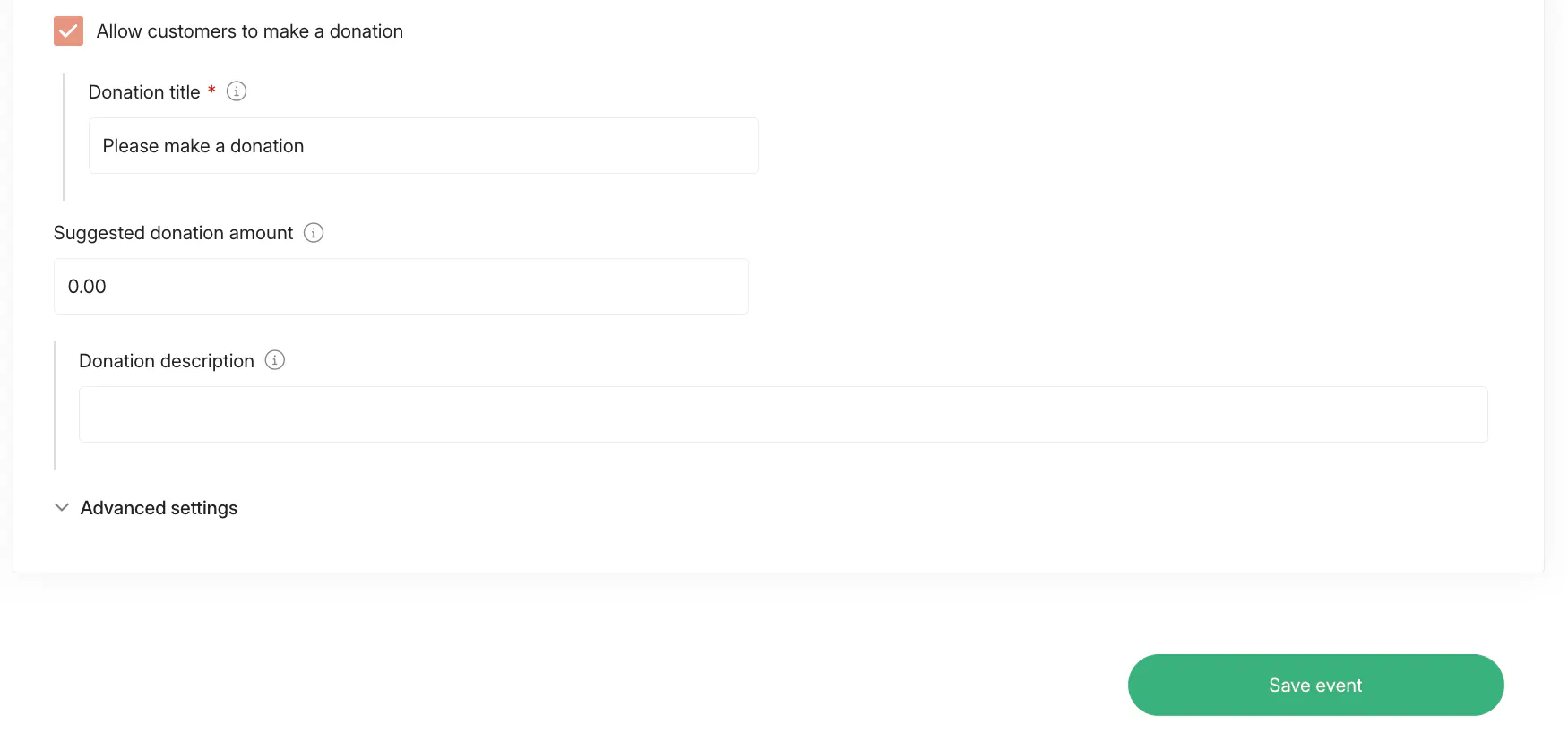
If you charge £20 a ticket, and someone leaves a £10 donation, with Zeffy the default % contribution of 17% on Zeffy will mean your supporter will pay their £30 + 17%, which is £35.10.
On Ticket Tailor, with fees passed on to the ticket buyer, that same £30 order comes to £30.77. That’s our 11p fee plus around 66p in card processing, so your supporter pays 77p on top and your charity still receives the full £30. With Zeffy’s default contribution, the same supporter pays £35.10, which is £5.10 on top, and all of it goes to Zeffy rather than to your cause. That makes the Zeffy order £4.33 more expensive for your supporter, for exactly the same £30 reaching your charity.
Can a charity tell supporters what they’ll pay?
With a booking fee, the buyer sees exactly what they’re paying and why, and you can put the figure on your event page before anyone reaches checkout. With Zeffy the ticket price is clear and goes to the charity in full, but the optional contribution is added on top at checkout and depends on each supporter’s choice, so the charity can’t say upfront what a supporter’s total will be.
Some charities will be perfectly happy with that, particularly if their supporters are generous and used to tipping. Others would rather know the number in advance, and that’s where a flat booking fee gives you more control.
When does Ticket Tailor make more sense than Zeffy?
Okay first, let’s look at it from a purely price perspective. Ticket Tailor tends to make more sense when your tickets cost more than about £12 to £16. Above this mark and the amount your ticket buyers and supports save with Ticket Tailor becomes seriously tangible as per the examples we showed above.
Secondly it’s worth questioning the experience you want to give your ticket buyers and supporters. And this comes down to two considerations. Firstly, if you want your ticket buyers to pay the same fair amount then choosing a platform like Ticket Tailor with predictable flat fees is the right call. Going back to JustGiving’s change in pricing model, many supporters were hit with the “caught out” moment, simply not realising a contribution with such a high % was left by default. Is this the experience you want to pass on to your supporters?
And the same scenario is true of the organiser - if you want to be able to give supporters clarity on how much it’s going to cost them to attend the events you’re running Ticket Tailor’s flat predictable fee makes more sense.
And lastly, when you need more advanced features specific to the world of ticketing - seating charts, connections to ad accounts, payment plans, time slots, concessions etc, this is what Ticket Tailor is built for. Zeffy makes more sense when you want auctions, raffles and the rest of your fundraising in one place.
Is Ticket Tailor cheaper for supporters?
Above the crossover, yes. For a charity selling 500 tickets, our flat fee plus card processing costs supporters less than Zeffy’s average contribution on tickets above about £16, and at our lowest charity rate of 11p a ticket that point drops to about £12. The gap widens from there, because our fee stays at a few pence while Zeffy’s contribution grows with the ticket price. On a £50 ticket, supporters would pay about £1.16 with us at 21p a ticket against £2.00 with Zeffy at its average, and you can choose to absorb our fee yourself rather than pass it on.
Do ticket buyers know what they’ll pay?
With a booking fee, the total is set before anyone reaches checkout, so you can put it on your event page and every buyer sees the same figure. On Zeffy the ticket price is just as clear, but the contribution is added at checkout and left to each supporter, so the charity can’t say in advance what a supporter’s total will be. If clarity matters to your supporters, a fixed fee is easier to explain.
Is Zeffy a charity?
Zeffy is not a charity, it is a for profit organisation. Founded in 2015, Zeffy is a privately owned business back by venture capitalists and an angel investor network. Amongst some of their backers are Ring Capital, Real Ventures, Panache Ventures, Frenchfounders and Anges Québec.
Which ticketing features does Ticket Tailor have that Zeffy doesn’t?
Both platforms cover the essentials, including waitlists, QR check-in and taking card payments in person, so the differences show up in the finer controls.
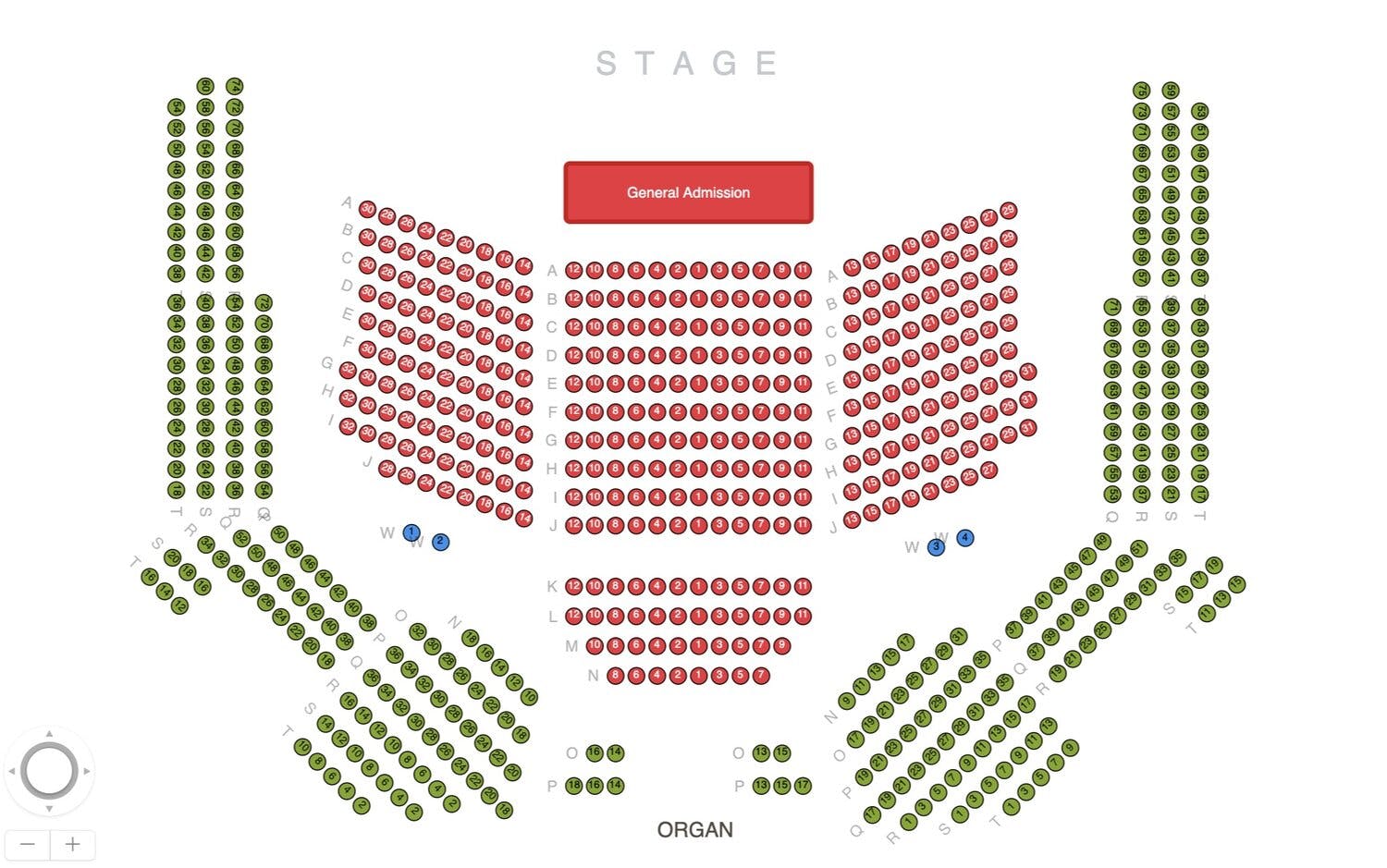
Reserved seating is the clearest. With Ticket Tailor you can build a seating chart that buyers click on to choose their own seats. With Zeffy this process is painful. You have to upload a picture of your seating chart to your checkout form and then in your ticket set up create a ticket type for every single row in your plan. Tracking what seats are taken, and what’s left becomes a real nightmare and it’s really a workaround for a feature they don’t really support.
Ad tracking is another. Zeffy’s help centre says you can’t add a Meta Pixel directly to a Zeffy form, so you ask its support team to redirect buyers to a thank-you page on your own site and put the pixel there, and its Google Analytics integration is only available to US-based accounts and doesn’t track clicks or conversions. We have Meta Pixel, TikTok Pixel and GA4 tracking built in, which matters if you’re paying to promote your event.
How does Zeffy customer support compare to Ticket Tailor customer support?
Zeffy offer support from 9am-5pm EST every single day. That’s 2-10pm in the UK, which isn’t too bad. And they offer a phone line in addition to email. However, if you want support round-the-clock you’re better off choosing Ticket Tailor. We offer 24/7 customer support, so whether you need us at 6am or 11pm there will always be something ready and waiting to help you. And we respond to all enquiries within 5 minutes.
Does Ticket Tailor support Gift Aid?
Yes. Supporters can add a donation alongside their tickets, and the charity can claim Gift Aid on that donation. As on Zeffy, the ticket price itself isn’t eligible, because Gift Aid applies to gifts rather than payments for tickets.
When is Zeffy the better choice?
If you want auctions, raffles, peer-to-peer campaigns, and a donor database in one place, Zeffy covers those and we don’t, and having all your fundraising in a single system can be worth more than a difference in ticket costs. It can also come out cheaper for supporters on low-priced tickets, below the crossover we showed earlier. If your events are mostly about selling tickets, though, we think the points above add up in our favour, and here’s how you’d get started.
How do you set up charity ticketing with Ticket Tailor?
- Ask for the charity discount. Registered charities get 50% off our fees, and there are other discounts for B Corps, PTAs and other not-for-profits.
- Choose how you’ll pay. You can pay as you sell, or buy credits upfront for a lower fee per ticket. Credits don’t expire, and the more you buy, the lower the cost per ticket.
- Decide who pays the fee. You can absorb it, or pass it on to buyers as a clear booking fee.
- Connect a payment provider. Stripe, PayPal and Square are all supported, and card processing is charged by them separately.
- Add donations if you want them. Gift Aid is supported on donations, so supporters can give alongside their tickets.
If your event is free to attend, so are we, for up to 5,000 free tickets a year. Our pricing page has the calculator if you’d like to run your own numbers.