The state of independent UK festivals in 2026 | A conversation with John Rostron, CEO of the AIF
Roughly 300 festivals have been lost since 2019 in the UK. More new ones started this year than closed though. So what is the state of the sector right now? Are we in a better position than post pandemic? We sat down with CEO of the Association of Independent Festivals (AIF), John Rostron to find out. The first in a three-part series on UK independent festival economics.
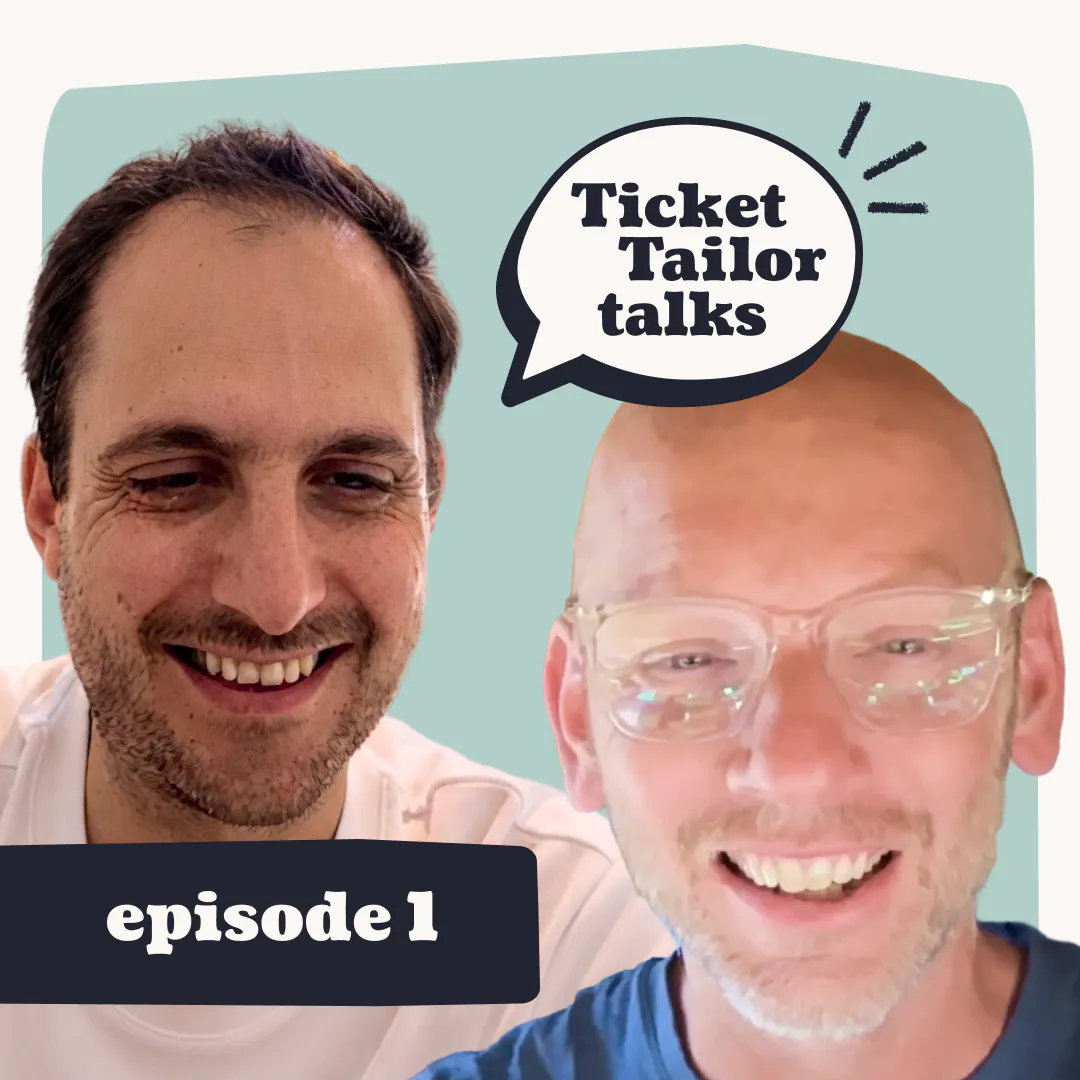
Roughly 300 festivals have been lost since 2019 in the UK. More new ones started this year than closed though. So what is the state of the sector right now? Are we in a better position than post pandemic? We sat down with CEO of the Association of Independent Festivals (AIF), John Rostron to find out. The first in a three-part series on UK independent festival economics.

If you only read the headlines, the story of UK independent festivals over the past few years has been one of decline. Closures, cancellations, rising costs, thin margins. These cancellations and costs are well documented and you could be forgiven for a pessimistic view of the current situation.
But it isn't the whole picture, and the largest representative of UK independent festivals is seeing a shift. We spoke to John Rostron, chief executive of the Association of Independent Festivals, for the first in a new interview series on the independent festival sector. His assessment: "This year is the first year where things really feel like they've steadied."
John’s careful not to overclaim though. Cancellations are still happening and plenty of organisers are having a hard summer. But he's equally clear that the trend line is changing, and that more festivals started up this year than folded.
So this article will cover both sides of the story, which is how Rostron himself describes his job. "Where I sit, it's a sum of two stories," he told us. "But of course, if you're running a festival, you're in one of those two stories."
This is the first article in a three-part series. In this piece, we look at where the sector currently stands. In the second, we’ll be talking to a festival organiser directly to get their take, including the role of ticketing companies. In the third, we turn to ticketing platforms and the structural mechanics of festival ticketing fees.
A note on sources before we start. Where we cite figures or quotes, the source is linked. Quotes from John Rostron come from our recorded interview with him unless stated otherwise. Where we're interpreting other people's data rather than reporting it, we’ll let you know.
Independents represent the largest part of the sector, but rarely get the headlines.
The first thing worth establishing is scale, because the public conversation about festivals is dominated by a handful of very large events that are not representative of the market.
According to AIF's Festival Forecast 2025, the UK is home to 592 music festivals. AIF's analysis breaks that landscape down by capacity: 4 are "major" (80,000 and above), 7 are "large" (50,000 to 79,999), 33 are "medium" (20,000 to 49,999), 334 are "small" (1,000 to 19,999) and 214 are "micro" (under 1,000). Live Nation owns all but one of the four major festivals, and Festival Republic founder Melvin Benn holds a director position at the other, Glastonbury.
Rostron's framing of what those numbers mean is interesting:
"The one thing I always try to make clear is that the independent festival market is the biggest part of the market. There's somewhere in the region of at least 600 music festivals in the UK. The big ones are owned by the corporations, but the majority of festivals are independent. That long tail that goes all the way down. So they're really, really important, because they are where most people go. It's just they're not the ones you always hear about, because the big ones dominate the media or the paid ads."
The AIF itself has grown into a substantial network. It was founded in 2008 by five festivals. Rostron told us it now has around 170 UK music festivals in membership, ranging from events of a thousand capacity up to 80,000, most of them greenfield festivals in the 1,000 to 20,000 range. Collectively, he said, AIF members will sell or reach 1.4 million people this year, and that figure excludes Notting Hill Carnival, whose two million free attendees put it in a category of its own.
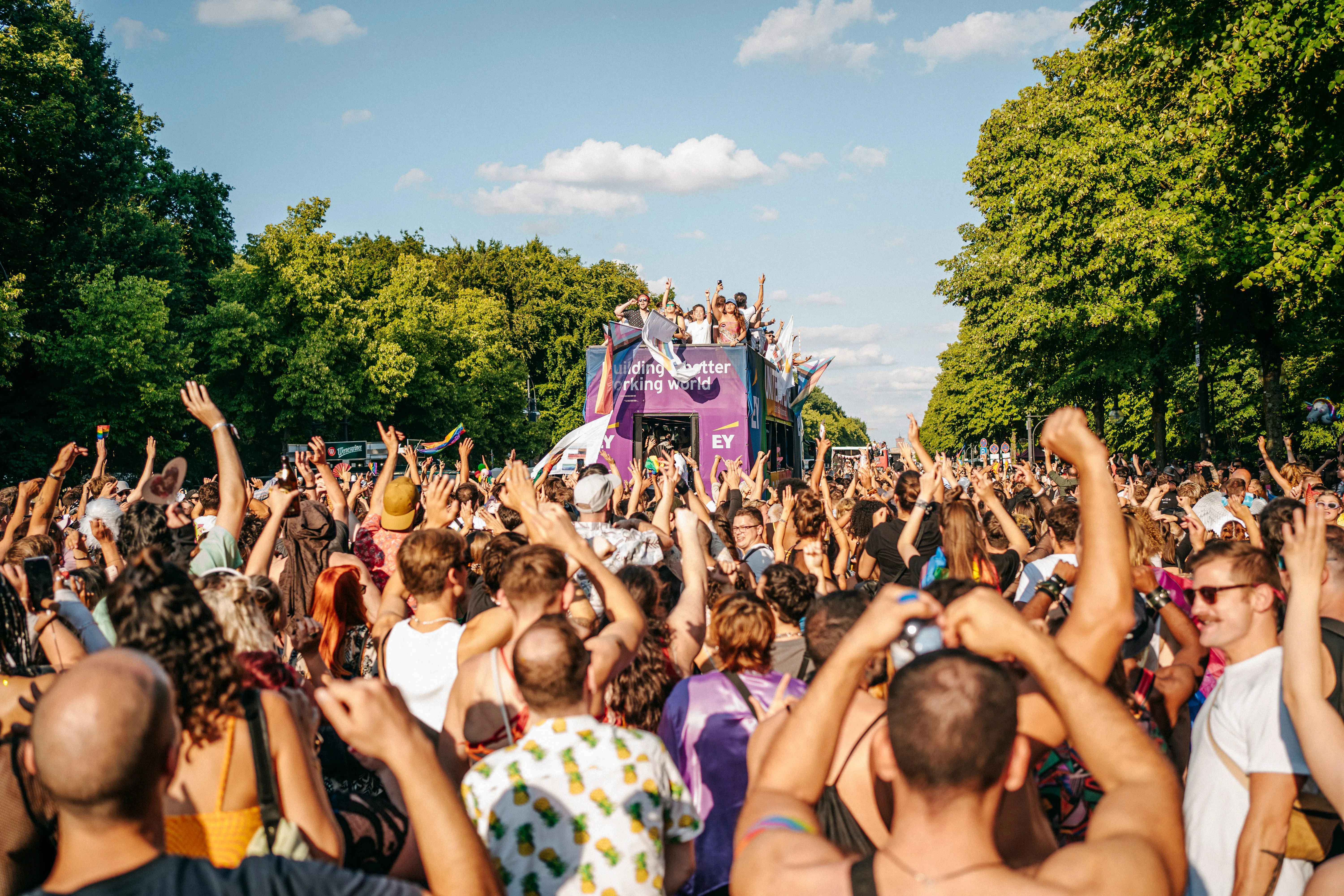
The pandemic and the rebuilding of festivals.
Rostron took the AIF job in November 2022, which as we now know, turned out to be a difficult moment to arrive.
"I came in post-COVID, which everybody thought, great, we're out of the pandemic, people are going to come. But as every festival organiser knows, they emerged out of the pandemic with debts."
What followed was a compounding sequence. Debt carried over from the closed years. Brexit friction on top of a global recovery everyone else was also navigating. A war in Ukraine. Audience behaviour nobody could predict, including ticket-holders who simply didn't turn up, and a cohort of younger people who had missed the years in which festival-going habits normally form. And costs were and maybe still are rising faster than the sector could absorb.
"Festivals were cancelling left, right and centre. Hit with debts, rising costs, strange audience behaviour, people who'd bought tickets who didn't turn up, young audiences that felt like we'd disappeared because guess what, they'd not been to a festival in their formative years. So it was a really tough time. And most of my job was counting cancellations, tracking them, publicising them, talking to the government saying we need some help, this industry's really struggling."
The counting produced a stark record. AIF's own figures paint the pucture, at least 96 festivals fell between 2019 and 2022, 36 in 2023, 78 in 2024, and 40 had fallen by mid-2025. Against a 2018 and 2019 peak that AIF estimates at somewhere between 800 and 900 events, that means roughly 300 festivals have been lost.
The cost side of it is equally well evidenced. AIF's 2023 Festival Forecast described supply chain costs as having become "untenable, with increases over 30% since 2019, and in some areas as high as 80%", identifying energy, production, staging and security as the affected categories. Speaking to Mixmag, Rostron put it more plainly: "Those production costs, energy, fencing, staging, security and artists, it's gone up by about 30% and festivals broadly do not want to increase their ticket prices by 30%."
The same 2023 forecast reported AIF member festivals were on course for combined gross revenue of £195 million against gross expenditure of £177 million. Those figures imply a collective margin in the high single digits. It’s clear to see that a lot of festivals would have been operating close to the line and others, under it.
But none of this should be read as a series of individual business failures. It was a cumulative pressure that fell hardest on the events with the least capacity to absorb it. Independent festivals simply don’t have the economies of scale or wider infrastructure to find, negotiate or stem those increased costs and it’s why they were hit hardest.
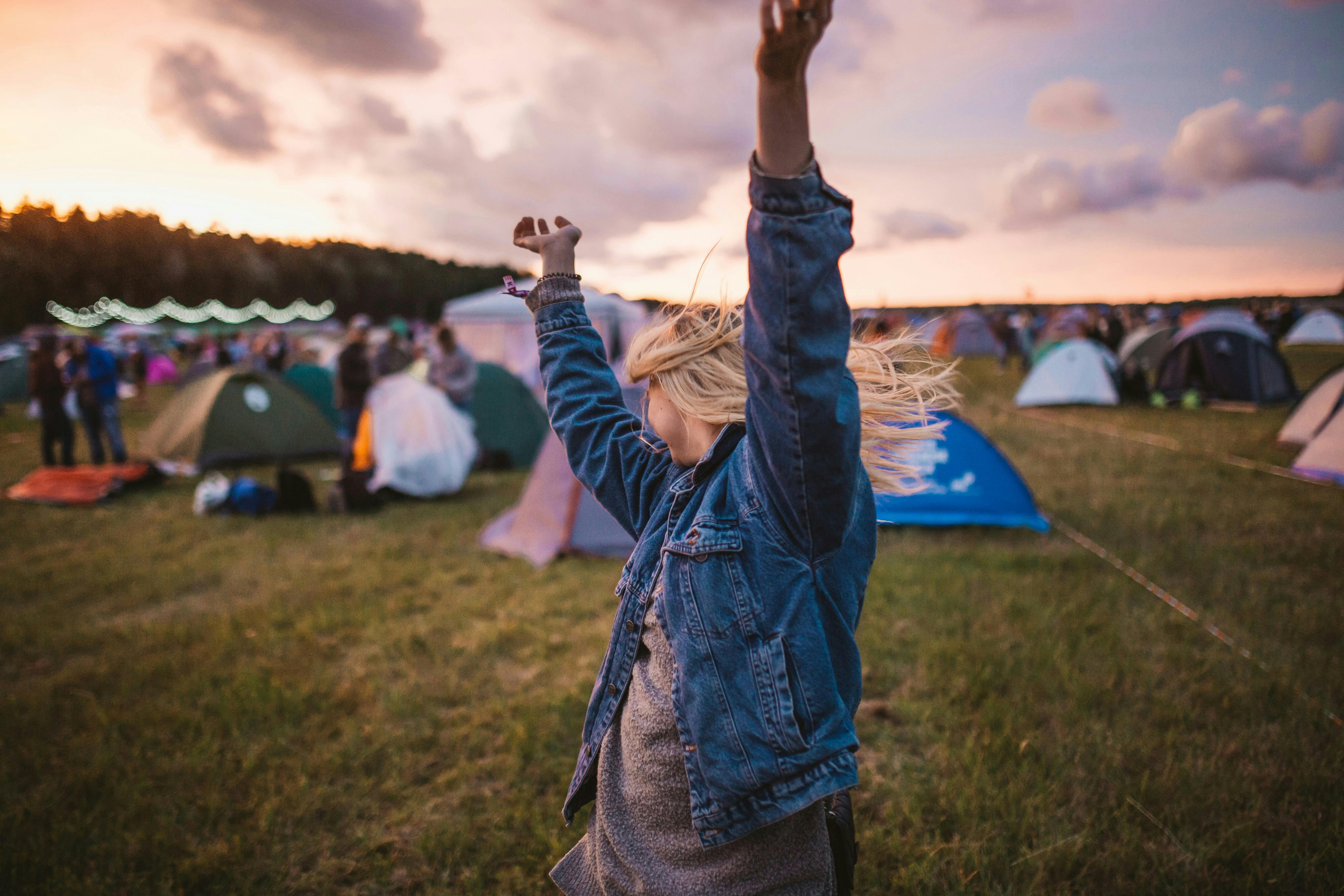
2026 has seen more new festivals than lost festivals and the tide may be changing.
The reason to be more optimistic in 2026 than in 2023 is not that the cost problem has gone away. It's that the sector has started to adapt, and demand for independent festivals has turned out to be pretty robust.
In our conversation with John, he spoke about several reasons for the change: consecutive good summers, organisers who have got better at resizing their events year on year to cope with costs, wider adoption of payment plans, and more confidence from the wider industry in advancing cash to festivals to get them through the pre-season squeeze.
So, yes, whilst the times are still challenging, it was refreshing to hear a new narrative. As John put it:
"From a higher perspective, there's been over 30 cancellations, but there's been way more than that start up. So the overall numbers feel like by the end of this year, they've probably grown a bit, and generally sales are strong."
More than 30 festivals have still been lost this year, and Rostron is candid that some of those were long-running events and some were new ones that never made it to a first gate. But for the first time since 2019, the count is going the other way. New events, mostly small ones, are being created faster than existing ones are folding.
"There's so many new events starting. Loads and loads. Very small parties, day festivals, some weekend festivals, and the appetite for people to come into this space and get together and do things is really, really strong. And they're all doing it for the love."
He is deliberate about not overstating it. "I would love to feel a hundred percent. I'm trying to get the balance right. But with support, with interventions, with a good wind, we're maybe on the up."
Audience behaviours are helping fuel the upturn
One of the most interesting parts of our conversation was on audience behaviour. We mentioned earlier that there were some really unusual patterns post pandemic but 2026 has enabled a few years of year on year data, enough to show some patterns emerging.
Early bird buying is unusually strong at independents.
Rostron's observation is that this is a structural difference between independent and corporate festivals rather than a pricing quirk. At the larger events, buyers wait for the lineup and then decide. At smaller independents, they don't wait at all.
"They sell more tickets on early birds than anywhere else. And early bird is just like a date in a field somewhere next year. And then when you ask people why they want to go, they go, you just got to go. They're not talking about the lineup."
Payment plans have changed the picture.
We’ve seen payment plans and providers become common practice across many industries for the best part of the last decade but the festival scene was a little late to the game. Many have firmly arrived though, and now they’re here, it's becoming a huge enabler of ticket sales.
A survey commissioned by PayPal in 2021 showed that 63% of consumers are more likely to buy from you if payment plans are offered as well as notable increases in checkout conversion.
"It's like, why didn't we have that before? It's such an obvious thing. That's been really brilliant."
People appear to be going to more festivals, not fewer.
This reverses the pattern of a few years ago, when rising prices pushed people towards picking a single event and spending their whole budget on it. Rostron is explicit that this one is anecdotal and that AIF want harder data on it, but the shape of it is clear enough:
"What we don't know but we seem to be seeing, is that people are choosing to go to many festivals. We'd love to get some real data on that. Previously we thought people might choose festivals versus a holiday or holiday versus a festival. It feels like they're doing all of it."
Part of the explanation may be that the product itself has diversified. Multi-venue festivals and single-day city festivals sit alongside the traditional weekend camping model, and they're easier to add to a summer rather than choose between.
Phones are driving people out, not keeping them in.
This is the opposite of the usual framing, and Rostron thinks the evidence points the other way:
"People have talked about phones making people feel lonely, but we're seeing phones as a tool by which you equip yourself to go off and do something and have those experiences."
There's a supply-side version of the same effect. Seeing other people run small events makes more people think they could run one too, which is part of why the startup numbers are what they are.
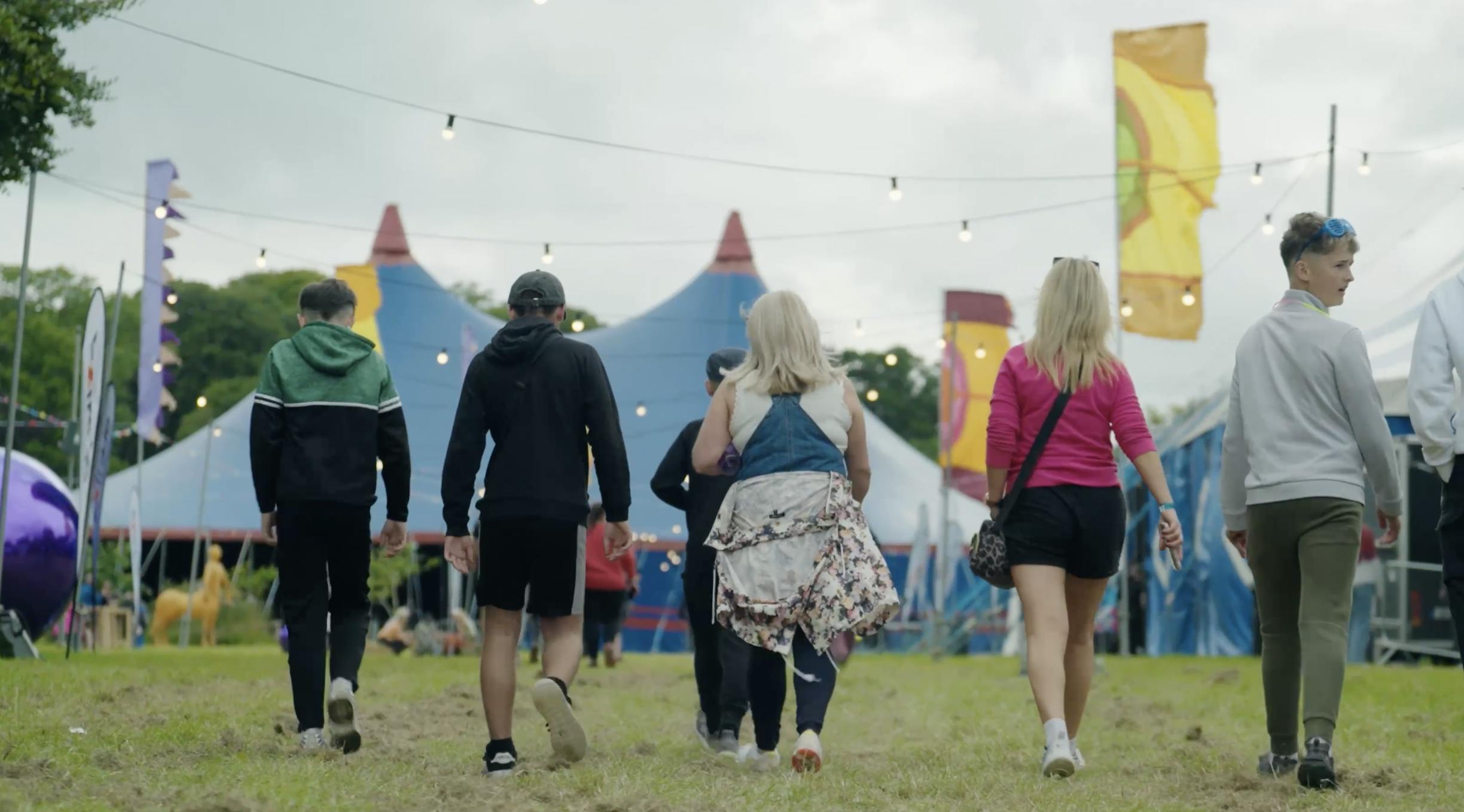
Independent festivals continue to be the bedrock of music and culture in the UK
It’s hard to summarise and put into words just how important the independent festival scene is in the UK, and no doubt outside of the UK too. How many artists have you seen a decade ago who now headline the majors? How many memories have you formed with family and friends summer after summer?
Talking with John, it’s clear he shares the same enthusiasm and he outlines that this starts with the experience itself, in a story he shared about one of his members. That organiser went to a large corporate festival as a young person, saw the headliners and not much else, then went to a small independent and found something entirely different.
"They were like, whoa, there was all of these mini venues in this creative world and they absolutely lost themselves. And this individual was like, that's what I want to do."
Beyond the experience, there’s an underlying structural difference between majors and indies too. People go to majors for good reason - the headliners, the experience, the sheer scale - but they’re built in a different way.
"With independent festivals, sometimes the company behind them is for profit, but they're built not for profit. They're built with love first. They're not built on a spreadsheet. There isn't an objective at the end which is, we are trying to make money and we need to make money. They're built to deliver a really solid, brilliant event and they just want to be able to wash their face and do it again next year."
Experience, flexibility and love is probably the right mix to enable a creative testbed to try new things, support new artists, and build experiences that a money-first-major doesn’t always have the flexibility to do. And the result is often new music and new experiences you’d be hard pushed to find anywhere else.
"If you think about skills, talent, artists, if you think about that development pipeline, where are you going to do it? In independent festivals. That's where everybody is getting to grips with things, trying things. Big corporations don't tend to do that. They have to play safe. Little independent festivals, that's where the innovation, that's where the tweaks come from, and that stuff, others will take and scale up. So they are where all the magic happens."
So what separates the festivals that make it?
We asked John what distinguishes the festivals that survive from the ones that don't, allowing for the fact that some of it is circumstance. His answer had three parts, and despite how much airtime and marketing they get, none of them were about the headliners.
Build around community, not headliners.
"Focus a lot less on your headliners or artists or thinking that lineups will draw people in. They (headliners) do, but where you can be much more sure is in your community." Many independents start as something closer to a party that got out of hand, or as a response to a gap in a particular place or genre.”
His advice is to keep doubling down on that rather than growing away from it and we think he’s got a point. Even if you step back from festivals and look at what makes a successful business, or how a sports team attracts fans and sells tickets, it almost always comes back to knowing your audience and community. A likemindedness, a shared value, a common interest. Sure having a big headliner at your indie will help sell tickets but it certainly won’t be why the majority of tickets are sold.
Spend your energy on what you control.
This ties nicely with the point above. Even if you want that headline act and you could just about afford it. How much time, energy and money would that cost you and can you guarantee to get them?
"In the world, what can you control? The only thing you can actually control is yourself. And who can you influence? The people around you. Whereas all these other things you might buy, like talent, it's out there, it's hard to get, it's competitive, and you don't have any control. You might book someone, the fees might continue to change, they might cancel, they might not post on their social media. Suddenly it's all out of your control. Whereas, hey, I'm running a party and we're doing it for these people."
The outcome is that the whole experience is the product, from how the ticket gets bought to where the toilets are. "The name that you've put on the bill might be really insignificant if everything else is not pleasurable."
He gave a lovely example of a festival that deliberately routes arrivals four or five miles out of their way so they come in through the hills rather than straight off the motorway, purely to change how the weekend starts. Great idea.
Budget up, not down.
For anyone starting out, this was his clearest piece of advice:
"Budget up. Don't start with the dream, start with something small that you can deliver and then hopefully as you sell well, you can then start to add and add."
With one important caveat, which we'd underline: "Being on detail doesn't mean cheapest is best. It's about understanding where all those different expenditures are, why you're spending them and what they mean."
The festivals holding the line on price
We'll cover ticket prices properly in the next article in this series, but one group deserves a mention here, because what they're doing is a deliberate choice that costs them money amidst all of the price rises and pressures that have been documented above.
Maid of Stone, a 5,000-capacity AIF-member rock festival at Mote Park in Maidstone, has held weekend tickets at £150 for 2026, the same price it charged in 2024. Festival booker Chris Wright told Planet Rock the team are "doing everything we can to ensure the increase in our costs are not passed on to our loyal supporters."
Knockengorroch, a 28-year-old independent festival in Galloway, took a different route. Rather than raising the gate price for 2025, it ran a public fundraiser, raising £18,914 in donations to cover increased costs. Its 2026 edition runs as a "Limited Edition" with a deliberately reduced capacity, responding to what the festival itself describes as a moment when "independent music and festivals are in a precarious place, fighting for survival."
Every pound of cost rise that doesn't get passed to the buyer has to come out of the promoter's margin or the production budget. That's a choice made because the festival cares about its audience as much as it cares about the maths.
How is the AIF supporting the industry
AIF's work splits into policy lobbying and direct support for members.
On policy, the headline ask is the 5% For Festivals campaign, launched at AIF's Festival Congress in February 2024, which calls on the UK Government to cut VAT on festival tickets from 20% to 5% for a temporary three-year period. Rostron's published case for it: "A reduction in VAT on festival tickets from 20% to 5% for three years is an evidence-based, simple, sensible remedy that would ease the financial burden on promoters enough for them to return to health." The campaign site includes a tool for festival-goers to contact their MPs.
Alongside it, AIF is calling for a Grassroots Music Festival Tax Relief aimed at festivals under 30,000 capacity, which AIF describes as "mirrored on other Creative Tax Reliefs, such as the highly successful Theatre Tax Relief and Orchestra Tax Reliefs".
In terms of direct support, two newer initiatives came up in our conversation and if you’re an independent festival organiser, we recommend you go and take a look or speak to the AIF.
The Step Change Fund
Puts a dedicated person and a budget behind helping member festivals with sustainability work, including a free measurement tool so organisers can see where they stand before deciding where to start. A significant strand of it focuses on food, which Rostron singled out as unusually promising: "You can help the planet and help your bottom line, which I think is amazing." The fund is supported by Earth Invest, Ticket Tailor's own fund.
The Festival MOT
Is a wraparound service aimed at festivals that are struggling, where industry experts "come in and look under the bonnet of your festival" and give independent advice. The thinking behind it is that peer networks are good at answering the questions organisers know to ask, and less good at the ones they don't. A specialist coming in can uncover the questions you didn’t know you needed answers too.
Building a community of peers
Whilst there are promising signs in the industry it’s clear that many organisers still face uncertainty and challenges in the coming years. At its core, the AIF have created a group of those facing the same challenges. The value of learning from someone else's wins or mistakes could even be the difference between survival. A point that John alluded to:
"Very few of our festivals fail compared to what fails outside, because there's a lot of advice and support in there that you might not notice at the time, but it's helping you down the line."
Where this leaves us - can we predict what the future holds for UK indie festivals?
We found our conversation with John extremely insightful and a breath of fresh air. It felt like the first time we’d heard positivity and a turn in the tide vs the trends seen over the past few years. As we’ve highlighted though, that positivity is still met with caution. Those financial pressures and rising costs are still present and running or starting an independent festival carries with it that risk John mentioned.
The damage since 2019 is real and, for the roughly 300 festivals that have closed, permanent. Costs are still 30% or more above where they were. Margins across AIF's membership are thin. More than 30 festivals have gone this year alone. And as is clear from our discussion, nobody in the sector is declaring victory.
But the direction has changed. More events are starting than closing. Sales are strong and coming earlier. Payment plans have made higher ticket prices manageable for more people. Audiences appear to be going to more festivals rather than fewer. And there is a steady supply of people who want to build something in a field with their friends, which turns out to be the sector's most durable asset.
The full conversation with John is linked below and if you run an independent UK festival and any of the above sounds familiar, the AIF network is the most useful place to start. Their member community, legal helpline, sector data and policy work all bear directly on the issues in this piece. Rostron's own pitch was characteristically unfussy: "There is no manual. You can do it yourself, but there's loads of other people who've been there, done that, and they can do it with you."
Full conversation with the AIF & John
In the following episodes we’ll speak with festival organisers directly to get their take before taking a look at ticketing economics more specifically and offering some advice to festival organisers when it comes to choosing their ticketing provider and getting the most for their money.
If you’d like to talk ticketing, you can get in touch via the links below. Our chat with the festival organisers follows in a few weeks
Book a Ticket Tailor demo
Create a box office for free