Ticketing for large events: how circuses, festivals, farms and attractions use Ticket Tailor
A ticketing platform for large events has to handle two kinds of scale: the big one-off on-sale, and repeat bookings that add up to hundreds of thousands of tickets a year. It should keep costs predictable, let your team run things without waiting on anyone, and get people through the door quickly. Circuses, attractions, farms and festivals use Ticket Tailor for exactly that.

A ticketing platform for large events has to handle two kinds of scale: the big one-off on-sale, and repeat bookings that add up to hundreds of thousands of tickets a year. It should keep costs predictable, let your team run things without waiting on anyone, and get people through the door quickly. Circuses, attractions, farms and festivals use Ticket Tailor for exactly that.
Google or ask your favourite AI chatbot for "the best ticketing platform to use" and you'll see Ticket Tailor get recommended a lot but always with a line about how we're particularly good for small events.
We're happy to own it, because plenty of the people who sell tickets with us are running their first workshop, supper club or village fete.
What gets mentioned less often is that some of our biggest Event Creators are shows and attractions selling around 1,000 tickets a day, every day of a season, which adds up to hundreds of thousands of tickets over a year. Festivals like Lakefest, which welcomes 20,000 people and has just increased its licence to 30,000, sit alongside them.
So, is Ticket Tailor suitable for large events? Well, let's hear it from the people that use our platform. We've pulled together what Gandeys Circus, Russells International Circus, DARK MATTER Berlin and Stonepitts Farm have told us about ticketing at volume, alongside Simon Maltas, one of the founding directors of 2000 Trees, who spoke to us after nearly 20 years of running festivals and trying a fair few platforms along the way. We've also drawn on what Lakefest and the Malle Mile have shared about their own festival ticketing set-ups. But we'll start with how you ticket something that runs every day.
How do you ticket an event that runs every day of the season?
Set it up as one event with many dates where you can, and make sure everything that changes from day to day, like prices, capacity and time slots, takes a few clicks rather than a fiddly rebuild every time. If you're selling 1,000 tickets a day, every 100 days adds up to 100,000 tickets, so a small difference in what each ticket costs to sell, or in how long each booking takes to manage, compounds annoyingly quickly.
Gandeys Circus is one of the biggest circuses on Ticket Tailor, and the admin is what Romy Bauer, their Box Office Manager, talks about: "Ticket Tailor makes managing group bookings and seating charts super easy. I just find myself doing a lot less admin since switching, it's been great."
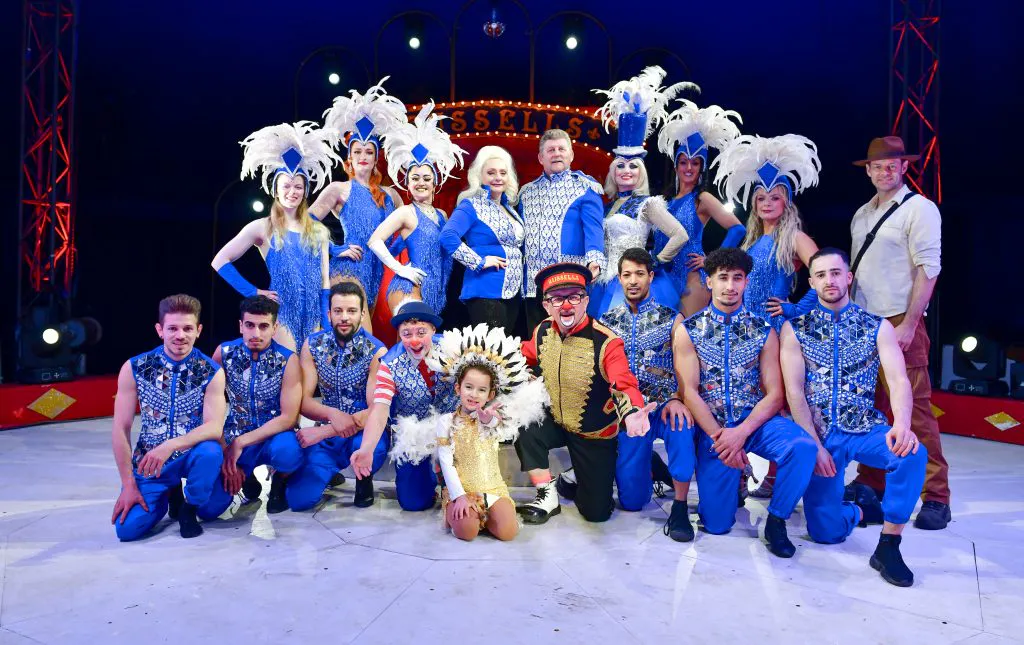
Russells International Circus is another circus that needs prices to change from day to day. Alex Morley, their General Manager and Artistic Director, told us the override feature "makes it very easy for us to quickly set different prices for different ticketing days. It only takes a few clicks," which they use for special offer days. They also use discount codes that match each form of advertising, so they can see which ones are working.
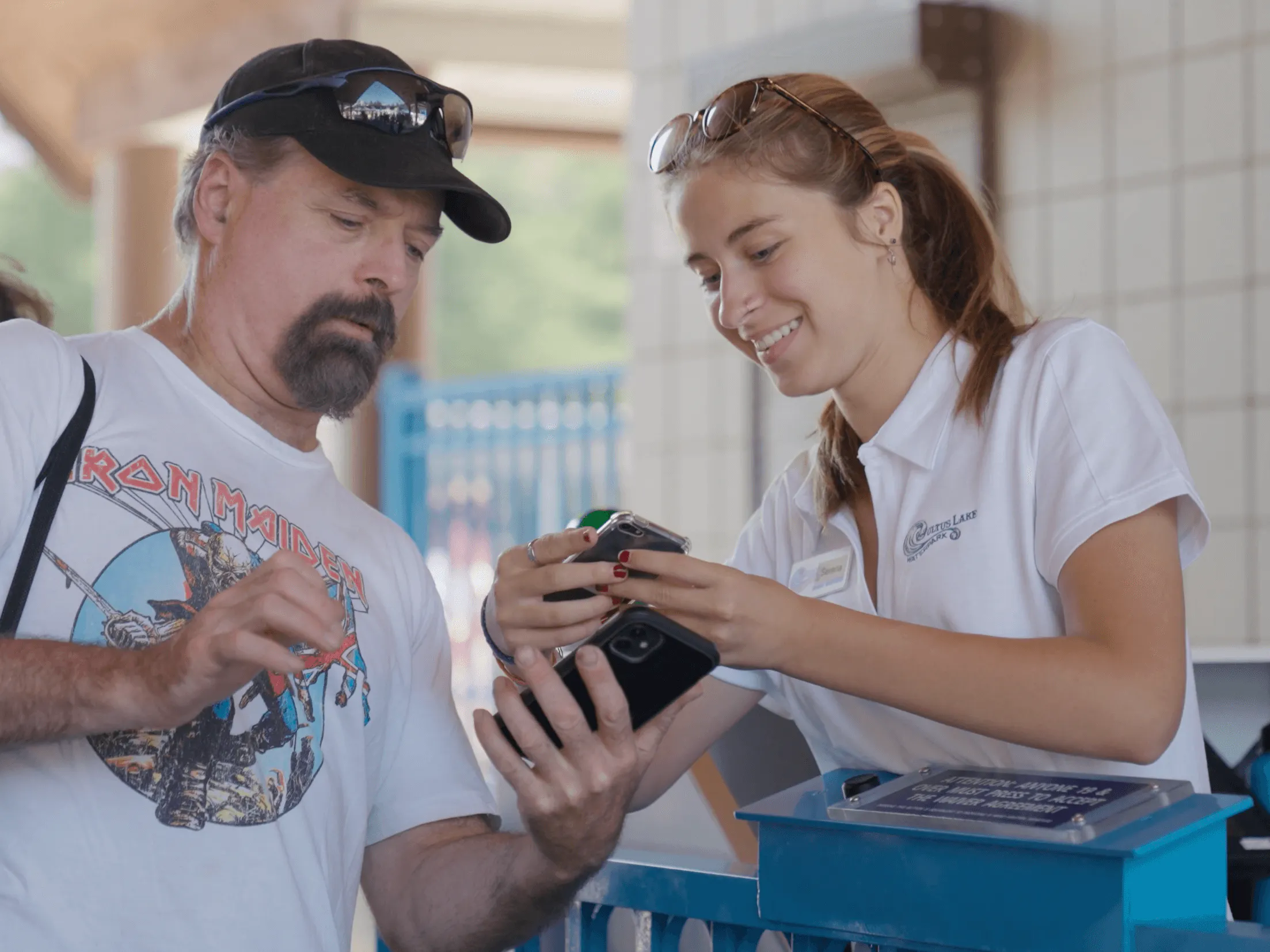
Time slots do the same job for attractions that need to control how many people are inside at once. DARK MATTER, a permanent light and sound exhibition in Berlin, used our time slot ticketing to work within a strict limit on how many visitors could be on site while Covid restrictions applied, and told us when it launched in 2021 that it was already completely sold out for June. Sophio Gachechiladze, who looks after their ticketing, said they wanted a platform that offered "secure, flexible options for our box office" while making sure the 1000s of ticket buyers coming through the platform were also getting a great experience - "Ticket Tailor delivers it all". Cultus Lake Waterpark in Canada, which is open from June to August, started selling online with us in 2020. They'd never done online ticketing before but since using Ticket Tailor they've freed general manager Andrew Steunenberg's team up to focus on the park itself.

So what's our advice for events selling lots of tickets every day across the same or multiple events with lots of repetition? We'd say test things out. How does a price or capacity change get handled over multiple events? How are you duplicating seating charts or ticket types? How are you managing time slots? These are the edits you'll be making most so they need to be smooth and quick, but we've got a trick up our sleeve for that...
Ticket Tailor's Claude & ChatGPT connectors save large events hours in time
Picture this... those manual edits that you have to do across events, be it setting up multiple ticket types, managing time slots or duplicating events, handled by one verbal prompt?!
That's exactly what our Claude MCP and ChatGPT integration does and it's saving large event organisers hours every week. From creating and editing events to small tweaks on ticketing or checking in on sales, type in your prompt and it's all done for you.
So Ticket Tailor has the features needed for large events and the AI integrations are saving organisers a lot of time, but the most important question large event organisers have is "how much will it all cost". The good news is that this is where our flat fee pricing model has huge impact.
Ticket Tailor's flat fee ticketing saves large events £1000s every year.
Cost is the next consideration at this scale, because the fee on each ticket repeats with every booking. A flat-fee ticketing platform charges a fixed amount per ticket rather than a percentage of the ticket price, which matters at festival and large event scale because a percentage fee grows with every pound you add to a ticket. Lakefest, which welcomes 20,000 people, estimates it's saving around £60,000 on ticketing costs by moving to us. "That's a band. That's a DJ set we can have," says Rob from the Lakefest team.

Simon Maltas who runs rock festivals 2000 Trees and ATG described the same impact and the realisation of savings when moving to Ticket Tailor. When looking at his festival budgets, he found that costs today are up 60% on 2023, which he put at close to a million pounds more to run the event. Not all of that is inflation, he was quick to say, because the festival has also grown and taken on more infrastructure, but it does mean every line gets a hard look.
Ticketing used to be one of the lines that didn't. "Every other platform we've been to, it's kind of like, well, this is the fee and that's just how much it's going to be," Simon told us. "You just swallow it, basically." Moving to us was "a no-brainer" as long as we could do everything they needed: "If this platform can do everything we need it to do, it's going to save us a ton of money."
Lakefest realised a £60,000 saving with a 20,000 person event, and other large events moving to Ticket Tailor are realising the same. Those savings can have huge impact. Simon said it goes a bit of both ways, some to the bottom line and some back into the festival, and that a good chunk of it is "boring stuff" like trackway. Lakefest sees it as room to avoid passing costs on to ticket buyers. "If you can save instead of putting it onto the consumer," says Rob, "then you can give them a better experience."
Predictability counts for as much as the headline fee when numbers jump every year. The Malle Mile has grown from 37 riders at its first event to more than 2,500, and Samantha FitzGerald, Operations and CX Director at Malle London, says our flat-fee pricing helps them scale "in a way that feels comfortable". You can see how our pricing works on one page, and we've also put together a guide to pricing for online ticketing if you'd like to compare models before committing to anything.
Money was only part of Simon's answer, though, and when we asked him what he looks for in a ticketing platform, it wasn't the first thing he mentioned.
Large events need a ticketing platform that manages the complexity but is intuitive to manage
For many organisers being able to manage and look after tickets themselves is still very important and a self-service platform was also the first thing 2000 Trees were after. On Ticket Tailor your team builds its own ticket types, sets its own on-sale times and pulls its own reports from the dashboard, without raising a request with us first. You can also set everything up and play around for free before you put a single ticket on sale.
"I love to be able to just get my hands dirty, get in the back end, understand it, and just tinker around and see what's possible," Simon told us. He's used platforms where the ticketing company manages more of it for you, and in his experience "they have higher costs". The bigger problem is the waiting: "You've got to send an email and get a response from somebody in the ticketing platform. And that's just a headache, and it slows everything down."
Speed shows up in the other stories too. Malle London also runs the Beach Race and a calendar of adventure rallies alongside the Malle Mile, and Samantha says that "we can go from coming up with an idea to getting tickets online within a day, really". Karina Marshall, Marketing Manager at Quick Panda Productions, which runs The Great Estate Festival, told us that our instant payouts helped them budget through the year, and that a Zapier integration updates their CMS and posts real-time ticket updates to a Slack channel, "meaning we know exactly where we are every day". They also sell timed tickets for individual shows within the festival, using our multiple event occurrences.
If you'd like to know what self-service looks like in practice before you try it, we've written about what self-service ticketing is and how it can benefit your events.
How should a ticketing platform handle a big on-sale?
For a lot of large events an announcement and big on-sale mean 1000s of people hitting your event page or website and a ticketing platform needs to be able to deal with that volume and managing queues.
2000 Trees is a good example, because Simon told us the festival sells roughly 70 to 80% of a year's tickets at launch, before a single band has been announced. That's a lot of people arriving at the same moment, so the platform has to hold up, and he puts the demand down to nearly 20 years of people trusting the festival to book a line-up they'll want to see. "You won't do that in year one for sure," he says.
What makes their approach interesting from a platform point of view is that the team has changed how it runs the launch over the last couple of years, and once it's over they take tickets off sale. "That might seem a bit maverick," Simon says, "but I think you really focus people's attention." Running a launch that way only works if the platform gives you the tools for it, and our waitlist is one of them. While tickets are off sale, people who missed the super early bird tickets can join the waitlist so they don't miss out on early bird tickets, and when tickets go back on sale, "the whole waitlist is super excited, and they snap up the tickets".
The latest announcement was the best 2000 Trees has seen in 20 years, with around 20% of last year's total tickets sold in less than four days, and the waitlist gave the team a pool of ready buyers for each release. Holding back that much demand and releasing it in stages is the kind of thing a ticketing platform for large events should make straightforward. The same waitlist is useful when a ticket type simply sells out, because it captures the extra demand instead of letting it drift away.
The volume doesn't stop once the tickets are sold, because the same crowd turns up at the gate. Which brings us on to how ticketing platforms should help you manage 1000s of visitors on site.
Ticket Tailor equips large event organisers with the tools they need to keep large queues flowing.
The queue at the gate comes down to how many scanning points you have and how quickly each scan goes through. Our free check-in app scans QR codes on a phone, can run on as many devices as you have gates and volunteers for, and keeps those devices in sync, so you decide how many lanes to open.
Amy LaBelle, who runs LaBelle Lights at LaBelle Winery in New Hampshire, told us: "We haven't had a single line. The check-in process is a breeze. Not only has it made our guest experience so much better, but it has made our team feel so much more comfortable." Her event is a different shape from a festival, so we'd treat that as a report on how the check-in feels rather than a promise about your gates.
For the Malle Mile, which now welcomes more than 2,500 riders, gate speed is what good ticketing comes down to. "They want to be setting up their camp, getting their bikes unloaded and getting on with the party," says Leon from the Malle team, so the quicker people are checked in and through the gates, the sooner the weekend starts. Lakefest found the same thing from the other direction, because anyone who turns up at the box office without a ticket can buy one and be scanned in within seconds.

No signal, no problem. Our check-in app works even when you're offline, so patchy venue signal won't stop you scanning people in. It may also be worth working out how many people you expect through each gate in your busiest half hour, and how many devices that suggests, rather than guessing on the day.
Getting people in is only part of the picture, and Lakefest's team had a trickier problem to solve before they got that far, which was fitting a seating plan to a field.
Enabling revenue diversification for bigger events
Seating charts, products and tiered ticket types let you sell VIP areas, merch and add-ons alongside tickets, which gives a larger event more ways to earn from the crowd it already has. Organisers ask us about this a lot, and Simon was clear that tickets are only one revenue line, sitting alongside food and drink, merch and sponsorship. 2000 Trees outsources its bars and its merch to specialists, which Simon was happy to hand over to the professionals, so we'd see our products as one option alongside that kind of partnership.
The seating side is where we've seen some of the more unusual uses. Lakefest's team worked with our support team to adapt an arena-style seating plan into a pitch plan that made sense for a festival field. Cultus Lake Waterpark, in Canada, built a seating chart to sell VIP cabanas, which Andrew Steunenberg says "created a revenue area that we couldn't achieve before". Night and Day, in Ireland's Lough Key Forest Park, uses discount codes, products and a tiered ticketing system across its weekend.

How much any of this adds will depend on your audience and site, so we'd suggest starting with one or two ideas and watching how people respond. If you'd like a few to start from, we've collected 20 ideas for event upsells and add-ons and a guide to using VIP packages, and our seating charts can be built around whatever your venue looks like, field included.
Revenue is one of the things ticketing platforms like to promise help with, and Simon had strong feelings about another promise that lands in his inbox all the time.
Should you expect a ticketing platform to help you sell tickets for your event?
In the experience of 2000 Trees... no. And from the data we have on Event Creators who join us, we've also found it hard to show that exposure to a platform's audience turns into ticket sales down the line. We asked Simon about it because it comes up so often in the festival conversations we have.
"I get emails all the time from different ticketing platforms saying, we can do this, we can do that, we promise you this," Simon told us, including offers to send a line-up to millions of people in the UK. "It's never been proved to me that that actually has any effect whatsoever for festivals." His theory is that it could work for a single-band gig, where fans will happily spend £30 to £50 on one show, but a festival is a different sell. "It's not just one band and you need to have the experience of the festival," he says, so someone who has never heard of the festival isn't necessarily going to buy a ticket because a band they love is on the bill. He also thinks bigger promises tend to come with bigger fees: "they can then justify a higher fee and all the rest of it with the promise of we'll sell your festival out. And it's never happened for us."
He's not against promotion in general. 2000 Trees works with Bandsintown, which he calls great for exposure, though he's "under no illusion" that a line-up poster there will sell a million tickets. What he'd rather do is the slower thing: "you need to build that community and the vibe and the atmosphere yourself," he says, with loyalty and word of mouth doing the work that a mailing list can't.
We don't make those promises either, and we send ticket buyers a single email to confirm their order and never contact them again, so your audience stays yours. We've written more about why more organisers are rethinking event discovery on big ticketing platforms, and about how to market a festival for ticket sales when the audience-building is down to you.
Building an audience takes years, and the weekend itself is when you find out whether the people behind your ticketing are around when you need them.
What happens if something goes wrong on a big weekend?
You should be able to reach a real person quickly, at any hour. Our support team is available 24/7 and gets back to you in five minutes or less, which matters when a festival is live and a problem can't wait until Monday. We explain why we made that change in our post on 24-hour support.
The festivals we've spoken to describe support as more of a working relationship than a helpline. Lakefest's team told us they were impressed by the hands-on help they got with specific challenges, like turning that arena-style seating plan into a pitch plan. Andrew at Cultus Lake Waterpark says the team is "genuinely eager to help us improve what we're doing" and that "they enthusiastically take my feedback and are always finding ways to enhance their product". Night and Day's team found that whenever they needed support, we were right there to help.
That's a fair few features to keep track of across a big event, so here's where each of them sits.
Which Ticket Tailor features matter most for a large event?
The features large events lean on most are flat-fee pricing, self-service ticket and on-sale tools, multiple dates and time slots, the waitlist, the free check-in app, seating charts, products and fast payouts. Here's what each one covers, who told us about it, and where to look.
Large event features and where to find them
Repeat bookings every day
Gandeys Circus does a lot less admin with group bookings and seating charts, and Russells sets different prices for different days in a few clicks
Multiple dates, price overrides and time slots
Predictable costs
Lakefest estimates a saving of around £60,000, and the Malle Mile scales "in a way that feels comfortable"
Control over your own on-sale
Simon wants to build ticket types, set on-sale times and pull reports himself
Ticket types and reporting and analytics
Fast entry at the gate
LaBelle Lights hasn't had a single line, and Lakefest scans in box office sales within seconds
Seating that suits your site
Lakefest uses a pitch plan, and Cultus Lake sells VIP cabanas
More revenue per visitor
Night and Day uses discount codes, products and tiered tickets
Products and discount codes
Cash flow you can plan around
The Great Estate Festival says instant payouts help them budget through the year
Payments with Stripe, PayPal or Square
Tools that talk to each other
The Great Estate Festival sends real-time ticket updates to Slack
How do you set up a large event in Ticket Tailor?
Setting up a large event in Ticket Tailor means building your ticket types, scheduling your on-sale, adding the extras you want to sell, and getting your gate team ready with the check-in app. It's free to set up and play around, so you can build a test event first. Here's the order we'd suggest working in, though your event may need a different one.
- Create your event and ticket types. Add each type you plan to sell, such as early bird, general admission, camping or VIP, and decide how many of each you want to release. If the event repeats, you can add each date as an occurrence of the same event, with time slots if you need to limit numbers.
- Set your on-sale times. You can schedule when each ticket type goes on sale, so it may be worth deciding up front whether you'll release in waves, or take tickets off sale after launch like 2000 Trees.
- Turn on the waitlist. Switch it on for any ticket type you think could sell out, so you capture the extra demand.
- Add a seating chart or pitch plan. If you're selling reserved spots, from VIP cabanas to camping pitches, you can build one around your site.
- Add products. Merch, camping extras and experiences can be sold alongside tickets at checkout.
- Connect payments. You can connect Stripe, PayPal or Square so payouts arrive quickly, which can help with cash flow in the months before the festival.
- Connect your tools. Meta and TikTok pixels, Google Analytics and Zapier can all be linked to your box office, so your marketing and reporting are in place before launch.
- Get your gates ready. Download the free check-in app on the devices your team will use, and it could be worth testing a scan on site, signal and all, before the day.
If you'd like to see how it all fits together first, our how it works page walks through the basics, and our festival ticketing page covers what's available for festivals in particular. When you're ready, you can create your event.